
The Ramones, 50 Years Later
HEY! HO! LET’S GO! It's the 50th anniversary of the Ramones' self-titled debut.
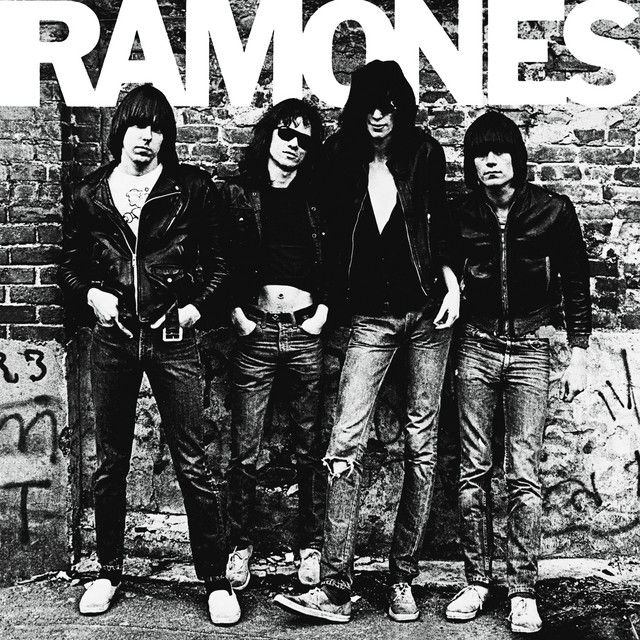
Joey Ramone: vocals
Johnny Ramone: guitar
Dee Dee Ramone: bass, backing vocals, co-lead vocals on “53rd & 3rd”
Tommy Ramone: drums, backing vocals
Guests: Rob Freeman and Mickey Leigh, backing vocals; Danny Fields and Arturo Vega, hand claps; Craig Leon, keys and some guitar
Produced by Craig Leon and Tommy Ramone
art by Roberta Bayley
My main challenge in covering a classic, capital-P Punk group like the Ramones is to not read too much into punk’s etymology, sociopolitical x-y-z, blah blah blah, while still situating the band in a greater historical arc. Going too far into the weeds would be in direct opposition to what punk is about. This is also a narrative coming from (forgive me, this won’t be the first time I get meta) Abigail Devoe. Situating a band in a broader generational history and examining their greater societal impact is what I fucking do! ramones 50th anniversary
Where does “punk” begin? In the arty roughness of the Velvet Underground? The spectacular FUCK HUDSON’S hubris of the MC5 or peanut-butter-flinging antics of Iggy Stooge? How about the singles that became Nuggets? Richard Hell and Tom Verlaine with the first recorded instances of “punk names”? Or Suicide being the first band to describe themselves as punk, like the 13th Floor Elevators were the first to be described as “psychedelic rock?”
Punk used to be an insult. The dumb, do-no-good delinquents. Or worse. In Please Kill Me: The Uncensored Oral History of Punk, MC5 guitarist Wayne Kramer explained, “...from where I sat” – federal prison at the time – “punk did not have a good ring to it...somebody that they knock down and make their girlfriend. You know, ‘I’m gonna make you my punk’ – and that kind of talk could get you killed, right?” You’d much rather be “underground.” That’s how the music press described the Ramones and their peers in their day.
In their latest issue, Creem, the former “cool kids” of the big music magazines take credit for our current understanding of the “punk” genre; citing Dave Marsh’s 1971 review of a ? And the Mysterians show. But Creem themselves acknowledge the term cropped up a month earlier in a Rolling Stones review of the Guess Who; Greg Shaw described them as “punk rock-and-roll.” Creem’s justification? It makes more sense to call ? And the Mysterians punk than the Guess Who. Oh, please! They also seem to forget their daddy, Lester Bangs, wrote for Rolling Stone first. In his infamous review of Kick Out The Jams, Les slung the line, “a bunch of sixteen-year-old punks on a meth power trip.”
Does punk it include artists and writers? Hunter S. Thompson? John Waters? Marlon Brando?? Legs McNeil settles it (for now,) with, “(punk) was about real freedom, personal freedom.”
It’s a lot easier to point to the origins of the Ramones! They began with a few guys from Forest Hills neighborhood of Queens. Jeff Hyman, John Cummings, and Douglas Colvin all went to the same school, but since they were all in different grades, they only knew of each other. Jeff, then using stage name Jeff Starship, was the singer of glitter band Sniper. He loved rock-and-roll; from the Beach Boys to the MC5 and everything in-between. About his first muse, Alice Cooper, Joey said, “...he was very primal...which brought out the beast in me – the kind of insanity that was going on. In the beginning I really believed Alice, until I found out he wasn’t really a necrophiliac and then I got pissed!” When John was a construction worker, Doug worked in the mail room in the building across the street from John’s job. They’d grab beers after work and shoot the shit. One afternoon, they wandered into a music store drunk and bought their instruments! Doug knew fellow serial no-do-gooder Richard Hell, and first auditioned for proto-Televsion band the Neon Boys. They needed a guitarist. Doug couldn’t play guitar. The audition went about as well as you’d think! Jeff knew Doug through the music scene, and Doug introduced Jeff to Johnny.
Tommy was more of a manager at the start; though he was briefly in a band with John in school. Tommy encountered the future Ramones at the rehearsal space he ran with another Forest Hills alum, Monte Melnick. As their roadie and sound guy, he became the “fifth Ramone.”
The guys had just two things in common: they were misfits, and they liked the Stooges. That was enough to start a band!

The state of America at the time was dominated by one thing: WATERGATE. Since Vice President Spiro Agnew resigned on the eve of the scandal breaking, Speaker Of The House Carl Albert nominated Michigan senator Gerald Ford to be the new VP. When Nixon resigned, Ford assumed the presidency. He turned around and pardoned Nixon, leaves a bad taste in people’s mouths. So does the principle of having a president who wasn’t elected President OR VP – that’s not very American! The Ramones’ home city of New York was a mess in 1975. The city was in a $1.5 BILLION deficit, leading to mass layoffs of what us post-2020 people call “essential workers.” Your bus drivers, garbage truck drivers, janitors, even policemen. The crime rate rose, drugs took hold, infrastructure crumbled, and boy, did it smell!
“(Rock-and-roll) was a hodgepodge of Pink Floyd and ELP and all this crap, so basically what we did was we stripped it right down to the bone and we disassembled it and reassembled it and put all the excitement and fun and spirit, raw energy and raw emotion and guts and attitude back into it.”
quoted from: Clinton Heylin, From The Velvets To The Voidoids: The Birth of American Punk Rock (2005 ed.)
Gritty New York couldn’t have been more different from the current state of rock-and-roll. There was so much money in it and no clear trajectory; stadium rock, prog, Joni Mitchell going jazz, Neil Young doing...whatever he’s doing. And the legacy groups were just shoving pounds of cocaine up their noses while shelling out for private jets. It’s a recipe for stasis. Rock-and-roll took itself so seriously now that major labels pelted hundreds of thousands of dollars at most any band with two guitars and drums to cut a record. It’d become so far removed from the spirit of the thing: just kids with their instruments. The Ramones’ tastes went against the grain of the current pop sphere: Phil Spector records, one-hit wonders, even the bubblegum stuff that “other people despised.” They liked Mad Magazine and surf movies. They grew up on comic books and Saturday morning cartoons. The guys liked horror movies; that’s how you get “Chain Saw.” And, of course, war movies.
The Ramones also drew inspiration from the comedy of errors that were their lives as society’s outcasts. According to Ramones: An American Band, one of them tried to rob a drug store at night, but broke into the wrong back door and wound up in the laundromat! At the root of it all, as Joey explained, “Our early songs came out of our real feelings of alienation, isolation, frustration – the feelings everybody feels between seventeen and seventy-five.” Before egos and heroin and girlfriend-stealing, the band’s philosophy was brotherhood. The same clothes, the same name, the same hair; and no individual songwriting credits. Even if it was a performance of brotherhood, punk is all about image, too. It comes from the Lower East Side scene’s cabaret revival and glitter lineage. The guys settled on a uniform of t-shirts, leather jackets, Levi’s jeans, and tennis shoes; something any American kid could identify with. They got matching grown-out mop-top haircuts. There were slight deviations, of course: Joey wore little colored glasses for his terrible eyesight. This look was totally out-of-step with the rest of the Lower East Side crowd: skinny ties, black jeans, the Stilettos’ fifties schtick, and Television’s thrift-store digs. But the girls LOVED it. Bad, but not too bad. You’ll rumble after school and roll your eyes at dad, but kiss mom on the cheek when you get home
Punk rockers need punk names – Johnny’s was pretty easy to figure out. Dee Dee lifted another famous bassist, Paul McCartney’s, Beatlemania-era code name. Dee Dee Ramone’s nickname for Jeff was Joey.
The Ramones put a lot of work into promoting themselves, and it couldn’t have been done without the “sixthRamone:” their sometimes-stage hand, mostly-artistic director Arturo Vega. In the early days, the Ramonesmade most of their dough slinging his t-shirts. The oodles of Ramones shirts you’ll see Hot Topic, H&M, even Forever 21 and Target shelling, are based on Vega’s original design. Slight alterations have been made over the years – not even my Ramones shirt has the iron-on letters.

The iconic Ramones logo was inspired by Vega’s first visit to Washington, DC, where he saw the Presidential seal everywhere. He changed the olive branch, representing peace, to an apple tree, as the Ramones were “as American as apple pie.” The quiver of arrows was changed to baseball bat (a nod to “Beat On The Brat” and Johnny’s love of baseball,” and the E. PLURIBUS UNUM banner was changed to “HEY HO LET’S GO.”
Joey was supposed to be the drummer and Dee Dee the singer. His voice would give out after three songs, and the guys quickly discovered Joey was a much better singer than drummer! Their first gig as the Ramones was on March 30th, 1974...
...and they sucked. They openly, publicly sucked!
The guys would throw their instruments down and storm off stage if they screwed up. They bickered with each other about what song they wanted to play. Everything started with “1234!” Sometimes, after counting off, they’d all play something different! Ramones’ sets were all of fifteen minutes long because they only had a few songs – there’s this joke that they wrote all their “I don’t wanna” songs before writing an “I wanna” song, and that first “I wanna” song was “Now I Wanna Sniff Some Glue!” – and partly because they played everything so fast. The Ramones became the laughing stock of the Lower East Side scene, but I have to give them credit. They weren’t afraid to put themselves out there, even before they were “done cooking.”
After months of failed auditions for drummers, Tommy finally stepped in, and things started to fall into place. The guys saw an ad in the paper for a Television gig at CBGB. Thanks in part to Dee Dee dating Cockette and friend of the New York Dolls Pam Tent, the Ramones debuted at CBGB’s on August 16th, 1974.

Save for Tom Verlaine and Patti Smith sharing a voice, none of the CBGB’s groups sounded alike. Patti was in the lineage of beat poets, openly reverential to her sixties rivals. She loved the sixties, but not the same way Television loved the sixties; they favored psychedelic and garage rock. As Clinton Heylin identifies in From The Velvets To The Voidoids, where fellow CBGB’s newbies Blondie had to zero in on their pop sensibility to make it, the Ramones were determined to lead with their roughness.
Joseph W. Washek for...forgive me for getting a little meta here, Tracking Angle, said,
“...there was a doctrinal set of beliefs regarded as essential to the rock faith that the Ramones rejected…swing, the blues, and improvisation. The choppy, stiff, ultra-fast, groove-less tempos of the Ramones were the antithesis of swing. Their chords and melodies abandoned the blues feeling and structure. There were no solos or any interplay between the instruments and strict adherence to only the most rudimentary instrumental technique.”
quoted from: Joseph W. Washek, "Marquee Moon and Television's 'Not Punk Rock' Masterpiece" Tracking Angle, 3/5/2003.
It was no roll, all rock. “Punk did not originate on the scene at CBGB. The Ramones brought it there.”
In late 1974, they cut 15 demos in a day. Say what you want about these guys, but you can’t say they weren’t efficient! Tommy was producer; he was an engineer at the Record Plant. They gradually built a fanbase including the likes of Alan Vega of Suicide, David Byrne and Chris Frantz, of Talking Heads, even Lou Reed. They got extensive press coverage from New York publications, Punk Magazine, even NME. Lisa Robinson of Rock Scene and Hit Parader was their greatest champion. “I really loved LZ but after spending several tours with them and watching lengthy guitar and drum solos, I saw the Ramones – with all their songs under three minutes! – and thought it was such a refreshing change. I thought they were really charming, and that for the time, their energy was a much-needed shot in the arm.” She convinced Danny Fields not to throw away the blitz of mail the Ramones sent him. They didn’t even really know who he really was, just that he’d signed the Stooges and the 5. They figured if he liked them, surely he must like us! Lisa and the guys were right, Danny absolutely liked them. “(Lisa) knew my attention span wasn’t very long, and I guess she liked the idea that they had a gimmick...They were right what the world needed at that time. They were so cute, and I thought they had hit tunes.” They had “everything (he) ever liked. The songs were short. You knew what was happening within five seconds. You didn’t have to analyze and/or determine what it is you were hearing or seeing. It was all there.” He couldn’t handle the Stooges or the 5, but something about the ragtag Ramones made Danny think he could handle them.
The mid-1970s were the height of rock criticism. Christgau, Bangs, Greil Marcus, Nick Kent, and our old friend Jon Landau were all alive and writing. Musicians themselves, like Patti Smith and Richard Hell, got in on the fun. As I noted way back in the Led Zeppelin III episode, this was a generation of writers who wanted rock-and-roll to be important. In trying to legitimize rock-and-roll, looked down on as “kids stuff” in their teens, they sought stuff that meant something. This something changed a lot over the years; Bob Dylan, the Beatles. ThoughRolling Stone moved their headquarters to New York, they were still clueless about the New York bands; and the Ramones learned critical acclaim doesn’t necessarily reflect music industry interest. They sent their demos out to labels, only to have them sent right back.
When Patti Smith and Television both went on tour in the spring of 1975, the CBGB’s stage was literally left wide open for the Ramones to get their shit together. They managed to do it in time for CBGB’s Unsigned Artists Festival in July. In September, they cut some new demos with the New York Dolls’ ex-manager. After seeing them at Mother’s, Linda Stein convinced her husband Seymour, co-founder of Sire Records, to give them a chance. The Ramones auditioned in late 1975, and signed their contract in January of 1976; making them the second CBGB’s group get a deal.

Stein needed the Ramones just as much as they needed him. In the seventies, record labels and distributors were completely separate entities. Sire’s distributor, Paramount, was sold to ABC; Sire needed to sign new deal with them. But before they could, the ABC execs changed over. The new guy wasn’t happy with contract. Things were looking grim for Sire. They were able to provide the Ramones with a $20,000 advance for everything; gear, recording, and promo. This was a small label. Making do with what they had, they cut their self-titled debut record in a little over two weeks in February at Plaza Sound (basically a back room of Radio City Music Hall!) for about $6,400. Mind you, this was at the same time Fleetwood Mac blew a year and half a million of Warner Bros.’ dollars on cocaine and Rumours. Producer Craig Leon remembered, “The album was recorded purely. Nothing covered up.” Though the Ramones had three albums’ worth of material, they didn’t necessarily prepare how the songs would start or end. Craig said, “At first the Ramones just had one twenty-minute long song, with different riffs running through. They were all written as individual songs, but they never thought about it from a recording point of view – you know, ‘How is this song gonna end?’ They’d just play and then ‘One-two-three-four,’ they’d start the new one.”
I’ve often spoken about bands getting the creative freedom from their labels to make these crazy leaps and bounds on record. The Ramones on the other hand had the creative freedom from Sire to make the same album four times in a row! In his 33 1/3 installation about this album, Nicholas Rombes justifies the three-peat. (Four-peat?) “...punk stood against evolution and technological growth because this implied a growing expertise and mastery of music that ran counter to punk’s studied amateurism,” performed stupidity. Punk is a performance, the dumb adolescent forever; though the seed of angst comes from a genuine place. “...the marker of selling out was not signing to a major label, but rather adopting your sound to suit market tastes.”
We’ve heard the criticism. “The drummer can’t drum, the bass player can’t play, the guitarist only knows one riff. The singer...is this utter buffoon…” Tommy had it right. “What we had was an idea that it’s not the virtuosity that counts, it’s the ideas themselves that are important...virtuosity is not only not necessary, but it might get in the way.” Virtuosity would’ve gotten in the way; this is a fourteen-song album with a 29-minute run time. There are barely any breaks between songs. The longest is 2 minutes and 41 seconds! What you see is what you get. We aren’t waxing poetic about wizards in capes and shit. In his review, Dave Marsh wrote, “Of course it all sounds the same, it’s supposed to.”
There are very few truly perfect recordings in rock-and-roll history. Even “Hey Jude” has a mistake, you know? Blitzkrieg Bop is fucking flawless. It’s the American punk rock song for a reason – and talk about writing an accidentally great pop song! It was inspired by the Bay City Rollers’ “Saturday Night,” if you can believe it! No Ramones song has been commodified quite like “Blitzkrieg.” It’s appeared in commercials for Bud Light, Diet Pepsi, Coppertone, Taco Bell, Mitsubishi, GoPro, even Pfizer! (And I swear to god, it was in a laptop commercial in my youth. Or maybe it was the iPod? If anyone else remembers or can find proof of this, please let me know.) It’s not for no reason; “Blitzkrieg”’s got pop appeal. Across this record, you’ll hear that these guys didn’t abandon the melody. They had pop in the backs of their minds making this album, and they weren’t shy about it. When you peel the layers of commercials and Forever 21 T-shirts back, “Blitzkrieg” is what the Ramones do. Tommy only plays in 4/4. Dee Dee only ever plays what Johnny plays, and Johnny plays only in riffs and downstrokes.
Every player puts the emphasis on the same part; the strum, the cymbal crash. Uniformity and order making chaos. You can tell these guys were listening to the Detroit records because this thing crunches and flies. Tommy’s drums rattle in place, they sound like they’re about to fall apart! “Blitzkrieg” isn’t the highway heartbreak of “Born To Run,” or the Eagles taking it easy in their flatbed Ford. This is the leopard-print, stinky interior of the Stooges’ “Search and Destroy.” The axels are loose, the tires are bald, the doors stick, and the brakes suck. But it goes fast. That’s all that matters to the kids stuffing themselves into one car like cans of sardines. “They’re pilin’ in the back seat,/They’re generating steam heat,/Pulsatin’ to the back beat.” With “Blitzkrieg,” the Ramones accidentally wrote an anthem for a generation of tri-state area suburban youth piling in their friends’ station wagons to see them at the New York clubs. The song sounds sounds like a sixties dance craze in this context, and “shoot em in the back now!” becomes more “ambush these kids with something they never knew they needed” than a literal attack. “What they want, I don’t know/But they’re all revved up and ready to go.” For the next 29 minutes, we are go go go. “HEY! HO! LET’S GO!”
These guys may have played dumb, but they weren’t dumb. The super-compressed drum sound under Joey’s compressed chants is flat-on-flat. Joey’s weird clipped “bop”s. It’s instant iconography, like a black-on-white pop art print. No gloss for maximum visual impact. “Blitzkrieg” is minimal in structure, maximalist in effect. It’s as potent a distillation of a sound, MO, and attitude as the Stones’ “Satisfaction.”
Eternally charming as the Ramones’ matching floppy haircuts is the mystery of Joey’s voice. Where did the fake British accent when he sings come from? Who knows. But from Beat On The Brat alone, you can clock his three main inspirations: Alice Cooper, Bowie, and Ronnie Spector. The “oh yeah!” is Bowie, “oh-oh” is Ronnie. He sings about brutality with the same intensity and vigor as Alice. Joey modeled “Beat On The Brat” after the snooty rich housewives and their spoiled brat kids that would terrorize the playground. Imagine the kid you get so fed up with picking on you and their mom not doing anything about it that you just want to smack him so he learns his lesson; and you’re not too far off. The original “Beat On The Brat” had an intro like the 1910 Fruitgum Company or the Ohio Express might do. These guys had no concept of “high culture” or “low culture,” it was all the same to them! There are no more than ten lyrics, and the majority of them are, “Beat on the brat,” “Beat on the brat with a baseball bat,” “Oh yeah!” “Oh yeah!” and, “Oh-oh!” When in doubt, Joey sings “oh yeah!” “Beat On The Brat” was better live, where it got to be faster and more chaotic. But when you pack up “Beat On The Brat” with “Blitzkrieg” before, and “Judy Is A Punk,” “I Wanna Be Your Boyfriend,” and “Chain Saw” to follow, its status is elevated:
Judy Is A Punk might be my favorite Ramones song of this era? It got to be as fast as it wanted on the studio LP.If you listen to the Ramones’ live albums (It’s Alive is my favorite of theirs,) you’ll hear how they slowed everything down to get to the 29-minute run time of a vinyl album. David Fricke explained in the sixties that, on“American Top 40 radio, if you went over the 3-minute mark, nobody wanted to know you...what wasn’t a song in ’76 was all you needed in ’66. And when you talked to Joey about the music that meant most to him, he’d talk about the Kinks and the Beatles and the Ronettes, Phil Spector, the Shangri-Las, all from ’64, ’65, ’66...What do you need 19 minutes to sing about oceans and dragons for? Cut it out – it’s wholly unnecessary.” “Judy”’s undeniable riff favors the bassline, and the song is a proud homage to the girl groups. There are harmonies, a little “Yayyyy,” Joey’s layered “ooh”s, and friends of the band giving jiving hand claps. These guys were children of the fifties and early sixties and they loved it.
Judy isn’t even the punk in the song, “Judy is a runt!” Jack is the presumed punk, and Judy presumably becomes one too by running off with him. Bad boy, good girl, tale as old as time. Judy escapes her mundane life (what teenager doesn’t dream of that?) By joining a traveling ice skating show, or otherwise the SLA. America was fascinated with the whole Patty Hearst thing, especially the CBGB’s scene for some reason. See Patti Smith’s “Hey Joe.”
Rock-and-roll nod to bubblegum gets the full pop treatment with I Wanna Be Your Boyfriend. Take out the rock-and-roll guitars and is a girl group song, top to bottom! They use a more gentle...something resembling a swing, and embrace the “oooh”s. I could easily imagine someone like Ricky Nelson singing, “Sweet little girl, I wanna be your boyfriend/Do you love me back?” Like we’ve stripped rock-and-roll of all that glitters, we’ve cut songwriting back to where pop music started: boy likes girl. No wonder the Ramones had so many female fans from the beginning. Those girls had Elvis and all the teen idols on their walls, and these were the songs they sang! It’s sickly sweet, so earnest it’ll make you blush and check “yes”…
And it’s cut off by a chain saw. That’s the Ramones’ sense of humor for you! I hate to be That Guy, but the “chainsaw” at the beginning of Chain Saw is not a chainsaw. It’s so clearly a circular saw. You can’t fool me, I sat through wood shop in the eighth grade! Gore, shock, and horror was on the American public’s mind. Several high-profile serial killers were active, and Texas Chainsaw Massacre was part of a wave of classic seventies slasher flicks. Our poor narrator has lost (figuratively or literally) his girlfriend to the maniac cannibals. But I can’t help but laugh at, “Texas Chainsaw Massacree/They took my baby away from me” Joey didn’t care, he just needed a rhyme for “me” and “massacre” looked sort of right! He does something similar in “Judy,” pronouncing “Ice Capades” really weird to make it sort-of fit with “Oh, I don’t know why.” When in doubt on a Ramones song, sing “oh no” or “oh yeah.” Here, they use say both! The “oh no”s were vari-sped sped up, the “oh yeah”s slowed down.
Oh, Now I Wanna Sniff Some Glue. This came from Dee Dee and you can tell. It’s hilarious, the Ramones playing dumb to the fullest. This song uses two whole chords and the inane lyrics of ALL the kids wanting to sniff some glue. What’s next, everybody was kung fu fighting?? But the guys subtly (I can’t believe I’m using that descriptor in a Ramones review) build upon what we’ve thoroughly established on the record. We have stop-starts, group vocals in unison, a modicum of a nice guitar solo from Johnny, a really fierce stop at the end and holy shit, we’ve got four more numbers! Good job boys, you can count to eight!! It’s that kind of playing-dumb setup that makes their sneaky punchlines incredible. Clearly, “Sniff Some Glue” was not a call to sniff glue like “Blitzkrieg” is a call to arms of the blank generation to get out there and play music. We’re making fun of kids blindly following each other. If Bobby told you to sniff glue, would you do it? Or those not questioning authority: if your parents told you to sniff glue, would you do it? It’s like something Zappa would write into a seventies punk version of We’re Only In It For The Money as a bit. Dee Dee said, “I hope no one thinks we really sniff glue. I stopped when I was eight.”
I Don’t Wanna Go Down To The Basement is a whole two minutes and 41 seconds, but I don’t think it was used to its fullest Ramones potential. At this point in the record, a whole thirteen minutes in, we know what these guys can do with two minutes. Don’t tell me you can’t finish the word “basement!” It’s unfortunate because this is a great song for Johnny and Dee Dee’s shared riffage, and Tommy’s wet-cardboard-box kick drum. It’s the flattest sound I’ve ever heard on record, and such a contrast to the fuller snare and cymbal. Talk about not competing with the guitars!
I’m similarly underwhelmed by Loudmouth, the riff is way too similar to “Blitzkrieg” and “Blitzkrieg” is clearly the stronger song.
Havana Affair is a surreal experience. Joey sings about being a banana-picking spy for the CIA and going undercover at a talent show. It’s the concoction of a bored, stoned kid who’s watched both way too many Hanna Barbara cartoons, the Monkees, and spy movies! Don’t think I wouldn’t catch the nods to Harry Belafonte. It wouldn’t surprise me at all if that record were in one of the Ramones’ homes growing up, it’s one of the thrift store bin LPs along with Whipped Cream and Other Delights. (This is not me knocking Harry, the guy was a genuine trailblazer!) “Havana” is even funnier when you imagine Johnny whacking out this crunchy riff and Dee Dee stancing, but in Hawaiian shirts, straw hats, and false mustaches as disguises. If you listen hard, there’s an innovative twist. The blast of air and kick sound awful familiar...
Finally, we hear the iconic “1234!” On Listen To My Heart. It’s in the tradition of the song about a girl who vaguely did you wrong. “That girl could still be mine, but I’m tired of the hurt, tired of trying, tired of crying.”It’s catchy and hooky. Good, but not great.
Before I read the lyrics, I thought 53rd and 3rd was about a female sex worker. Then it got really interesting. The lyric was based on Dee Dee’s real experience as a teenage runaway. Obviously there were some changes made to the narrative: Dee Dee wasn’t a green beret, nor did he kill one of his clients because he couldn’t go through with a service. When Dee Dee steps in front of the mic, wheezing more than singing, he deals some gritty realism to the song. We quickly hear why he switched lead vocals for bass. He sounds good, having him on this song is a potent choice, but that voice couldn’t hold out for a whole set.
Craig Leon’s production was great, but also crummy? The Ramones have the “Wall of Sound” power without the fuss, but you can still hear all the crunch – and where did that organ even come from?? The Ramones know how to do a sixties cover. They’d far surpass Let’s Dance, but this is a debut album. We’re laying out what we’re all about! There’s room to grow here.
I Don’t Wanna Walk Around With You is another one of my favorite early Ramones songs. These songs are generally better live, so I was surprised to hear how well this translated to LP. Teenagers are all about I want, I want, I want. The Ramones tell us what they don’t want! “I don’t wanna walk around with you!” It’s a schoolyard way of breaking up. Even the “OOOOOH!”s taunt you. That’s all the explanation you get, and that’s all he needs to say. Dee Dee deviates from the riff, which helps both him and Johnny stand out. They play with even more attitude here, matching Joey’s sneering delivery. This doubling-up of “Walk Around” and “Today Your Love, Tomorrow Your World,” with no break in between, is a powerful showing for Tommy.
What do I have to say about our closer? I was confused when I looked at the track listing; for some reason I thought Today Your Love, Tomorrow The World was just the “Today your love!” part. There’s this whole part tacked on the front, and…

Joey was Jewish. Dee Dee was the one who brought this stuff into the Ramones’ fold. He grew up in post-war Germany. He was fascinated by Nazi-era Germany because he saw leftovers from the war all over the place. It really disappointed him to learn that people interpreted these lines as the Ramones saying “fascism is okay.” It’s like people taking “Sniff Some Glue” at face value, right? Still, this is a hard line for some people. It was for Seymour Stein; he put out a censored version of the song. You may be wondering, “How did ‘Today Your Love’ not cause an uproar?” Easy. The Ramones hardly sold any records in the seventies!
Legs McNeil said, “...the entire seventies culture was based on being ‘nice.’” I don’t know about that, but go on… “You had to be nice. It’s no accident that smiley faces became the symbol of the seventies. So when the Ramones sang that they were Nazis, they were really saying, ‘We refuse to be nice.’” Lester Bangs dissented in his The White Noise Supremacistsessay. He articulated how this stuff made it to the nihilistic “no future!” branch of punk and got way out of hand. There’s a reason we have to say “Nazi punks fuck off” these days. There are an unfortunate amount of Nazi punks.
Then you have Robert Christgau in his June 1976 review of the LP in the Village Voice.
“...these boys flirt with images of brutality (Nazi especially) in much the same way (the Rolling Stones’) ‘Midnight Rambler’ flirts with rape. You couldn’t say they condone any nastiness, natch – they merely suggest that the power of their music has some fairly ominous sources and tap those sources even as they offer the suggestion. This makes me uneasy. But my theory has always been that good rock and roll should damn well make you uneasy, and the sheer pleasure of this stuff...is undeniable.”
quoted from: Robert Christgau, “Ramones” Village Voice, 6/14/1976.
Also see this exchange between Hey Ho Let’s Go author Everett True and Arturo Vega: “How do you take a Jewish boy singing, ‘I’m a Nazi schatzi/I fight for the fatherland’ seriously?” “Exactly.” In the Ramones’ specific case, “Today Your Love” is the turning the weapons around and using them on the aggressors. They point and laugh at how lame they actually are in their stupid uniforms. You’re conforming? Loser!!
Aside from this, there no politically-inclined songs on the Ramones’ first album. Remember, these were kids of the sixties. They were sick of the preaching from Bob Dylan and Joan Baez. It’s like John Cale explaining why he hated folk, “Every song is a fucking question!” Joey was leftist, while Johnny was punk’s most famous Republican. While DIY and anti-establishment action were always the fabric of punk, left-leaning politics weren’t essential to this wave the way they were to previous and subsequent waves. The sixties were a reaction to the picture-perfect cookie-cutter rigid fifties. The brown, brown seventies were a reaction to the chaos and disorder the sixties fell into at the end. Punk reacts to that with more chaos and disorder. The pendulum swings. We see it in full irreverent, goofy, powerful, instigatory display on the Ramones’ debut. We’ve gone from the rock-and-rollers, guys in leather jackets with instruments playing three chords, to the virtuosos and studio lavishry of the sixties, through the excess of glitter, glam, and stadium rock, and right back to some guys in t-shirts with instruments playing three chords. Time is a flat circle.
What more could possibly be said? The Ramones dealt one of the great debut albums of all time. They got it so right on the first try, they did it three more times and got away with it! This isn’t my pick for the “first punk album,” but it was certainly the one that blew the fucking lid off the whole thing. After this, every tennis-shoe-wearing, guitar-slinging, garage-dwelling burnout kid wanted to be the Ramones. They opened the floodgates for disaffected seventies youths to express their frustration; the country’s conflict with Iran, the fuel crisis, a recession...again, time is a flat circle. It was a much-needed shot to the heart. Kid Congo Powers captured that experience. “The second I got home with the LP, I raced up to my bedroom and dropped the needle onto the vinyl, and started laughing hysterically jumping up and down, because the music was something else, a pure adrenaline rush of exhilaration.” If we learned anything from the Jackass phenomenon of my youth, teenage boys are adrenaline junkies!
Why do I love the Ramones? They were freaks and misfits and they were proud. They put tough-guy leather jackets on their freak. They made freak cool. While “NOOO FUTURE” is fun, I love that the Ramones weren’t nihilistic like their peers, or even their heroes the Stooges. In this sense, they’re more like the 5 than the Stooges. They share a sense of altruism. If you pick up a guitar and get together with your buddies, you can change people’s minds about the freaks and misfits of the world. Or, at the very least, put a little power in their hands.
The Ramones weren’t the first band doing what they did, but they were the right band in the right place at the right time. Simple as that is, you can’t discount the power.
Personal favorites: “Blitzkrieg Bop,” “Judy Is A Punk,” “I Wanna Be Your Boyfriend,” “Chain Saw,” “Now I Wanna Sniff Some Glue,” “I Don’t Wanna Walk Around With You,” “Today Your Love, Tomorrow The World”
– AD ☆
Watch the full episode above!
Want to see the uncensored version? Become a member of my Patreon!
Bessman, Jim. Ramones: An American Band. New York: St. Martin’s Griffin, 1993.
Christgau, Robert. “Ramones.” Village Voice, 6/14/1976.
Heylin, Clinton. From The Velvets To The Voidoids: The Birth of American Punk Rock. Chicago: Chicago Review Press, 2005 ed.
Hoberman, J., with Jonathan Rosenbaum. Midnight Movies. New York: Harper & Row, 1983. https://archive.org/details/midnightmovies0000hobe
Lipez, Zachary. “Punk Turns 50!” Creem, Spring 2026.
McNeil, Legs, and Gillian McCain. Please Kill Me: The Uncensored Oral History of Punk. New York: Penguin Books, 1996 ed.
McLeod, Kembrew. The Downtown Pop Underground. New York: Abrams Press, 2018.
Melnick, Monte A., with Frank Meyer. On The Road With the Ramones. London: Sanctuary, 2003. https://archive.org/details/onroadwithramone00meln
Paul, Prince. “Ramones’ RAMONES with Mike Watt.” Spotify: The 33 1/3 Podcast. 11/12/2021. https://open.spotify.com/episode/7HN7VgmDsCcHGzwTEiXCDI?si=7d5d960ba4d44806
Rombes, Nicholas. 33 1/3: Ramones. New York: Bloomsbury, 2005.
True, Everett. Hey Ho Let’s Go: The Story of The Ramones. London: Omnibus, 2002. https://archive.org/details/heyholetsgo00ever
Washek, Joseph W. “Marquee Moon…Tom Verlaine and Television’s ‘Not Punk Rock’ Masterpiece.” Tracking Angle, 3/5/2023. https://trackingangle.com/features/tom-verlaine-and-television-s-marquee-moon-not-punk-rock-masterpiece
Waterman, Bryan. 33 1/3: Marquee Moon. New York: Bloomsbury, 2011.
Further reading:
Thurston Moore, Sonic Life: A Memoir (2023.)
Further viewing:
Michael Gramaglia and Jim Fields, dir., End of the Century: The Story of the Ramones (2003)
Brendan Toller, dir., Danny Says (2015)


your writing digs out so much that is good about the energy of the time as we'll as the genuineness of the music. i love the logic of
we misfits
we like stooges
we start band
and i'm not bothered that their limitations led to enjoyable music or their stumbling to success. it's a good story. "wet-carboard-box kick drum" is brilliant. i reckon we Brits invented apple pie: if that doesn't shock you...
the German artist Anselm Kiefer utilized the nazi salute controversially as a way of signifying that we're bound to the course of history whatever our stance. or that's my interpretation anyway.
kind of against odds the Ramones achieved. I say fair play to em.
thanks AD ⭐
yes, You Absolutely GOT IT. https://garypiggold.substack.com/p/danny-says-we-gotta-go
The first time I ever heard "The Ramones" was in "National Lampoons Vacation" when Audrey and Russ put on their headphones as the family enters St Louis and those oh so familiar strains of "Blitzkreig Bop" start. I mean I can't say it any better than you did, Abby!!!! They are something everyone should experience when young and confused and the world has pushed you around a little too much. I am glad I found them at the right age and time. I love your videos, but I love your writing even more. Music is and always will be personal. You are allowed to be a fan and a critic at the same time. So, never be ashamed of that.