
Live/Dead: The Grateful Dead in 1969
“Every night when we walk onstage, our first solemn duty is to abandon reason. We do that with remarkable aplomb and from there unexpected stuff is easier to discover.” – Bob Weir (1947-2026)

The Grateful Dead:
Jerry Garcia: vocals, guitar
Bob Weir: guitar, harmony vocals, vocals on “The Eleven”
“Pigpen” McKernan: keys, lead vocals on “Turn On Your Love Light”
Phil Lesh: bass, harmony vocals
Tom Constanten: keys
Mickey Hart, Bill Kreutzman: drums
Robert Hunter: lyricist
Produced by the Grateful Dead, Owsley “Bear” Stanley, Bob Matthews, and Betty Cantor
art by Rob Thomas
This isn’t a strictly Live/Dead piece. After covering the Dead in 1968 with Anthem of the Sun and 1970 with American Beauty, I’ve realized how pivotal a year 1969 was for the group. Mickey Hart acknowledged as much in Dennis McNally’s A Long Strange Trip: “I don’t think it was an intellectual choice, but I think there was a gray area that we were passing through.”
“It,” of course, referring to the Dead’s stonedness. How else would they have survived the late sixties?
We Leave The Castle
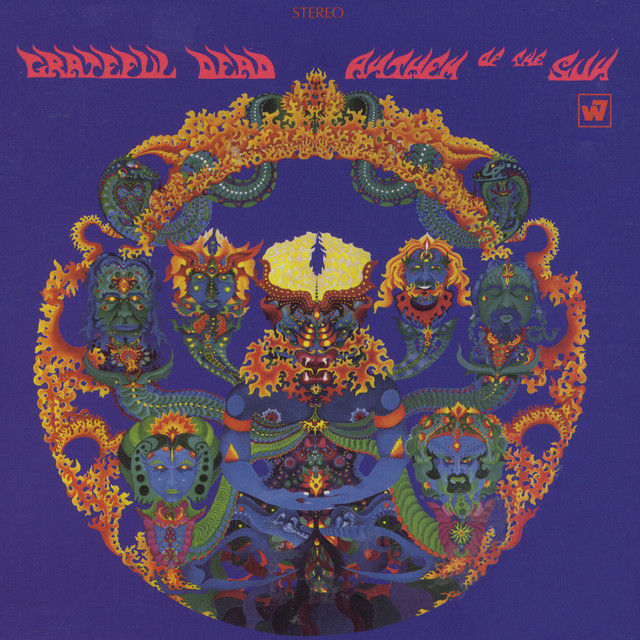
Critics liked Anthem of the Sun, but it was just too Dead to succeed. Warner Brothers struggled. It’s not a studio album, it’s not a live album, it’s an Anthem. How do you market that? You don’t. The Dead’s audience to market to was still so small.
The promotional single (that Warner forced the Dead to record) was a two-minute ditty called “Dark Star.”
The Grateful Dead? Two minutes? You have to be kidding. A little seven-inch single just couldn’t capture what the Dead were capable of. Hell, a single album hardly could!
Anthem of the Sun came into a rapidly-changing world. The “San Fransisco sound” was already pretty co-opted by major labels. Thus, the Dead would find themselves in positively corporate places...
...like Playboy After Dark! (Naturally, they slipped the whole set LSD.)
Fun as dosing Hugh Hefner was, psychedelic music would slowly fall out of favor through 1968. Thisregression to homier sounds and aesthetics was a response to the mass loss of innocence of that year. The Deadwere right in the middle of this. They played several demonstrations, including Columbia University in April. Phil Lesh found the band’s lighthearted approach was way out of touch, man. “We all thought of this as a prank, the ultimate guerrilla music mission – while the students were in a much more serious frame of mind.” The 1968 DNC and Nixon’s election in the fall either triggered a pendulum swing or was a response to one, depending on who you ask. The Smothers Brothers’s show was cancelled. Columbia Records, once known for their edgy ad campaigns, were bullied out of advertising by the FCC and FBI.
The Dead’s inner world was changing, too. Neal Casady, AKA Dean Moriarty and subject of “The Other One,” passed away. The loss deeply affected Bob Weir, who looked up to Neal and always considered him patriarch of the Dead “family.”
“We’re all siblings, we’re all underlings to this guy Neal Casady. He had a guiding hand, though it was...good and strange.”
quoted from: Dennis McNally, A Long Strange Trip: The Inside History of the Grateful Dead (2003.)
If this is a family, the family homes are going under. The Dead their rehearsal space due to noise complaints. The Carousel, which they co-ran with Jefferson Airplane and Big Brother and the Holding Company, suffered from all three groups lacking the business know-how to manage a venue. Bill Graham swept in and reopened the Carousel as the Fillmore Ballroom, but that became too expensive for him to run. He closed the storied venue; quickly filling the void with the Fillmore West. Meanwhile, the Avalon was running out of money, as one-third of attendees didn’t pay for tickets. This is the sixties, man, we’re letting people in through the back door. (Or just letting them through the front door!) It’s all peace-and-love until the place loses its dance permit and lease.
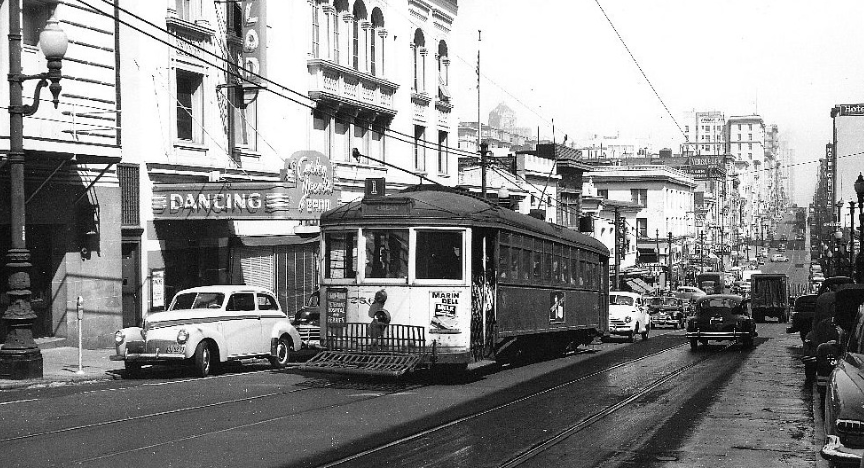

The San Fransisco of the Acid Tests is ancient history. “What the Kesey thing was depended on who you were when you were there,” Jerry Garcia mused to Michael Lydon of Rolling Stone. “It was open, a tapestry, a mandala – it was whatever you made it. Okay, so you take LSD and suddenly you are aware of another plane, or several other planes, and the quest is to extend that limit, to go as far as you can go.”
According to Phil in his memoir Searching for the Sound, by 1968, the Dead had gone about as far as they could go.
“...once you’ve delivered yourself of that radical a rethinking, it’s just not workable to keep repeating yourself in the same vein; for continued growth, it’s necessary to take an almost dialectical approach: to consider the polar opposite.”
quoted from: Phil Lesh, Searching for the Sound: My Life with the Grateful Dead (2005.)
The Dead would move in two directions at the same time come 1969: condensing on record, while expanding in a live setting.
Forces Tear From The Axis
Mickey discovered the work of Alla Rakha, Ravi Shankar’s tabla player. This sparked his interest in polyrhythms, which Phil jumped right onto. 7/4? Don’t threaten that guy with a good time!! A “demented” experiment in 12/8 was shortened by a beat to make 11/8 – “The Eleven.” This new composition was linked with Anthem single “Dark Star,” another new song called “St. Stephen,” and an extended romp on Bobby Bland’s “Turn On Your Love Light” to make the Dead’s latest live show suite.
While the rhythm section worked on their fuck-off time sigs, Robert Hunter moved in with Jerry and wrote up a storm. Since the timelines overlap so hard, this is the closest to Aoxomoxoa coverage you’ll ever get from me! Production began in September of 1968, just one month after Anthem’s release. Signature Grateful Dead nonsense ensues. Not only do we have all the same chemical elements of Anthem, we’ve added nitrous oxide. That’s right, the Grateful Dead didn’t make such weird music in the sixties just because they were on LSD. They had fucking laughing gas!

The Dead sank over $100,000 into Aoxomoxoa. That’s $925,000 adjusted for inflation. Where are they gettingthis kind of money?? Quite simply, they weren’t. Spoiler alert: their fast-and-loose business practices will come back to bite them in their collective hippie-dippie ass. The guys’ growing interest in acoustic instruments wouldcome in handy when they got too far in debt to record elaborate psychedelic stuff. Mickey mused,
“The electric side was so fun and so stimulating and so rewarding and so energetic, and then all of a sudden we were starting to explore the soft side of the G.D. And I thought, what a beautiful thing – acoustic guitars. It was cold out there in the feedback, electric G.D. world. It was a great cold, a wonderful freeze, full of exploratory moments and great vision, but here we were exploring the soft side...I thought it was really cool.”
quoted from: Dennis McNally, A Long Strange Trip: The Inside History of the Grateful Dead (2003.)
With that, we somehow condense on record. All the guys save for Pigpen left hippie-haven-turned-tourist-trap San Fransisco for neighboring townships. Being out of the Haight-Ashbury fray meant they were tripping less...save for a Fillmore West gig in which the apple juice was dosed so hard, the guys could taste the acid in it. (Poor Phil was so fucking high, he forgot what music is and how to play his instrument. He had to be lead on stage by Mickey!)
Mickey became caretaker of a ranch in Novato, California, where the guys smoked ungodly amounts of grass and rode horses. They wrote more songs on their acoustic guitars and returned to the blues...well, Pig never left. Gospel song “Death Don’t Have No Mercy” became another set staple.

The Dead trucked out on tour in the winter of 1969. In their absence, Pacific Recording upgraded their equipment to a cutting-edge Ampex 16-track console. In typical Dead fashion, the guys conclude, “Ah, what the hell. Let’s rerecord the whole album with this new console!”
“The gnashing of teeth from Warner Brothers corporate headquarters could be heard the length and breadth of the land.”
quoted from: Phil Lesh, Searching for the Sound: My Life with the Grateful Dead (2005.)
But before the Dead could piss Warner off even more, they had to pay off the debt they’d already accrued. They weren’t much of businessmen – they just kinda threw money they didn’t have at their problems. But shit, they’re six figures in the hole right now!!
Like Anthem, what would become Live/Dead was assembled from several nights of recordings. (The first night was a bust: Bob’s input went kaput. This is the Grateful Dead. Why would anything be quick, efficient, cost-effective, or go remotely to plan?) January 26th, 1969 at the Avalon, plus February 27th and March 2nd at the Fillmore West, were much more successful. The guys brought former Ampex engineer Ron Wickersham, Bob Matthews and his apprentice Betty Cantor, their go-to sound guy/chemist Bear Stanley, and Pacific’s console with them. This made Live/Dead one of the first rock albums ever recorded with 16-track technology, if not thefirst. Bill Kreutzmann said so, anyway. “...we hauled it up the steps of the Avalon, and later the Fillmore West, and we became the first band ever to make a live sixteen-track recording. We weren’t trying to make history; we were just trying to record a live album.”


Though it wouldn’t be out for months, having Live/Dead in the can saved the Dead’s asses. Had they not had something to show for, it’s highly unlikely Warner would have let them finish Aoxomoxoa. It was a win for the good old Grateful Dead – and the end of their wicked streak of luck.
Reason Tatters
Live/Dead was finally released in November of 1969, less than five months after Aoxomoxoa. It came at just the right time: that week, Janis Joplin and new kids on the block Santana were both in Billboard’s Top 10. This was the Dead’s second of four albums in just eighteen months (the most productive they ever were as an active band,) and their first officially-released live album.
Reality was closing in on the sixties counterculture. The ugly side of 1969 soon arrived in California. The People’s Park was torn down by authorities. Protesters were fired on with buckshots, the National Guard turned up, and one passed away from his injuries. The Dead turned up to raise bail money, but the show quickly went sideways – the feds were closing in on them, too.


Within days of the Dead playing Woodstock, the nation was rocked by the Tate-LaBianca killings. Hippies were demonized by the media after Charles Manson and his cronies were arrested. In October, Jack Kerouac, author of the text that arguably kicked off the cultural craziness that was the 1960s, died. Angela Davis was fired from UCLA as part of the FBI’s efforts to squash the Black Panthers. The trials of the Chicago 8 played out as part of the FBI’s efforts to squash the counterculture overall. It became a media circus (Phil Ochs was summoned to testify over the Pigasus thing,) but the overarching tone was revenge; especially on Black Panther Bobby Seale. A mistrial was declared after he was bound and gagged in court, and the Chicago 8 became the Chicago 7.
The formal death of the sixties happened less than a month after Live/Dead was released. I’ve mentioned it in past reviews, but haven’t carried out an in-depth analysis. I still don’t feel this album is the place for such. But I can’t not mention the Dead’s role in Altamont.
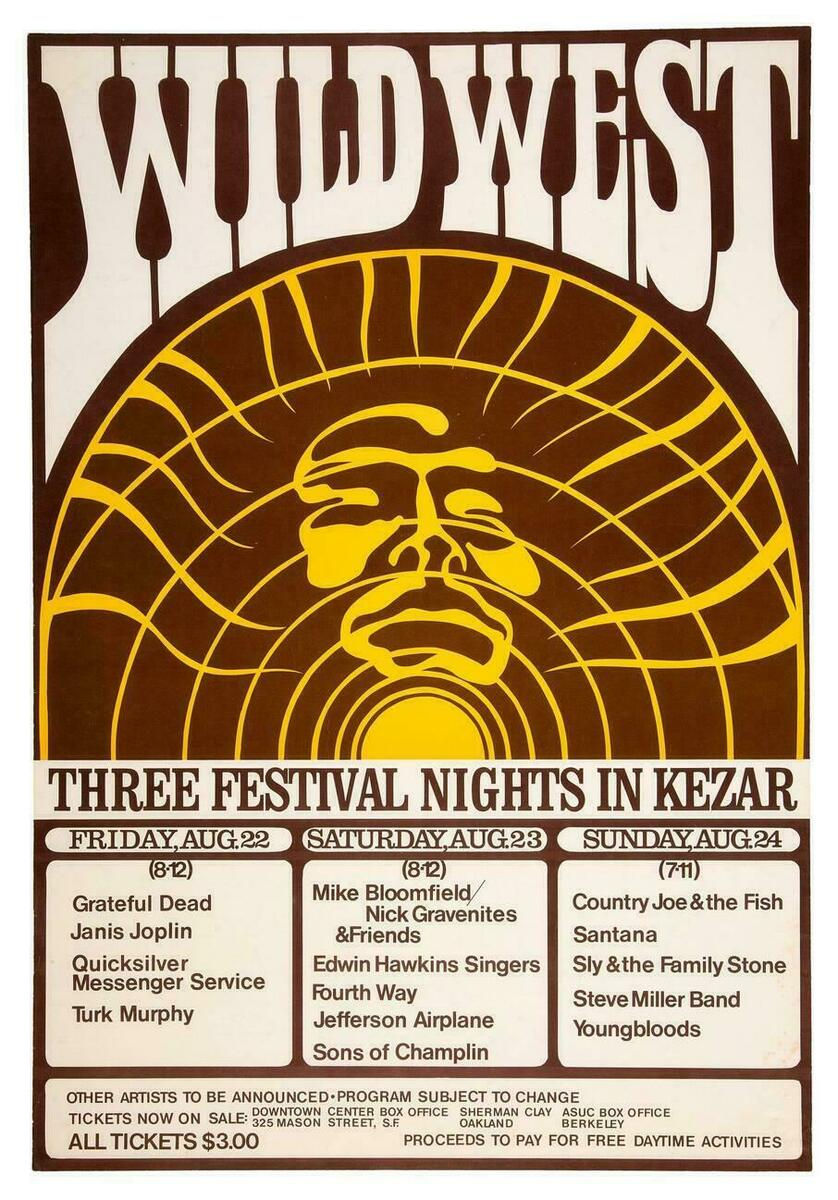
The Dead tried to plan a wild west-themed festival in California that summer. That fell through, opening the door for the band to participate in Woodstock in August. In September, Rock Skully flew to London under the guise of bringing the Woodstock sensation to Hyde Park. In reality, Rock was smuggling acid to some rock stars. He was busted at Heathrow and called Chesley Millikin for help. Chelsea brought the Rolling Stones’ stage manager, Sam Cutler, along with him; they planned Brian Jones’s memorial free show at Hyde Park together that July. What are the chances?
Woodstock at Hyde Park became “Woodstock of the West,” and the Dead were down to play. Then the Stones committed – and so did their camera crew. They’d been filming a tour documentary with the Mayles Brothers in hopes of competing with Wadleigh’s upcoming Woodstock film at the box office. This would still be a free concert, but now its scale had increased tenfold. The venue changed to Sears Point Raceway.
Stay with me here: Sears Point was also owned by the concert promoters who thought they had the right to promote this free show. They did not. Sears got pissed and demanded the Stones paid for the insurance policy and movie rights to use their raceway. The Stones declined, making for venue change number two: to Altamont Raceway.
The third band involved, Jefferson Airplane, were on tour at this time. This meant they couldn’t approve the new venue or security – the Hells Angels – themselves. They instead relied on Woodstock organizer Michael Lang and Rock Skully’s approval. Michael and Rock said yes, so the Dead said yes, and from the testimony of Paul Kantner and Grace Slick, so did the Stones.
You can see how all these last-minute changes and an intercontinental game of telephone could become a nightmare. That’s exactly what happened. As the Stones played, the Dead saw people rushing to the stage and getting beaten back with pool cues. From that alone, they decided it wasn’t safe to play, and noped the fuck out of there.
Had Rock Scully not okayed the venue change, Altamont wouldn’t have gone down the way it did. Rock (and the Dead by association) had blood on their hands; just as the Airplane did for hiring the Hells Angels, and the Stones by association through Sam Cutler. Once the fatal car crash outside the speedway and the killing of Meredith Hunter appeared in the papers, they all knew it to be true. Phil admitted in his memoir, “The Grateful Dead should have known better, but several factors clouded our minds and prevented us from seeing disaster approaching: the fact that the band wasn’t directly involved in the planning of the event; the lack of communication between our team and the Stones and between our management and band…”

To add insult to injury, new band manager (and Mickey’s dad) Lenny Hart extended the Dead’s contract with Warner without their knowledge or consent. He took off with the label’s advance and the rest of the Dead’s money, putting them right back in the debt they worked their tails off to get out of. The hippie dream is thoroughly dead, both outside and inside the Dead’s circle. They fully ditched the psychedelics after they lose Bear Stanley to two years in the slammer. They turned inwards, and began their journey from hippie saints to good little capitalists. Cue the brown, brown 1970s.
Michael Lydon predicted as much in his Rolling Stone cover story four months before:
“Rock and roll, rather some other art, became the prime expression of that community because it was rock, machine and all, the miracle beauty of American mass production, a mythic past, a global fantasy, an instantaneous communications network, and a maker of super-heroes...The excitement of San Francisco was the attempt to synthesize these two contradictory positions. To pull it off would have been a revolution; at best San Francisco made a reform. In the long haul its creators, tired of fighting the paradox, chose modified rock over folk music. All except the Grateful Dead, who’ve been battling it out with that mother of a paradox for years. Sometimes they lose, sometimes they win.”
quoted from: Michael Lydon, “Good Old Grateful Dead” Rolling Stone, 8/10/1969.
Dark Star Crashes
“…death is the last and best reward for a life well and fully lived, I rejoice in his liberation…” – Bob Weir, on the passing of Phil Lesh
It’s going to be a hard couple years for Grateful Dead fans. It has been since Phil passed in 2024. The Deadheads are going to have to figure out how to carry forth with the Dead’s music and message without the guys here. How do you carry forth the spirit about the sixties without the sixties? What do you do after that innocence has died; or, in this case, after the corporeal body has died? You have to hang onto that spirit somehow. The first time I featured the Grateful Dead was in memoriam to Phil. Now, Bob Weir has trucked on. Anthem of the Sun would be a perfect tribute to Bobby. His very spirit, the jokester, the baby of the family, is instilled in that weird and wonderful and truly unique album. But I covered Anthem (and had a lot of fun doing it) back in April. Through examining this recording of Dark Star, I hope to show you how Anthem and Live/Dead are intrinsically linked.
(A quick note: though we have regular markers of when things happen in songs, like verses and choruses, I’ll be using a lot of time stamps. These are compositions of advanced length, man! Having these time stamps will behelpful for you to reference what I’m hearing.)
Audiences seeing Ravi Shankar live would applaud after simply hearing his group tune up. I feel the Dead tapped into that here. The guys amble into position: Phil gets there first with his wandering bass. Jerry and Bob answer in short phrases. The toms drop out for the cymbals and faint bongos. But no one’s in a rush. It takes a full minute and thirty-three seconds of gently modulating chords into the shape of a “Dark Star” before we actually hear the first recognizable bit of “Dark Star.” One four-note motif, repeated three times; as if a signal to ground control. Suit up, boys, we’re spacewalking tonight.
Brightness arrives with Jerry’s exclamations on guitar starting around 2:15. I’ve described these as sparklers in the night in the past. They’re the first clear and bright things we hear in this murky soundscape; especially his curls and licks at 4:30. Bobby’s rhythm moves in, hear how he responds to Jerry’s bursts with his own. The organ’s waterfall entrance at 2:50 acts as connective tissue between the guitar and bass. Phil mimicks this several minutes later with a trip down the fret board. The drums build up, but I don’t hear a kick for almost five minutes. This movement is an extended, paced, group conversation. Several distinct voices take their time to come together. Gravity pulls matter together to form the star.
The instruments ebb for Jerry’s quivering, youthful voice. He occasionally drops the melody, but holds onto that gorgeous tempo shift with the organ. Robert Hunter’s lyrics give the sounds we hear an image.
“Dark star crashes, pouring its light into ashes.
Reason tatters, the forces tear loose from the axis.
Search light casting for faults in the cloud of delusion.
Shall we go,
You and I, while we can?
Through the transitive nightfall of diamonds...”
This is about the psychedelic experience, sure. But Hunter describes star death. This is the life cycle we’ll traverse through the music of “Dark Star”; birth, life, and death.
If you stripped the percussion, this song would lose a lot of its power. Wood percussion and bongos give us something we can hold onto as disjointed phrases circle around each other. The gong crests into big booms and crashes, and grand chords at 8:20. When combined, it sounds like cathedral bells. A big gate in the sky opens for Jerry and Phil’s extended duet.
I’ve had several listens of this recording of “Dark Star” where it just felt like meandering. Maybe it’s because the center of gravity in this composition is so open. The key to not getting sucked out of it is to hold onto the unit of three: Jerry, Phil, and Bobby. The two gas giants, with Bob’s light and short phrases swirling around them like their rings. If you can hang onto this amid the chaos, it strikes gold.
Thin phrases at 11:45 are like watching a satellite trace in and out of view, vs. the noise and feedback at 13:00 that brings us into the second extended Jerry solo. I have to admit, he gets a little lost in the sauce on this recording. He falls in a rut; repeating phrases until Bill swoops in to save the day by changing the time signature. I talked about this with the Allman Brothers’ “Mountain Jam” a couple years back. One of the guys will get lost or stuck. That’s just how jams go. It’s up to the group to course-correct. How do they do that? Either they come back to the A in the traditional jazz A-B-A structure. In “Dark Star”’s case, the A would be Jerry’s sung melody. He references it on guitar a few times so it doesn’t feel alien when he eventually sings the second verse. Either the guys take this route, or they ebb and flow. Dynamics are how “Dark Star” can sustain itself for twenty minutes.
“Mirror shatters in formless reflections of matter.
Glass hand dissolving to ice petal flowers revolving.
Lady in velvet recedes in the nights of goodbye.
Shall we go,
You and I, while we can?
Through the transitive nightfall of diamonds.”
We’ve only gotten tastes of improvisational Dead on record before this; and those were heavily augmented in the studio. This “Dark Star” has a whole side of a record to roam without a lot of obstacles. (Besides the guys occasionally stumbling over each other.) Releasing “Dark Star” in this format was crucial to the band’sevolution. This was the natural extension of ideas they worked with on Anthem. This is why I chose a Live/Dead piece to pay tribute to Bob Weir. He was the conduit of the psychedelic Dead. “The Other One”’s soul manifests in this other moment, “Dark Star,” this song that isn’t even Bob’s. That adventurous spirit is necessary for the Dead’s other psych masterpiece. But this time, they didn’t need the tape edits to capture the feeling. That’s how much the Dead had grown as musicians in a year and a half. It’s kind of incredible, when you think about it.
At the very end of “Dark Star,” the band introduces an idea that will soon become a fixture in their songs: squiggly harmonies. Phil takes the second part on, “Shall we go, you and I while we can?” And I believe Bob sang the high part? The Dead got to harmonizing through hanging out with Crosby, Stills & Nash on Mickey’s ranch. The Dead’s style, however, was much more idiosyncratic and precarious. Sometimes they stick it, sometimes they just don’t.
The one thing I’m missing from this recording are the psychedelic drones present on the two-minute single. As you’ll see later in this review, I love a drone.
One Man Gathers What Another Man Spills
Thank you for your patience, we can actually talk about St. Stephen now.
As was releasing their first official live album, “Stephen” was crucial for the Dead’s mythology. This thing and “Alligator” became their “Free Bird”s, you know? Naturally, Robert Hunter and the guys combined mythologies in the lyrics. A Christian martyr, one of the seven Muses, and a real Stephen in the Dead’s San Fransisco circle intersect. The repeated images of flora with roses and ivy, the celestial images, and bright colors like the “scarlet covers” invoke the Dead’s distinct visual language in song.
Like “Dark Star,” we have to settle into something “St. Stephen”-shaped. This time, a feedback futz precedes the teasing guitar part. They play it slow, hanging onto the spaces between notes. It’s like the guys know they’ll get a hearty “YEEAH!” once Phil kicks the song into gear. (And we do get Bob's hearty, enthusiastic “WOOO!” after the second verse. The guys had a blast playing this one.)
Jerry never liked going slower at the bridge, but I see why it had to happen. If we were to move through “St. Stephen” at an even pace, it wouldn’t warrant its six minutes. We need to build back up to the power. The place we come out at, the harmony of stringed instruments and the bomb Phil drops, is much sweeter. Plus, the second bridge with its military drums would make significantly less sense than it does to begin with. It’s goofy, it’s weird. I’m here for it.
“St. Stephen” runs right into part three of our Dark Star suite, the terminally quirky and fun-to-listen-to The Eleven. Clearly this bunch of musicians was comfortable connecting their songs with extended solos. There are strange motions of what I believe are both T.C. and Pigpen on organ (Phil mentions them playing on stage at the same time in his book.) Phil’s own busy bassline is accentuated by double-drummed-up goodness. “The Eleven” showcases what the rhythm section was working on in 1969: fucked-up time signatures. Yes, we are in 11. No, I cannot keep track of where the one is. I agree, it is slightly offensive how comfortable such a big and wiley ensemble is in 11.
Jerry’s guitar tone is sharp and bright, while Bobby is softer and hitting his signature waterfall glissandos amidst the chaos. Phil’s tone gets nasty at 3:05. This nine minutes flies by so smoothly, I almost don’t notice the utterly nonsensical lyrics! “Now is the time past believing the child has relinquished the rein/Now is the test of the boomerang tossed in the night of redeeming.” Yeah...there are no Dylans in the Grateful Dead. The guys’ harmonies stumble all over each other. Bobby tries for his falsetto and hopes something sticks. There isn’t the time to worry about the perfection of the minute detail, though. We’re trying for the perfect picture; formed by church-bell guitar squeals and a minute-long gear-up for the final chapter of the suite.
Albums like Live/Dead are where the limitations of the vinyl format show. Not only did the side-long Turn On Your Love Light see it pushed off the same side as “St. Stephen” and “The Eleven,” it’s on a totally different disc! That perfectly-orchestrated slide from 11/8 to a rhythm-and-blues shuffle just fades out. The silence as we flip the record takes us right out of the party.
Thankfully, the party don’t stop. You know the saying “Boys start fights, but men finish them”? The boys of the Grateful Dead could start a show, but Pigpen knew how to close one. His gruff voice was best suited for the band’s blues and R&B numbers. His inherent charm, outwardly masculine and likely smelling of beer and tobacco, could work a crowd. (The girls who like mustaches and mullets will get it.) He was the connection between the fucked-up shit the rhythm section was doing and the coming back to earth that Jerry and Robert were interested in. Pig starts up at 1:15 before breaking for a fabulous double-drum moment. I love how Mickey and Bill fill in each other’s gaps without trying to dominate. Then Pig goes on ad-libbing for eight whole minutes, bringing it up and down with the drums stamping behind him. It feels like a smoky, groovy, baptist-dive bar-church. When Jerry, Bobby, and Phil come in to fill out the call-and-response at 4:55, it puts a smile right on my face. The stoned barbershop R&B backing vocals are just plain funny. This is a true brotherhood; hearing music from down the hall and sticking their heads in the door to join.
(I've included the full uninterrupted "Stephen"/"Eleven"/"Love Light" below. Though my experience was interrupted by the limitations of vinyl, yours doesn't have to be!)
Hearing “Love Light” and Death Don’t Have No Mercy, it’s wild to think that this record started with a twenty-three-minute largely improvised excursion. This is a grounded, soulful, deep, dark Dead. Not a dark Dead like a celestial black hole, but a mortal-dark Dead that can deliver a believable blues. This displays a truly well-rounded band. Jerry gives a fabulous vocal performance, supported by wonderful dynamic drumming and the organ hitting every emotional note. It’s mournful and heartfelt; occasionally crying out.
I have to point out the significance of “Death Don’t Have No Mercy,” a song about the black dog showing up on one’s doorstep, as performed by the Dead in 1969. Live/Dead represents the final months before the black dog showed up on the Dead’s own doorstep. Altamont at the end of 1969, then losing Jimi Hendrix and their good friend Janis Joplin in 1970. Jerry’s grandma and Phil’s dad both passed away that year, and Pigpen’s health began slowly declining as a result of his alcoholism. “Look in bed this morning/Children you find that your brothers and sisters are gone.”
As for the Feedback. Listen. I’m a Sonic Youth fan. I will excuse eight minutes of feedback. It arcs through the air, swirls, it slithers like a snake, crunches, and shakes my sternum. Twenty-plus minutes of flirting with jazz might be your meditative state. This is mine. This is my soul frequency. Drums crash, hues clash, and T.C. gives the last of his avant-garde contributions. He quietly parted ways with the Dead after this release; his prepared piano too weird for the Dead slowly grounding their sound, his interest in the chemical element negligible. Andhe was a Scientologist, which the Dead did not fuck with.
I’ve always appreciated T.C.’s unique musical perspective and contributions to the psychedelic Dead. It was only like this once, and I love that it was included.
The crooked a capella encore And We Bid You Goodnight is served for dessert. What a whole trip we’ve gone on, from far-out spaces back down to earth. Mickey described the Dead’s musical evolution through 1969 as “stepping out of our spacesuit and coming down to earth, and putting on a pair of Oshkosh and digging the furloughs.” After this, the jazzy stuff was put on pause (at least until the Weather Report Suite on Wake of the Flood. God I can’t fucking wait to talk about Wake of the Flood now.) The Dead’s turn to country and the blues was their way to cope with the turbulent year of 1969. It’s a good thing they did: they’d need this medicine to cope with the hellish year that was 1970.
I’ve seen some publications naming Live/Dead as the best Grateful Dead album. Do I agree? No. I am firmly on board with Anthem and American Beauty there. Do I even think this was their best live album? No. I’d pick Europe ’72, and that’s just from the live albums issued in the Dead’s lifetime! I do recognize that Live/Dead is the definitive sixties Grateful Dead package. Everything they did best at this point of their career – R&B romps,wacked-out time signatures, extended improvised solos and the bizarro routes we take to make sense make sense with each other – is represented here. Live/Dead is the dying gasp of psychonaut Dead. Acid cowboys trade their day-glo pistols for horses and good weed. Goodbye innocent 1960s, hello mortality and consequences.
“I’d rather be a lightning rod than a seismograph.” – Ken Kesey
Personal favorites: the whole thing.
– AD ☆
Watch the full episode above!
Kaye, Lenny. “Live/Dead.” Rolling Stone, 2/7/1970. https://www.rollingstone.com/music/music-album-reviews/live-dead-190337/
Kreutzmann, Bill. Deal: My Three Decades of Drumming, Dreams, and Drugs with the Grateful Dead. New York: St. Martin’s Griffin, 2015.
Lesh, Phil. Searching For the Sound: My Life with the Grateful Dead. New York: Black Bay Books, 2005.
Lydon, Michael. “Good Old Grateful Dead.” Rolling Stone, 8/10/1969. https://www.rollingstone.com/music/music-news/grateful-dead-jerry-garcia-1969-cover-story-103056/
Marre, Jeremy, dir. Classic Albums: The Grateful Dead - Anthem to Beauty. Tubi: VH1, 1998.
McNally, Dennis. A Long Strange Trip: The Inside History of the Grateful Dead. New York: Broadway Books, 2003.
McNally, Dennis. Jerry on Jerry: The Unpublished Jerry Garcia Interviews. New York: Black Dog & Leventhal, 2015.
Wilkinson, Alec. “Bob Weir’s Feral Radiance.” The New Yorker, 1/17/2026. https://www.newyorker.com/culture/postscript/bob-weirs-feral-radiance



Great job with this. I think you have accurately portrayed how this album is generally viewed today. It's a favorite of mine. It was the first live Dead I had ever heard back in 1989. My first reaction to hearing Dark Star was that these guys were watching what Miles Davis was doing. That's all it took to hook me in for a few decades. This is a special Star, and I think they achieved what they set out to do with it. It's perhaps one of the most coherent and cohesive takes of the song, as in it almost feels like they are playing to a score. As my dear, late friend Jerry Moore was known for saying, "2/27/69…
Need to find 'the one' in The Eleven? Count, ONE-2-3, 1-2-3, 1-2-3, 1-2...
" This is my soul frequency " is a memorable self observation.
i'm not aligned with your admiration of the greatful dead but that doesn't mean i can't appreciate that they were central to the american psych scene. it's a big discography so i might come round. also if they instigate, from you, writing as good as this i'll follow your writing on the dead in future, gratefully.