
The Meddle Children, Part 1: Ummagumma
Smoke bombs, inhale screaming, and a guy in a gorilla suit. Welcome to Pink Floyd’s experimental period.

Roger Waters: bass, lead vocals on “Careful With That Axe Eugene,” “Grantchester Meadows,” “voices” on Several Species of Small Furry Animals Gathered Together In a Cave and Grooving With a Pict”
David Gilmour: guitar, lead vocals and all instruments on “The Narrow Way,” Parts 1-3
Richard Wright: organ, vocals, Mellotron, piano, bells, and percussion on “Sysyphus” Parts 1-4
Nick Mason: drums, percussion, marimba on “The Grand Vizier’s Garden Party” Parts 1-3
Special guests: Lindy Mason, flute on “Grand Vizier;” Norman Smith (possibly,) timpani and gong on “Sysyphus”
Live album produced by Pink Floyd, engineered by Brian Humphries
Studio album produced by Norman Smith, engineered by Peter Mew
art by Hipgnosis
“It was a word I made up about shagging. As in, ‘I’m off home for some Ummagumma.’ Floyd thought I’d heard it somewhere before, but it was off the top of my head.” – friend of the band Iain “Emo” Moore, about the origins of “Ummagumma”
quoted from: Mark Blake, Comfortably Numb: The Inside Story of Pink Floyd (2008.)
We’re off to a great start. Welcome to part one of my four-part series on Pink Floyd’s experimental period. The “Meddle children” of their discography, if you will.
Patterns Repeating
According to Storm Thorgerson of Pink Floyd’s favorite Hipgnosis collective, the Ummagumma cover was meant to “illustrate the simple idea that Floyd music was multilayered…” It’s a loose example of the Droste effect: an image seemingly infinitely repeating. Where a true Droste effect would be the same image repeating, Hipgnosis had the members of Floyd swap places in each image. The one “closest” to us has David Gilmour in the chair, Roger Waters sitting in the doorway, Nick Mason doing his best “dad-on-a-Saturday-morning-contemplating-mowing-the-lawn” stance, and Rick Wright’s doing some kind of headstand. The one inside it has Roger in the chair, Nick in the doorway, Rick stancing, Dave waving his legs in the air, etc. etc.


Of all the techniques the surrealists adopted, the Droste effect was the one that freaked me out as a child. The inclusion of the Gigi soundtrack on the original Ummagumma cover makes it all the more unsettling.
This is an album cover you have to hold in your hands to believe. You just don’t get the full effect seeing it in a little square on your screen. Storm put it best in interview in 1998: “Despite whatever protestations may be made by young designers and computer freaks about CD covers,” (CD covers. You can tell this was 1998!) “it’s just a seventh of the area of an LP cover. Even that was small if you were an artist.” It makes the Ummagumma cover all the more remarkable.
The music is remarkable as well, of course. Just in a...different...way.
The Man and The Journey
By the time A Saucerful of Secrets came out in late June of 1968, Pink Floyd founding member Syd Barrett had been officially out of the band for two months. He took band managers Andrew King and Peter Jenner with him. Saucerful went over well in the UK, but the States just did not “get” it. The US wouldn’t “get” Floyd for another five years or so. Jim Miller for Rolling Stone identified Syd’s fading into the background, saying his lone composition “Jugband Blues” “hardly does credit to (his) credentials as a composer.”
Miller concludes,
“...as the chaos settles reassuringly into a banal organ-cum-religious chorus final, one realizes that the Pink Floyd are firmly anchored in the diatonic world with any deviations from that norm a matter of effect rather than musical conviction. Unfortunately a music of effects is a weak base for a rock group to rest its reputation on – but this is what the Pink Floyd have done.”
quoted from: Jim Miller, “A Saucerful of Secrets” Rolling Stone, 10/26/1968.
The Bible foresees it: Pink Floyd have become slaves to their equipment.
Floyd’s second-ever ever tour of the States in late 1968 proved to be just as much a shitshow as the first. “Point Me At The Sky” was released as single in December. It flopped so hard, Floyd wouldn't release another single in the UK for almost a decade! But I find the whole “Floyd not doing singles” thing inconsequential. It’s like making the Grateful Dead record a two-minute “Dark Star” for a single. It defeats the band’s purpose. Singles were too restrictive a format for what Floyd was going for in these few years, especially live. They were an “albums band.”
While “Point Me At The Sky” was largely forgotten save for its appearances on compilations, note its the B-side: “Careful With That Axe, Eugene.”

The truly impressive flop of “Point Me At The Sky” didn’t deter Floyd. They were already hyping up their next project to Melody Maker: a double-album, to be released on EMI’s brand-new subsidiary, Harvest Records.
A couple months before the More soundtrack’s release, Floyd debuted one of their most fabled compositions: “The Man and The Journey.” “The Man” was intended to be a day in the life of a typical English bloke. Wake up, go to work, have tea, make love to your lady friend – I’m not kidding, there’s a sequence called “Doing It” – going to sleep, and having a nightmare. “The Journey” is a bit more...abstract. The “Nightmare” sequence became More’s “Cymbaline. It also included heavy breathing, ticking clocks, and alarm bells. Sounds familiar, right? “The Beginning” became “Green Is The Colour.” “Careful With That Axe, Eugene” was worked in as “Beset By Creatures of the Deep” – this is not the first alternate name “Eugene” went by. “Daybreak” became a song called “Grantchester Meadows.”
This shit makes no sense to a modern listener – or even a sober one in 1969. But it made sense to Roger, who ‘salways had a taste for theatrics. “We wanted to throw away the wold format of the pop show standing on a square stage at one end of a rectangular room and running through a series of numbers.” Floyd had their taste of the hit parade, and they were thoroughly done.
To mark the final night of their Man and the Journey tour, Floyd staged “The Final Lunacy.” Aptly-titled.
On this night, Pink Floyd might have been the first band to speedrun a ban from the Royal Albert Hall.
The night began normal enough...until Rick and the crew built a table on stage during “Work.” Might as well put that architecture education to use, boys! The crew sat at said table and drank tea while listening to a transistor radio. Yes, the radio was part of the show, the guys stuck a mic in front of it and was looped into the PA system. The Royal Philharmonic Orchestra and Ealing Central Amateur Choir joined the fray. Rick played the hall’s pipeorgan. He was fighting for his life the whole time, as it takes some time for the air to move through the pipes when you press the keys. He couldn’t win. He was always early or late!
An art school friend of the band’s “created a monster costume involving a gas mask and some enourmous genitalia rigged up with a reservoir to enable him to urinate on the front row of the audience,” what in the Lamb-era Peter Gabriel is that? He appeared during “The Labyrinth” and scared the living daylights out of a girl tripping on acid. A crew member roamed the stage in a...gorilla suit? Roger somehow got ahold of the cannons used in Tchaikovsky’s “1812 Overture” and set them off. The grand finale? A pink smoke bomb, of course.
Chris Welch for Melody Maker said, “It usually is strange inside the Albert Hall, but by thunder, the Floyd at work are enough to freak the most sober normal.”
Now that the recent Pompeii treatment has shown us it’s possible, we need an overhauled Ummagumma remix with an expanded album including live material previously on The Early Years sets. To place "The Man and The Journey" alongside Ummagumma would totally change how Floyd fans perceive this album going forward.
Despite how batshit crazy “The Man and The Journey” was, press was shockingly good. Echoes: The Complete History of Pink Floyd author Glenn Povey muses, “...at last they were being taken seriously as pioneers of a new and exciting movement capable of pushing back the boundaries. The experimentalism wasn’t so much a free-form muddle as it had been in the past, but something more readily defined by the press, which labelled it – ghastly as the term now sounds – ‘Progressive rock.’”
So sets the scene for our first, and most bizarre, excursion.
“It Was Just Desperation, Really...”
If “The Man and The Journey” spectacle didn’t set the scene for Ummagumma, the following anecdote from engineer Peter Mew certainly will.
“My recollection is that everybody assembled in the studio on the first day with Norman Smith, who asked, ‘Have you got any songs?’ To which Floyd replied, ‘No.’”
quoted from: Mark Blake, Comfortably Numb: The Inside Story of Pink Floyd (2008.)
Saucerful of Secrets: The Pink Floyd Odyssey author Nicholas Schaffner has a different interpretation of how the album’s dual nature came to be. He claims Rick was dissatisfied with the repertoire at the time, and longed to play some Stockhausen-style stuff. Glenn Povey’s Echoes states it was Dave’s idea, but includes a quote from him that bolsters the “healthy competition” angle. “...it was down to a lot of paranoia amongst each other, and thinking we would have a good time doing things on our own for a change, just for a laugh.”
He’s a little more frank in Jean-Michel Guedson’s text. “We’d decided to make the damn album and each of us to do a piece of music on our own...It was just desperation really, trying to think of something to do…”
Roger said in interview for Melody Maker, “The four songs on the first album are a set of numbers that we’d been playing all round the country for a long time, and we decided to record them before we jacked them in. And they’ve changed a lot since we first recorded them.” That live discdidn’t come easy, though. Their first attempt was at Mother’s in Birmingham on April 27th, 1969. A viable“Astronomy Domine” came from this gig, but the equipment malfunctioned and most of the rest of the recording was lost. They tried again at Manchester on May 2nd. Save for “Careful With That Axe, Eugene” and “Set the Controls For the Heart of the Sun,” the gig was really bad according to Rick. They had no choice but to use it; they only had mobile unit for three gigs. (Yes, three. Bromley Technical College was also recorded, but turned out even worse than Manchester!) Neither Birmingham nor Manchester yielded a sufficient “A Saucerful of Secrets,” so according to Rick, they were spliced together. Live staples “Interstellar Overdrive” and “Embryo” were also recorded for potential inclusion, but just didn’t fit with everything else already going on. In any way, the represented on the live half of the Ummagumma reflected Floyd’s main audience at the time: clubs and college kids.
On that first day in the studio, it was decided that half the run time of each side of the studio album would be split amongst the guys. To Beat Instrumental in 1970, Rick explained, “The four pieces of the LP are very different, though there are pieces in all of them which link them together.” He seemingly immediately contradicts himself, though, adding, “There wasn’t actually any attempt to connect them all. We didn’t write together, we just went into the studios on our own to record…”
Indecision is the signature of this project, it seems!
Each side of an album holds twenty-five minutes of music max, meaning each guy got a maximum of twelveminutes and change to work with. Most used this for one long composition with several movements. Rick got to work on his first; “Sysyphus” was complete by March of 1969. Nick also began “Nicky’s Tune” (later “The Grand Vizier’s Garden Party”) around the same time Roger recorded “Several Species” and Rick his “Sysyphus;” all in September of 1968. Dave began his “Dave’s Scene,” retitled “The Long Way,” in January, completing it later that spring. Roger’s “Grantchester Meadows” was last to come.
At the same time as Ummagumma production and scoring not one, not two, but three broadcasts of the moon landing, Dave and Roger scrambled to complete Floyd co-founder Syd Barrett’s The Madcap Laughs LP. Madcap took about a year and a half and a whopping five producers to make: Peter Jenner, Malcom Jones, Syd himself, and Dave and Roger. The latter two only took on the project to get it done. EMI threatened to can Madcap due to an extended, frequently interrupted timeline – Syd traipsed off to Spain without warning and delayed the whole thing for months.

The whacked-out timeline and Syd’s worsening mental health meant for constant retakes, putting the whole thing over budget. Dave and Roger were given three days by the label to finish the whole thing. Still, they had to pause the project to go on a Floyd tour of Holland in July.
Dave and Rog admittedly used some real slapdash methods on their tracks, resulting in unorthodox, controversial, and unflattering results; but overall a quirky and remarkably strong LP.
For more on Madcap, read part one of my two-part retrospective of Syd Barrett’s solo career here.
Careful With That Axe
I remembered liking the live album but I don’t remember even touching the studio LP before this. If I did so, it would’ve been out of morbid curiosity!
Among my Floyd fan friends, opinions on Ummagumma are steeply divided. My best friend and occasional assistant researcher Jack thinks it’s straight-up bad. One of my Syd Floyd fan friends, Ethan, thinks it’s “a fucking weird ass record and it’s so cool. And even if you’re a lame-ass normie you still get a good live record.”
The deal with Pink Floyd is that the whole is more than the sum of its parts. Unfortunately, Ummagumma is the parts.
Nick called the live disc “antiquated.” He’s not wrong. A decent chunk of it was Syd-era material. Having it here only makes his absence felt – glaringly. Especially Astronomy Domine, a song Syd sang! I won’t talk much about “Astronomy” here since I’ve already covered it, but it’s changed a lot since opening Piper. Author Will Romano says this iteration “at time approaches the raucousness of the Who.”
I used to think this “Astronomy” was sloppy, but I’ve turned around on it. The guys are having fun with it; swapping sections around, repeating others. It mucks with the natural progression of the tune; that’s where my initial dislike came from. But with this band in this stage, I don’t see that as a flaw. It’s exciting to not know what comes next.
Ummagumma manages to capture an “Astronomy” even heavier than it was on the LP. There’s a chord inversion about two minutes and seventeen seconds in that just sounds like doom. This is loud, and completely unlike Dave’s “pillow of winds” playing style. It’s fun hearing him indulge in sheer volume. Of course, we have some slide playing; one gorgeous glide like pulling the bow across a cello.
The star of the show is Nick. I don’t know what it was. But as we’ll see through the rest of this series of reviews, rarely could studio Floyd capture the energy Nick was capable of. Being such an intuitive, disciplined player as him had its drawbacks. There’s little opportunity for him to be this flashy on the LP. He tends to slip into the background. Not an issue here! He responds to the energy, even fuels it, with how he unleashes at the three-minute passage. That poor cymbal! Nick inverts expectations. He plays it straight when one might solo, and solos where one might play it straight. This is where Romano got that “Who” feel from. Keith Moon was known for playing that “made no sense.” (His own bandmates’ words, not mine!)
I’m interested in the equipment Rick uses on this recording. The beginning sounds like a synthesizer (a nod to the morse code on the album version,) but I don’t see any synthesizer in the back cover gear “flat lay.” None is listed on the album credits, either.

This album’s recording of Careful With That Axe, Eugene used to be my favorite. It’s leagues better than the B-side version from the year before.
About “Eugene,” Dave said, “We were just creating textures and moods over the top of it, taking it up and down...it was largely about dynamics.” That’s the hallmark of a truly great “Eugene.” Imagery through dynamics. How can we introduce something in the most goosebump-inducing way possible? An ominous two-note bassline, washes of keyboard like fog hanging low, creeping organ. Dave’s falsetto keening in the wind, his wordless moans in pained ecstasy.
And, of course, the inhale scream.
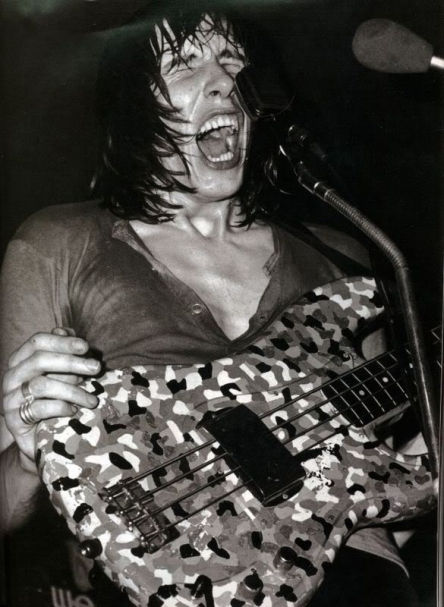
Imagine hearing that for the first time. Or having never been to a Floyd show and seeing Roger do that. I had the pleasure of witnessing my best friend from high school’s first time hearing “Eugene.” I played her the Pompeii recording. She was flummoxed. As was I when I first heard the inhale scream! Your jaw just drops.
I don’t know how Roger figured out he could do that. How does one figure out they can inhale scream? Who could physically sustain that? It’s the definition of an out-of-body experience. And who was doing that on a song in 1969? You certainly hear people doing the psych freakout thing, but this is beyond freakout. This is disembowlment.
Though Rog said in interview in ’69 that, save for “Set the Controls,” he didn’t tie his writing to any specific image, “Eugene” paints alarmingly vivid images. (Though I don’t know if you really “write” “lyrics” for something like “Eugene.”) It’s an axe murder movie in song. Think of the psychological horror of the scream. Are you witness to the crime? Are you Eugene’s victim, letting out the blood-curdling scream? Are you Eugene himself, screaming for your escaped sanity? I’ve always interpreted it the third way. This is my favorite cut on the live album. Given my tastes and Dave’s maniacal slashing at the strings, that shouldn’t be a surprise.
The next two tracks were quite difficult to evaluate, as I have every intention to cover A Saucerful of Secrets in the future. (Distant future, though. After covering Live At Pompeii for Tracking Angle in May, reviewing the four albums in this series, and writing a 50th anniversary retrospective for Wish You Were Here, I am thoroughly Floyded out!)
Ummagumma’s Set the Controls For the Heart of the Sun is superior to the album version. What makes a good “Set the Controls?” Slowing it the hell down! I don’t know why the guys rushed it on Saucerful, but they gave it some room to breathe here and I’m so grateful! Roger said,
“‘Set the Controls’ still has relevance to the sun as the life-giving force, but perhaps it was never a real image – more of a head image. Two or three years ago I used to read a lot of science-fiction books, and that’s where it must have come from.”
quoted from: Richard Williams, “Pink Floyd: Faithful Numbers” Melody Maker, 11/1/1969.
This song is another exercise in dynamics, established by the loud hiss of surface noise. It feels all the more like we’re headed towards the core of the sun; oppressive heat. The mallet drumming gets more intense, Rick bends the Middle East-influenced melody into far-away jazz. Dave unleashes a howling wind. The sun is equally life-giving, ripening fruit on the vine, and terrifying, mercilessly burning up our spaceship. Roger’s all on his theater kid behavior; cigarette smoking in his fingertips as he melts into the microphone. Note an early lyrical reference to madness: “Witness the madman who raves at the wall.”
The to a good A Saucerful of Secrets is speeding the second movement up. The guys have made that discovery, and take “Saucerful” out into the depths. Being in the room with the noise takes the song to the next level. You have to feel this in your sternum. It’s one of those experiences where, yes, the music becomes sludge, and maybe it loses its momentum at times. But when you hit it just right, when you can stand toe-to-toe with it and allow yourself to be immersed in the experience, it’s transcendental. It’s fucking crazy. That’s what exactly psych rock sought to do.
Much physical exertion as Roger’s little gong act surely took, I want to point out the incredible amount of discipline and physical stamina it takes from a drummer to keep that pattern going for as long as Nick does. He’s playing that for nearly seven minutes.
Ummagumma is a great live disc. I was hard on it in the past, but I’m sold now. It’s a snapshot of a remarkable place in time; Pink Floyd before they were capital P-F Pink Floyd. They could still afford to play the weird numbers because that’s was what they were known for! Melody Maker’s review was right about Ummagumma in the sense that the live disc prioritizes creativity over virtuosity. Creativity is often more interesting than virtuosity, at least for this listener. (Ironic, considering I am a King Crimson girlie and they were all about the virtuosity game.)
Rolling The Boulder
“One must imagine Sysyphus as a four-part suite.” Or something.
Upon the opening of Part One of Sysyphus, my knee-jerk reaction was, “Oh, shit! This is a prog band!” I don’t much consider Pink Floyd “prog” because what they went on to do so far surpassed that name. Only now, with this first movement of “Sysyphus,” have I felt Floyd’s lineage to the genre. Part One is grand, muscular, and imposing. Sisyphus rolls his boulder up the hill. Part Two zooms in on Sisyphus the man. Rick’s piano begins classical and introspective, then romantic. He slips into dissonance and jazz, and into his Stockhausen shit. I even hear John Cage’s prepared piano exercises in there.
Part Three is the strangest, with its exercises in percussion and varispeeded screams. Strange as it is, it’s tame compared to what we will hear later on this disc. It cuts from screams into organ, and I think a water effect on a Mellotron. It feels like a false sense of security. The organ goes from sweet to foreboding. Our sense of satisfaction ends when we realize the rock is about to tip. Part Four in slowed-down version of the first movement, with the vocal effect on Mellotron layered in. Rick invokes the gravity of Sisyphus’s situation: he will be rolling his boulder forever. So long after this piece ends, that we cannot fathom it. The human mind cannot fathom forever. Imagine the psychological distress of eternal damnation. Rick has funneled that into this portion of the music.
Rick is the George Harrison of Pink Floyd; “the quiet one.” “Sysyphus” introduces us to Rick the musician, without needing any words.
Grantchester Meadows is like an outwardly sad Kinks’ “Sitting By The Riverside.” Roger wrote it from childhood memories; specifically recalling the memory, as opposed to attempting to place us in the memory. It’s gentle and sorrowful, bearing the knowledge we can never go back to this sunny afternoon on the riverbank. “Basking in the sunshine of a bygone afternoon/Bringing sounds of yesterday into this city room.” Already we’re hearing maturing in Roger’s writing from that choke on bread greasy spoon business. Is it a little twee that we hear birds chirping and a buzzing bee? Yes. But his vocal delivery is quite sweet, if insecure. The harmony is nice.
...I can’t believe I have to talk about Several Species of Small Furry Animals Gathered Together in a Cave and Grooving With a Pict.
This is the worst Pink Floyd song. Indisputably. This is not a song. This is not avant-garde. This isn’t even musique concrete. It’s Roger Waters making rhythmic animal noises and saying nonsense in a Scottish accent, and also obligatory screaming. I would have loved to sit in on a session for this, though, just to see what it would have looked like. I’m sure he was pulling crazy faces!
“In response to a journalist who inquired about the ‘chick’s screams,’ an unidentified member of the group replied…‘The chick screaming is a very beautiful chick, she’s very tall and thin and dresses in black, and she sits and drinks, and smokes cigarettes, and her name is Roger Waters.’”
quoted from: Jean-Michel Guedson and Phillipe Margotin, Pink Floyd: All The Songs (2017.)
It ends with a reference to Jimi Hendrix’s “The Wind Cries Mary,” for what that’s worth. We haven’t left the sixties just yet.
I found Dave’s The Narrow Way most impressive – not to mention he plays all the instruments here! He was still fairly new to the band. He admitted in retrospect he wasn’t a confident writer. Where his confidence lies at this time is his playing. Specifically, his ability to create textures. High-pitched cries on slide, full-bodied acoustic strumming, and complex finger-picking. “The Narrow Way” might be the closest thing we’ve got to pop on this whole disc! “Grantchester” is a bit morose for that classifier. “Narrow Way” is quite California, with its bright chords in Part One. Of course, there’s some indulging in the psychedelic with stereo-panning effects. It gives way to unfortunate, aimless whizzing in Part Two. Part Three is Dave’s attempt at lyricism, but it absolutely takes a back seat to the music. This movement mixes his folksy interests with a piano-driven passage and transforms it into a dark memorable stamping riff. Reminds me of the Beatles’ “She’s So Heavy” interpreted by Black Sabbath (...though I shudder to mention that band’s name here given recent Roger-shaped events!) This might be the strongest music on this disc.
About The Grand Vizier’s Garden Party, Nick said, “...I attempted to do a variation on the obligatory drum solo – I have never been a fan of gymnastic workouts at the kit, by myself or anyone else.” The magic of Nick Mason is that he does just what he needs to do for a song. Never more, never less. It feels weird having him center stage by default. He doesn’t settle into the 1960s/early seventies cliché of the drum solo track like he easily could have. Instead, he takes the opportunity to play with percussion. The element of play is so important to the creative process. Being such stoic serious guys and all, I feel Floyd at times forgot this. “Grand Vizier” is all play, both with instruments and studio technology. Of the guys’ solo pieces on this studio disc, “Vizier” is most imaginative.
But I’m kind of beefing with you now, Nick, because Entertainment made me think there was something wrong with my turntable setup. It had me stopping to clean the stylus, adjust the counterweight, mucking with my preamp, I even took my surround sound system apart and tested speakers individually. Nope! That’s just part of the song!! Gotta love the psychedelic experience.
Lindy’s flute-playing in Entrance and Exit is lovely, I believe she plays some on More as well. It’s to imagine an alternate universe where Floyd joined the canon of rock groups with flutes in them, a la Jethro Tull.
In retrospect, Roger wasn’t “fantastically amazed with the live album of Ummagumma, but I think the idea for the studio side, doing one track each, was basically good.”
“I personally think it would’ve been better if we’d done them individually, and then got the opinions of others, put four heads into each piece instead of just one. I think each piece would have benefited from that, but by the time they were done, we’d used up our studio time. I was quite pleased by the way it came out, though. It sold a lot, which is something.”
quoted from: Jean-Michel Guedson and Phillipe Margotin, Pink Floyd: All The Songs (2017)
Rick didn’t have a very high opinion of the album. He wrote off his contribution as “pretentious.” Dave said he straight-up “bullshitted” his way through it! Nick wrote in his memoir, Inside Out, “My own view is that A Saucerful of Secrets had pointed the way ahead, but we studiously ignored the signposts and headed off making Ummagumma, which proved that we did rather better when everyone worked together rather than as individuals.”
Ummagumma’s studio disc exposes this stage of Floyd’s greatest weakness: songwriting. No one has come into his own yet as a writer, not even the guys who are actually writing lyrics on this disc! To someone unfamiliar with how the music industry in the 1960s worked, it seems truly incredible EMI would ever indulge a project as aimless, self-indulgent, and strange as Ummagumma. Consider what Mark Blake wrote. “(Pink Floyd’s) ‘far-out sounds’, to quote one review of the time, may have excluded them from the singles charts, but, with a new breed of discerning album buyer to pitch to, EMI viewed the group as a potential money-spinner.” Basically, EMI wanted to play to the “high-brow” crowd supposedly consuming prog rock.
How would Floyd’s target demographic have actually consumed their music at the time? They got together with their friends, swapped albums freely, laid on the floor to listen, and got stoned out of their gourds! You also have to remember this is Pink Floyd in 1969. These guys are stoned out of their gourds, too!! If anything, I’m enamored with Ummagumma’s innocence and naivete. They’re a band adrift; confident in the round, curious in the studio. Quintessentially sixties. Floyd haven’t had this sense of fun about them since Piper, and spoiler alert: they’ll never have it again. They don’t know to be embarrassed of their wacky ideas yet. That much I love. With Ummagumma, Pink Floyd ensured no one could ever dance to their music again.
Personal favorites: “Careful With That Axe, Eugene,” “A Saucerful of Secrets,” “Sysyphus,” “Grantchester Meadows”
In mid-November 1969, Floyd would go on yet another sidequest: an attempt to score Michelangelo Antonioni’s Zabriskie Point.
Keyword: “attempted” to score. When asked what it was like working with Antonioni was like, Roger described it as “sheer hell!” Antonioni would be in the studio, insisting on a complete take. No rough cut, no backing tracks to complete everything later. Everything had to be done to completion right now...and then he’d fall asleep at the console! Roger would present the final take in the morning for Antonioni to invariably reject, bad or good. “Control by selection,” as Nick called it.
Among the junked numbers was Rick’s “Violent Sequence.” But as we’ve seen in this chapter of Floyd’s experimental period (and will see in the future,) they seldom truly “scrapped” anything…
Does this sound familiar to you?
End of Part One
– AD ☆
Blake, Mark. Comfortably Numb: The Inside Story of Pink Floyd. Boston: Da Capo, 2008.
Bordowitz, Hank. “Mind Over Matter: An Interview with Storm Thorgerson.” Experience Hendrix Vol. 2 Issue 4, 9-10 1998.
Guedson, Jean-Michel, and Phillipe Margotin. Pink Floyd: All The Songs. New York: Black Dog & Leventhal, 2017.
Hodges, Nick, and Jan Priston. Embryo: A Pink Floyd Chronology 1966-1971. London: Cherry Red Books, 1998.
Mason, Nick. Inside Out: A Personal History of Pink Floyd. San Fransisco: Chronicle Books, 2017 ed.
Miller, Jim. “A Saucerful of Secrets.” Rolling Stone, 10/26/1968. https://www.rollingstone.com/music/music-album-reviews/a-saucerful-of-secrets-184964/
Romano, Will. Mountains Come Out of The Sky: An Illustrated History of Prog Rock. Milwaukee: Backbeat Books, 2010. https://archive.org/details/mountainscomeout0000roma/page/20/mode/1up?q=ummagumma
Schaffner, Nicholas. Saucerful of Secrets: The Pink Floyd Odyssey. New York: Dell Publishing, 1991.
Thorgerson, Storm, with Peter Curzon. Mind Over Matter: The Images of Pink Floyd. London: Omnibus Press, 2017 ed.
Watts, Michael. “The Floyd on Rock Today…” Melody Maker, 9/26/1970. https://www.worldradiohistory.com/UK/Melody-Maker/70s/70/Melody-Maker-1970-09-26.pdf
Welch, Chris. “Caught In The Act: Pink Floyd.” Melody Maker, 7/5/1969. https://www.worldradiohistory.com/UK/Melody-Maker/60s/69/Melody-Maker-1969-0705.pdf
Williams, Richard. “Pink Floyd: Faithful Numbers.” Melody Maker, 11/1/1969. https://www.worldradiohistory.com/UK/Melody-Maker/60s/69/Melody-Maker-1969-1101.pdf
“Floyd write major film score.” Melody Maker, 12/13/1969. https://www.worldradiohistory.com/UK/Melody-Maker/60s/69/Melody-Maker-1969-1213.pdf


the live set makes the album very necessary if you are keen to beef up pink floyd's presence in your collection. the studio set is oh my gumma (said with a twisty face). even with sysyphus where there are some ideas i pined for some keith emerson playfulness. grantchester is the best but the most successful merging of song and nature is john martyn's small hours. soft machine also spread long works over four sides better with III. so you got well bested by others imo floyd.
the experimental years project, covering four albums is audacious not to say out bloody rageous. we were awestruck at it's unveiling.