
The Velvet Underground and Nico
“Musically, the Velvets are the daddies of us all…”

The Velvet Underground:
Lou Reed: lead vocals, guitar
John Cale: bass, piano, viola, some bass
Sterling Morrison: guitar, backing vocals
Moe Tucker: drums
Nico: lead vocals on “Femme Fatale,” “All Tomorrow’s Parties,” and “I’ll Be Your Mirror,” backing vocals on “Sunday Morning,” tambourine
“Produced” by Andy Warhol and Tom Wilson
art by Andy Warhol
I’m Waiting For My Man
In the words of J. Hoberman, the sixties were the “normalization of cultural craziness.” Few groups of the sixties embodied that like the Velvet Underground.
A lot of this “cultural craziness” started in New York. Lenny Kaye said that in order to write the story of the Velvet Underground,
“...you have to begin far beyond any of the physical things that actually happened. You first have to look at NYC, the mother which spawned them, which gave them its inner fire, creating an umbilical attachment of emotion to a monstrous hulk of urban sprawl.”
quoted from: Clinton Heylin, From the Velvets to the Voidoids: The Birth of American Punk Rock (2005 ed.)
The 1964 Worlds’ Fair brought millions to New York to experience American innovation, including Ken Kesey the denizens of a bus called Further. Yoko Ono was a pioneer of performance art living in New York; she performed her Cut Piece in 1964. Carolee Schneeman propped the first pop music “happening.” The Fugs were active. The New Cinema Festival took fluxus and making it a multimedia spectacle. Hell, you have fluxus and happenings! Bob Dylan went electric and took up residence at the Chelsea Hotel.
And a twenty-two-year-old, drugged-up, hepatitis-addled, still-living-with-his-parents Lewis Reed stumbled into the office of Pickwick Publishing.
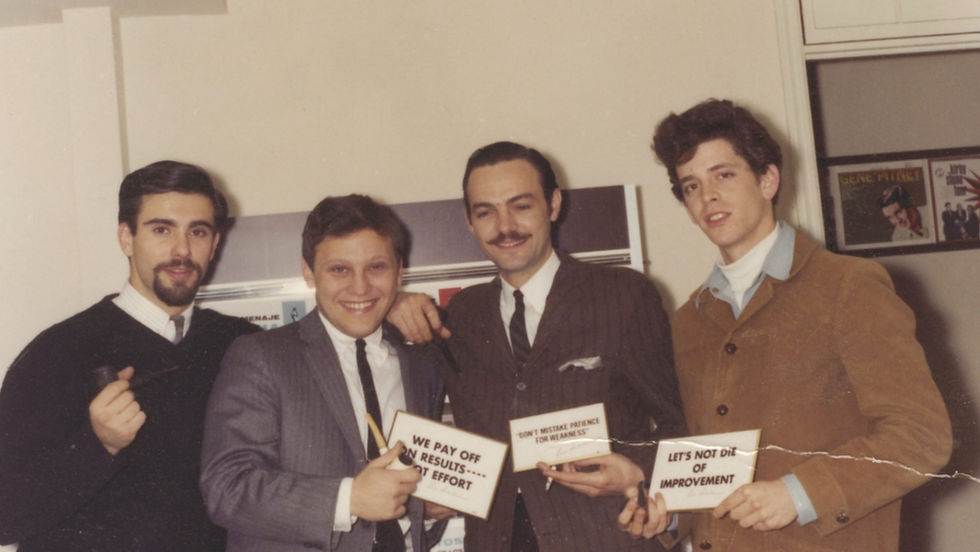
To paraphrase Marcus of the No Dogs In Space podcast, Long Island was Norman Rockwell and Lou Reed was Edward Scissorhands.
Pickwick immediately proved to be the wrong fit for Lou. They had him singing on knockoff Beach Boys albums. (I’m not kidding, The Surfsiders Sing The Beach Boys is my holy grail vinyl find. It’s so bad it’s good.)Pickwick wouldn’t record “Heroin” or “I’m Waiting For The Man” for obvious reasons, but they accepted Lou’s blatant “fuck you” to the sixties dance craze – and one of my favorite things Lou ever did – “The Ostrich.”
Pickwick wanted to tour “the Primitives.” Ergo, they actually needed Primitives.
This is when Lou meets the single most important collaborator he’d ever work with. Edward Scissorhands, meet your Welsh Dracula.
Thanks to Aaron Copland, John Cale snagged the Leonard Bernstein fellowship. He was supposed to study under Bernstein, but had a change of heart. Bernstein himself was cool enough to transfer John’s ticket to New York, where he studied at the Eastman School of Music under Iannis Xenakis and commiserated with John Cage. Cale either quit or was expelled after smashing a piano with an axe, and wound up in the Dream Syndicate (no, not that one) with La Monte Young.

He also worked as La Monte’s drug runner.
John, Tony Conrad, and Walter De Maria were hired by Pickwick to be the rest of the Primitives. They toured the east coast and predictably flopped, but Lou and John stayed friends. They moved into a brownstone on Ludlow Street, up three flights of stairs...and Lou shot John up with heroin for the first time. Good, clean, wholesome fun these kids are having!
Lou’s heroes were Otis Redding, BB King, and Dion. Pop music was a completely foreign concept to John, and he thought folk music was useless. “I hated Joan Baez and Dylan – every song was a fucking question!” After a fair amount of strong-arming, he eventually saw the merit in what Lou was doing. “I missed the point because I hated folk songs, and it was not until he forced me to read the lyrics that I realized these were not Joan Baez songs. He was writing about things other people weren't. These lyrics were literate, well-expressed, tough, novelistic impressions of life.” Since he hadn’t grown up with pop music, John didn’t know what he “should” or “shouldn’t do” with Lou’s songs. He’d come up with inside-out basslines or screeching viola. Lou loved it. They just clicked.
“In most collaborations is when you put two and two together and get seven. That weirdness, it shouldn’t have existed in this space. And there was always a kind of standard that was kind of set for how to be elegant and how to be brutal.”
quoted from: The Velvet Underground (dir. Todd Haynes, 2021.)
The foundation for the Velvet Underground is laid.
According to biographer Victor Bockris, Lou bumped into former classmate Sterling Morrison on the street one day. Sterling himself said Lou lived in the apartment above his. Will Hermes says they met at the 7th Ave stop on the D train, and adds a compelling detail: the two were first introduced by classmate Jim Tucker. However it happened, Sterling could play like Bo Diddley and Lou loved that. They pick up a real hippie-like drummer named Angus MacLise, and proto-Velvets group The Warlocks (no, not those Warlocks!) were born.
Now you may be wondering, “Who the hell is Angus MacLise and why are we supposed to care about him?” His work in the New York underground film scene had the Warlocks playing at Jonas Mekas’s Cinematheque alongside films by Jack Smith, Ron Rice, and Barbara Rubin. Barbara and Factory denizen Brigid Polk became the Warlocks’ first fans.
Some say it was Tony Conrad, others say it was Angus. One of them found a copy of Michael Leigh’s Velvet Underground. Sterling explained,
“We thought it was a good name because it had ‘underground’ in it and we were playing for underground films, we considered ourselves a part of the underground film community. We had no connections with rock n roll as far as we were concerned. Rock n roll consisted of Joey Dee and the Starlighters, guys who played the uptown clubs and had matching suits. We didn’t have any of those things...There was this incredible gulf between what we were and what we could do…”
quoted from: Ignacio Julia, Linger On: The Velvet Underground (2022.)
The band (loosely) snagged Bob Dylan associate Al Aronowitz as their manager, but on the eve of their first show as the Velvet Underground, Angus up and quits. According to Lou, Angus couldn’t handle the concept of having to turn up to a show on-time, play a set number of songs, and then leave! It turns out Jim Tucker’s sister played the drums.
That Paul Morrissey quote gets repeated all the time, but it’s true. With her dark sunglasses, bowl cut, and bulky black turtleneck, you really couldn’t tell if Moe Tucker was a boy or a girl! She had a totally different playing style from Angus, who liked African and Middle Eastern rhythms. Moe had never taken a drum lesson in her life, all she had was a drum and mallets, and “...to this day I couldn’t do a roll to save my life, or any of that other fancy stuff, nor have I any wish to. I always wanted to keep a simple but steady beat behind the band so no matter how wild John or Lou would get, there would still be this low drone holding it together.” The drone on drums. Moe was perfect.

On December 11th, 1965, the newly-christened Velvet Underground debuted at Summit High School. It went just about as well as you’d assume!
A residency at the Cafe Bizarre went slightly better before they got fired for playing “The Black Angel’s Death Song.” Before they got the boot, Barbara Rubin brought Gerard Malanga to a gig. He loves it, bringing along Paul Morrissey, superstar Edie Sedgwick, and the man himself: Andy Warhol.

If you asked Paul, he’d say he was the one who got Andy hip to the idea. He loudly proclaims as much in punk oral history Please Kill Me. All accounts agree that Andy instantly loved the Velvets; becoming their de-facto manager and getting them a deal with Vox. Goodbye Al Aronowitz! (Al admitted it was a mistake not actually signing the Velvets: “I am a total asshole and idiot to have put any faith in a handshake deal with a bunk of junkie hustlers.”)
Lou was receptive to partnership at first.
“Andy Warhol told me that what we were doing with the music was the same thing he was doing with painting and movies and writing – i.e. not kidding around. To my mind nobody in music was doing anything that even approximated the real thing, with the exception of us...the very first thing I liked about Andy was that he was very real.”
quoted from: Legs McNeil and Gillian McCain, Please Kill Me: An Uncensored Oral History of Punk (1996.)
But Andy and Paul are artists, and they see a problem with this work of art. It has no focal point.
Enter a very tall, very blonde actress with an entirely perplexing accent.
Femme Fatale
Nico in LA (photographed by Lisa Law, 1966) Nico in her signature pantsuit (photographed by Steve Schapiro, 1966) Nico in her screen test (Andy Warhol, 1966)
Brought to New York by her agent, Eileen Ford, Christa Paffgen waltzed into the Factory like she’d waltzed onto the set of La Dolce Vita. Warhol was immediately smitten...and sick of current superstar Edie Sedgwick. Andy found out that Christa, stage name Nico, had recorded a single and was moonlighting as a singer.
She, in the white pantsuit, was the visual contrast to the urchins dressed in black. She was beautiful, mysterious, morose...and most importantly, blonde. Anthony DeCurtis (),
“Without doing much of anything, she communicated drama. It was hard not to look at her, and Warhol and Morrissey understood the appeal of that – they were visual artists, after all, not musical ones. Nico’s visual qualities, far more than anything to do with music, were the reason they installed her as the Velvet’s lead singer.”
quoted from: Anthony DeCurtis, Lou Reed: A Life (2017.)
Or, as Sterling said, “We’ve got a statue in the band.”
It appears that Sterling himself went back on this idea. In interview with Ignacio Julia, he defended Nico’s presence in the Velvets, saying, “She was not there just simply to stand up and be beautiful, and we didn’t need that, we had beautiful people dancing...Nico could sing, she could sing the songs we had her do, and she sang them well.” Despite Lou’s talent as a writer and John’s avant-garde sensibility, in the music industry of the mid-sixties, you needed a face. If not for Nico, the Velvets may never have gotten signed. Tom Wilson admitted he signed them purely because of Nico. Of course, this pissed Lou right off – especially when she wanted to sing “I’m Waiting For The Man.”
But he warmed up to her, even dating her for a time. He wrote “I’ll Be Your Mirror” for her. But it was over as soon as it began: see “I can no longer make love to Jews anymore.” Yikes.
All Tomorrow’s Parties
In February of 1966, the Warhol-engineered Up-Tight engagement with Gerard Malanga and his whip, Edie Sedgwick’s dancing, and side-by-side projections of Warhol films debuted. By April, it evolved into a “happening”-on-wheels called the Exploding Plastic Inevitable.
Though the Exploding Plastic Inevitable was a huge hit – an event by Andy Warhol at the height of his fame, bringing famous attendees like Salvador Dali, Walter Kronkite, Allen Ginsberg, and former first lady Jackie Kennedy – the press slammed it. The New York Times covered it on their Womens’ page as a backhanded compliment, only bothering to write about Nico.
A lot of coverage of the Inevitable (and the Velvets in general) was centered around Nico. It even got to be billed as “Nico and the Velvet Underground,” not “The Velvet Underground and Nico.” You just know that drove Lou nuts!

Paul booked the Exploding Plastic Inevitable a turn in San Fransisco. “The gigs went off with a modicum of disaster.” Keep in mind, Laurel Canyon sounded like this...
...while the Velvets sounded like this.
All four Velvets were career hippie-haters. The feeling was mutual. They got terrible reviews from press and famous faces alike. Cher famously said, “The Velvet Underground won’t replace anything…except maybe suicide.”
Though they’d already lost the Dom by now (Al Grossman pulled the lease out from under them, fueling a lifelong feud between Andy and Al’s client Bob Dylan) it a., functioned like the Cavern Club had for the Beatles, refining them for recording; and b., made just enough money for Andy to finance an album. The Velvet Underground and Nico was primarily recorded at TTG in Hollywood while the Velvets were on the west coast. It was nowhere near as glamorous as the Silver Factory – TTG was in the middle of remodeling, they had nofloors or walls! It cost between $1,500 and $3,000 to record the whole thing, and took anywhere from eighthours and four days, depending on who you ask.

Andy wanted to capture what the Velvets sounded like live. In Bockris’s Up Tight, he explained, “I was worried that it would all come out sounding too professional…one of the things that was so great about them was they always sounded so raw and crude.”
So he never intervened on anything the band were doing ever!
Engineers walked out all the time, but no one ever actually did anything because Andy Warhol was in the studio. He’s very important, so this must be good! Andy giving the Velvets cart blanche turned out to be just what they needed. Sterling remembered,
“...if you asked him a straight question like, ‘What should we do?’ He would give you kind of a Socratic answer, ‘Well, what do you think you would like to do?’ That was Andy’s stock advice, think about what you’re trying to do and then do it.”
quoted from: Ignacio Julia, Linger On: The Velvet Underground (2022.)
When Verve heard what Andy and the Velvets had gotten up to, they were horrified. A reputable producer for Simon and Garfunkel and Bob Dylan, Tom Wilson, was assigned to assign The Velvet Underground and Nicosome commercial potential. What Verve didn’t know was that Tom had just let Frank Zappa and his Mothers of Invention do whatever the hell they wanted until Verve’s budget ran out! Tom did little more than cooking up “Sunday Morning;” leaving the rest be.
So wait. If Warhol didn’t really produce the album, and Tom Wilson only produced “Sunday Morning,” then who’s flying this banana-shaped plane??
(Probably Lou. Thanks to his Pickwick days, he had nominal experience in a studio.)
All The Angels Screamed The Velvet Underground and Nico
Insert Brian Eno “only 30,000 copies were sold, but everyone who bought it started a band” quote, blah blah blah. Time for some investigative journalism.
Thanks to poor promotion by Verve, a lack of European tour dates, and a lawsuit from Eric Emerson over his likeness not being cleared for the Chelsea Girls projection on the back cover, The Velvet Underground and Nicopeaked at a whopping #195 on the Billboard albums chart the week of June 10th, 1967. Exactly how many copies were sold in its first few years, no one is sure. Richie Unterberger’s White Light White Heat states just under 60,000 were sold by 1969. Sterling Morrison claimed 200,000 were sold by 1970. Here’s the real quote for you, published in Musician Magazine in October of 1982:
“I was talking to Lou Reed the other day and he said that the first Velvet Underground record sold 30,000 copies in the first five years. The sales have picked up in the past few years, but I mean, that record was such an important record for so many people. I think everyone who bought one of those 30,000 copies started a band!”
quoted from: Christine McKenna, “Eno: Voyages in Time & Perception” Musician, 10/1982.
Joe Harvard said, “Musically, the Velvets are the daddies of us all…” But why does VU & Nico “work?” Why can this record never truly be replicated, no matter how hard The Strokes, Arctic Monkeys, The Jesus and Mary Chain, Sonic Youth, Television, or whoever else tried?
I couldn’t answer the question when I bought my first copy of VU & Nico eight years ago, or even when I first took a stab at reviewing it three years ago. In the Peel Slowly and See box set liner notes, David Fricke said, “Being a Velvets fan has always been something of a loner’s joy.” He’s wrong. I bought VU & Nico because I felt like I had to. I went to art school. At least someone on every floor had the poster of that stupid fucking banana. I did too! It occupied the same real estate as the obligatory UP poster, Van Gogh’s skull, Mia Wallace on the back of my bedroom door watching over me and my terrible decisions like the stereotypical indie girl’s Mother Superior. Still, even today, everyone wants to replicate this cool.
There’s only one VU & Nico song that’s been replicated successfully.
Thanks to his time at Pickwick, Lou was damn good at the made-to-order song. Warhol asked him to write a song about paranoia, he got Sunday Morning. It lulls the listener into a false sense of security, in part because we’re so familiar with its formula now. Melodic, twee bells, kitschy tambourine, a thick layer of surface noise. Lou’s mumble-singing that, by the time the final verse rolls around, sounds like he’s in a public bathroom at 2 AM. I’m struck by how young he sounds – he’s not the rock-and-roll heel yet. It’s all so close to summer-of-love conventions, but not quite. The narrator is aware of the passage of time.
“Early dawning, Sunday morning,
It’s just the wasted years so close behind.
Watch out, the world’s behind you,
There’s always someone around you who will call...”
The magic in any given “banana album” song is its hidden harmony. I don’t mean Nico’s ghostly “la la la laaa”s. I mean the parts either Sterling or John have snuck in. This time, it’s both of them: Sterling plays the slide-down bass part, while John hides a viola solo in the thick surface noise.
I’m Waiting For The Man might just be the quintessential Velvet Underground song (though let’s be real, you could argue as much for anything on this album.) It kicks off VU & Nico’s energy, and starts one of my favorite three-track runs on any album. It’s one of Moe’s favorite Velvets songs because it sounds like a train chugging along: ba pa pa pa pa pa. The piano and tambourine are so evenly percussive, it’s mind-numbing.
The hidden harmony (and melody, in this case) are such secret weapons of VU & Nico because Lou’s voice isn’t exactly melodic. It forces you to find interest in the music behind the BA-BA-BA-BA piano. Sterling’s rhythm guitar playing is scratchy in tone and pretty much drowns out everything behind him. John’s bass adds to the fuzz, sometimes Lou’s ultra-cool picking style pops through.
“I’m waiting for my man,
Twenty-six dollars in my hand,
Up to Lexington, one-two-five,
Feelin’ sick and dirty, more dead than aliiiiive.”
Like his contemporaries, Lou was a talk-singer. He wasn’t as nasally as Dylan, but had a heavy sneer on most vowels and some consonants: “dollarrrrrs” vs. “my maaaan.” He pushes his accent so it’s totally believeable, more New York street rat than suburban Long Island kid. “I’m Waiting For The Man” is a perfect example of Lou’s slice-of-life writing style. The narrator matter-of-factly waits for dealer to show up. He shows up in his big straw hat. They go up the three flights of stairs, get the goods, and the narrator has to split. Lou does the most with the least amount of words.
I love when the whole thing goes sideways at the end. I know this wasn’t the truth, but it feels like John was playing those same chords so long, he got fed up and just started mashing at the keys.
Warhol requested Femme Fatale as a cruel diss to ex-Superstar Edie Sedgwick, but Nico makes it sound like sophistication and class. The cosmopolitan guitar which overloads and peaks to muddy the words and oh-so-sixties tambourine match Nico’s cool, detached delivery. I hear hints of Getz/Gilberto in this brand of detached sophistocation.
But it’s never too serious. Lou and Sterling did their obnoxious “She’s a femme fay-tale” backing vocals to annoy Nico. It’s goofy as hell, like putting a fart cushion under an issue of Vogue. And you’ll get a giggle out of Nico’s...unique...pronunciations.
English wasn’t her first language. She’s fighting to get the multisyllabic words out. It’s not, “Everybody knows...the things she does to please,” it’s, “Ev’rybody knoss...the things she doss to pleess.” And of course, “What a clon.”
Why did Nico’s voice sound like that? I broke it down a little in The Marble Index episode. She had a very deep voice for a woman, with dark vowel sounds, little to no vibrato, and an extremely limited range. Her thick German accent affected her singing for sure, but that doesn’t account for everything. In German, the “v” and “w” sounds are swapped. Nico doesn’t sing, “Vhat a clon.” It’s distinctly “what.” It turns out she had a perforated ear drum that got infected over and over again as a kid. Nico wasn’t just German, she was half-deaf! That’s why her voice came entirely from her chest, it’s all she could hear herself doing! Especially with the guys caterwauling behind her and Moe bashing away in hopes to be heard. All of this explains why Nico wasn’t exactly tuneful. All these qualities make “Femme Fatale” her signature song. She gave it this quirky charm the blunt-fringed ladies of the late 2000s indie pop boom would’ve eaten their felt bowler hats for.
Venus In Furs was Sterling’s favorite Velvet Underground song. It might be mine too? I swear, I’ve given a different favorite every time I review the Velvet Underground!
“Venus In Furs” scratches my historian brain because it’s one of the few moments linking the Velvets to the rest of what was going on in the mid-sixties. At the same time they were in TTG recording VU & Nico, the Kinks and the Byrds were experimenting with raga rock. The funeral-procession bass, somber tambourine, and viola squeeps and squeals dubbed over John’s hypnotic drone are equal parts rigid and fluid. When John picks a different note, it rakes across your brain. The discordant guitar strums against the steadily ascending rhythm part, Lou’s slinky melody, and delivery are equally menacing and detached. John originally sang “Venus” in his morose Welsh baritone, but it sounded too pretty to hold the Velvets balance of elegance and brutality. “I am tired, I am weary, I could sleep for a thousand years” and Lou’s tenuous grasp on the melody makes your brain fill in the gaps of where the melody should be, and sounds like Lou really has slept for a thousand years. This song is like waking an ancient spirit. I’m telling you, it invokes something else.
Lou uses his sneer to great effect on “Now pleeeeeeead for meeeeee,” out of the binding of the arrangement. I love “Venus In Furs” because it moves like a snake. There’s something sinister moving underneath the veneer of beauty, or maybe beauty moving under the sinister. You hear it in the last note, the secret chord of the hum of their equipment.
Run Run Run was written in a haste on the way to a gig. The bass and guitars make a low rumble, it sounds like Moe is playing at least two drums here. I love the screech of Lou’s “Ostrich” guitar and feedback solo, but I’m more interested in the lyric. This is a rare instance in which Lou doesn’t say the most with the least. He deals some potent imagery. Marguerita Passion jonesing for her fix, Beardless Harry can’t get one. Seasick Sara gets hers.
“Seasick Sara had a golden nose,
Hobnail boots wrapped around her toes.
When she turned blue, all the angels screamed,
They didn’t know, they couldn’t make the scene.”
He gives an overdose an almost religious fervor. It’s very Ginsbergian, as is the later “Black Angel’s Death Song.”
All Tomorrow’s Parties was one of Warhol’s favorite Velvets songs, along with “the ding-dong song” (“Sister Ray.”) This is a rare moment where the music has to settle into itself; an almost self-conscious guitar noodle with pulsing bass. In time, it becomes the largest and grandest moment on the album: flourishing piano, booming drums, and “Venus In Furs” tambourine. But this is far from a hi-fi operation – I love the technical hiccup where a beat has to be cut and pasted in. In her monotone, double-tracked affect, Nico mocks the poor girl who can’t find a dress to wear and fusses over what to do with what she wore on Thursday. It’s ironic that Andy liked “All Tomorrow’s Parties” because it’s an observation of how women were treated in the Factory: “For Thursday’s child is Sunday’s clown.” (Sorry, “clon.”) Edie replaced Ingrid, Nico replaced Edie, and Nico would be replaced by Viva. If you were no longer the most fashionable and interesting Superstar, Warhol pretty mercilessly dumped you. He had a nasty habit of using women and throwing them away.
Opening side two is a blossoming, unmistakable guitar crawl. Heroin was not the first heroin song. That would probably be “Spoonful”? But “Heroin” is one of two precise and powerful heroin songs; the other being “Cop Shoot Cop” by Spiritualized.
Lou said he regret “glorifying drugs” in an interview in the Reagan era. I don’t think he does that. John described how “People would say, ‘My God, ‘Heroin’ is glorifying drug taking.’ In fact, it's about a person talking about his disappointment with life and his conviction that he has now got the solution.” Or, he thinks he does. Our main character articulates all the worst parts about being an addict. Feeling nihilistic, like a loser, emasculated by himself, angry at his own euphoria, despair. He lays out the exact arc of his high, and we learn why he takes the drug. All those feelings I listed off, they’re not in the lyric. You listen to Lou’s demo from 1965 and it’s just not there. It’s from the music. Everything this stage of the Velvets did right is in this song. The boom-pa-boom-pa-boom-pa of Moe’s drumming, the inescapable drone, the oddly pretty guitar lines. Moe stops playing at a few points because she couldn’t hear the band, but it works perfectly for the dramatic arc of the song. Velvets superfan Jonathan Richman said, “folks like to imbibe simulated darkness and decadence, when a guy like John Cale can give them the real thing – using only chords, tones, and textures.” “Heroin” is threaded together by John’s hellfire viola, mimicking one’s train of thought as they get high and come down. It starts as a long, thin drone, scrambles, and comes back together, exhausted.
“I don’t know just where I’m going/But I’m gonna try for the kingdom if I can.” The original lyric was “I knowjust where I’m going” Lou changed it, John hated it, I think Lou made the right call. Ironically, John himself explains why. “Contradictory viewpoints are important because they show the richness of a character. If you can get that dichotomy in a character, it's compelling. If you can get more than that, you're amazing. Having those two things presented in simplistic form is really magical.” I love that this narrator is insecure. It makes the song so much more compelling. “I guess that I just don’t know,” This guy doesn’t even know if he doesn’t know! Hefeels like he’s a man when he puts a spike into his veins. He’s a slave to this thing. “He-ro-in/It’s my wife, it’s my life” is my perfect line because of Lou’s delivery. He sounds broken and helpless. He, Lou Reed, was not pathetic, but he wrote pathetic well. He wrote his own insecurities into his characters. That’s why Velvets song characters are so human, they come from naturalistic observation. Whether of the vain characters of the Factory, people on the train, or himself.
I’m not sure what the lyric of There She Goes Again is about. Sex work? Domestic abuse? A little bit of both? It’s unusually vague writing by Lou, who’s presented some really specific stuff here like “Venus” and “Heroin.” I think the music is much stronger. It’s at times an earnest ode to the mid-sixties pop tune. The tone doesn’t get jangly, but we get groovy, and there’s a rolling, fluid guitar solo. But again, the guys take the piss with their exaggerated falsetto backing vocals.
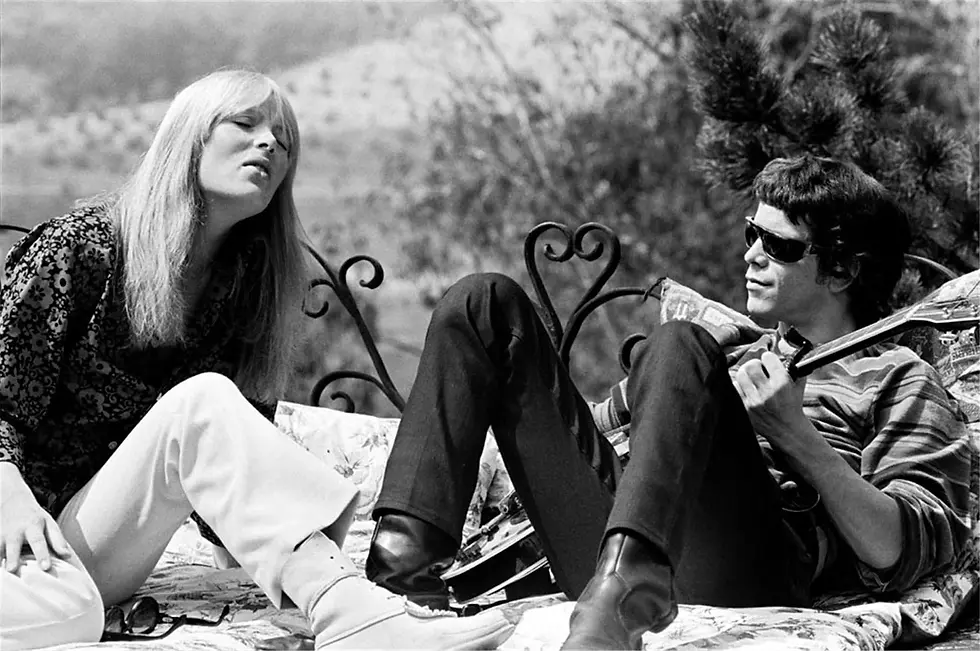
I’ll Be Your Mirror is some quality Lou/Sterling twinkly guitar style, perfected come self-titled and Loaded. And there’s that tambourine again. This is, in fact, 1966! The lyric really makes it special, especially among this body of material. It was one of very few straight-forward love songs Lou ever wrote, one very dear to me. Lou wrote “I’ll Be Your Mirror” for Nico while they briefly dated. They were an odd couple for sure. You have scrappy little Lou with the Long Island accent over here, and the sophisticated mysterious European lady towering over him. “I’ll Be Your Mirror” is the “beauty and the beast” dynamic, fully explored; with tender music and words from Lou. Nico once told him, “I’ll be your mirror.” He extends that.
“I’ll be your mirror, reflect what you are
In case you don’t know, I’ll be the wind,
The rain and the sunset,
The light on your door to show you that you’re home.”
This girl promises him to meet him at every success and challenge, and to be his north star when he needs guidance.
“I find it hard to believe you don’t know
The beauty you are,
But if you don’t, let me be your eyes,
A hand to your darkness so you won’t be afraid.”
She’ll see the best of him and the worst of him.
“When you think the night has seen your mind,
That inside you’re twisted and unkind,
Let me stand to show that you are blind.
Please put down your hands, ’cause I see you.”
When people are made to feel like they are freaks – ostracized in their youth, the Edward Scissorhands of Long Island or whatnot, they’re conditioned out of accepting love. Being given the space to be open and real can feel like a trick. They run and hide.
This is the girl coaxing the perceived monster back to her, assuring there’s nothing to run from because she sees him. She’s a freak too. It’s a beautiful sentiment. It was one of Lou’s favorite Velvets songs he wrote. He was quite proud of this one.
Wasn’t that so lovely? BOOM! The Black Angel’s Death Song!
I remember being in my college dorm room at age 19 or whatever, it was ten o’clock on a weeknight, all my roommates had gone to bed, and I put VU & Nico on because I knew it for the Nico songs like “Femme Fatale” and “I’ll Be Your Mirror.” Then “Black Angel” comes on, the trebley guitar and screeching guitar careening off the cinderblock walls, and I’m like, “Oh god, make it STOP!” This was the Velvets’ room-clearer. It’s just as unsettling and noisy as it was in 1967, but oddly pretty? Lou’s “psssssh” is a predecessor to the industrial blasts of air we hear on that other t-shirt album, Unknown Pleasures.
I’m happy to say my opinion on European Son has completely changed in the three years since I last evaluated this. This is now one of my favorite album closers.
Listen. I love a good noisy album closer, see “Starship,” “LA Blues,” and “Sister Ray.” You think at first this will be another off-kilter Velvets rocker; with John’s terribly fun inside-out bassline. It’s like you asked someone who’s never heard surf music before to make surf music. There’s an anxious repetitive riff, Lou’s rapping something about Delmore Schwartz, until ladies and gentlemen, cretins of caves, my single favorite sound effect on any album ever. John dragged the chair, Lou broke the glass. It’ll send you flying out of your chair if you’re not anticipating it. When I first heard that blasting in my dorm room at half past ten at night, I was mortified! I now understand it exciting and totally out-of-the-blue. And I understand it reflects the art of the time. It’s very fluxus: the idea that the sound of someone coughing, a car passing by, the door opening and shutting becomes part of the piece. It’s loud, like the roar of a film projector or the drone. The sensory overload of the Exploding Plastic Inevitable. The Velvets were in and around that atmosphere day-in, day-out and immortalized it on their record. This is the sixties, the decade to normalize cultural craziness. Why not drag a chair across the studio floor and smash a glass?!
I don’t think anyone’s description of “European Son” could be better than Joe Harvard’s. He goes on this like page-long epic, I’m mad I didn’t write it because it’s totally in the vein of my second-wind spiels. The chair drag is really the star of the show, but if you need me to describe the rest: tangled guitars fumble and stumble all over each other at full volume. Moe bashes away at what I think are bongos, the bass is thumping, whining, and relentless. Nico has long since evacuated the scene, the guys use feedback as their fifth band member. This number totally runs away from itself. It’s the twelve-bar blues from hell. It’s all the tension the Velvets have been building and building, occasionally letting off with Nico’s downtempo numbers. It’s more like the second screen of Warhol’s two-screen things. Screen one is the pretty girl, screen two is the hospital burning down. It ends with the rattle of the Ostrich guitar and the hum of their amps. And that’s the banana album.
Watch Out, the World’s Behind You
Lou complained,
“How long do you need to have it demonstrated that this was for real, completely sincere, aboveboard and meant exactly the way it seemed to be meant? Look at the records. They speak for themselves.”
quoted from: David Fricke, liner notes for Peel Slowly and See (1995.)
I agree, Lou, this thing is long e-fucking-nough!
What more do you need to think this stuff as elemental? Uncle Les said, “I don’t care who did feedback first, or if Lou Reed ‘sang like Dylan,’ Modern music begins with the Velvets, and the implications and influence of what they did seem to go on forever.” I want to loop back to the question I asked earlier. Why does The Velvet Underground & Nico endure?
It’s the band’s ethos. The ability to plug in and just play. Being totally confrontational in all your queerness and otherness, beauty and ugliness. This goddamn banana, the ability to be totally irreverent. Crass and classy. Trashy and sophisticated. High art and low-brow, boy and girl. This is such a cliché favorite album, but fuck it, it’s on my short list. It’s just pop enough, rough enough, biting the thumb at convention as it sets the bar. And sets trends the kids will follow for 59 fucking years afterwards. The thing that speaks to me about rock-and-roll is the human element; the human element the ladies in the front pew at church every Sunday sneer at, but the humans Jesus Christ himself would’ve loved. The humans New York loves. What does the Statue of Liberty say? Bring me your tired, your poor, your hungry. That’s the dealers, hustlers, and freaks of the world. The ones who feel just like Jesus’s son. Lou didn’t write about them to be shocking, he wrote about them because they’re interesting. He realized the same thing true crime podcasters realized: people are drawn to this stuff. Humans are naturally curious about ways of life that don’t look like their own Lou said in 1978,
“I don’t see it as the dark side. If this was a novel or a movie, this stuff would be no big deal. But in rock ’n’ roll, the parameters you’re allowed to work in are so horrifyingly narrow. If you do anything other than pure, surface optimism, you seem to come off as intrigued with the dark, murky, down side of existence. It's just a little realism. I think it's fine and dandy that people enjoy themselves and they're happy and everything, but to constantly paint that picture leads to a general dullness on the part of the listener.”
quoted from: The LA Times, 3/12/1978.
He was just writing what him and his friends knew. He’d take notes of what people at the Factory said and write them into songs. Lou’s work was best when it was simple and real. A handful of words, guitar and drums, and maybe three chords. He was also best with collaborators. But here’s the thing: his competitive nature and sour personality made it a never-ending struggle to collaborate. Victor Bockris said, “Lou could be the sweetest, most charming companion socially, but he was virtually always a motherfucker to work with.” Lou’s work suffered when people fed him the “You’re a genius!” thing. He was always strongest with collaborators. Mick Ronson, David Bowie, Bob Ezrin. Having John and Nico around pushed Lou. John, the Pisces fish who swims down, almost never doing what is “expected.” And Nico the performer. Her covers are masterful interpretations, not to mention her self-penned efforts after the Velvets. She revealed herself to be a true original thanks to John. I love the relationship between these three. Though Lou took the both of them for granted, especially John, and Lou distanced himself from Nico for very valid reasons, they were bonded by this environment. Lou and John fought like brothers and loved like brothers. John and Nico had that relationship too. Lou said if anyone else said anything bad about them, he’d kill them. These three, plus Sterling and Mo’s nuts-and-bolts playing styles,absolutely crunchy recording fidelity, and the times which this album came from, are why VU & Nico works.
These five people just so happened to be in the same city and the same time, and just so happened to find each other. Chance meetings like this are becoming less and less often by the year. I believe this is why remarkable albums like this are becoming less and less common. In order to make great music like this, you have to be a freak and go out into the world and find other freaks. This band of freaks had their fingers on the vein of all of this for the rest of their careers, together and as individuals. The Velvet Underground is...well, the Velvet Underground and Nico, really. Crass, class, street smarts. Ugly freaks, beautiful human stories, and the instinct to survive.
Personal favorites: “Sunday Morning,” “I’m Waiting For The Man,” “Femme Fatale,” “Venus In Furs,” “All Tomorrow’s Parties,” “Heroin,” “I’ll Be Your Mirror,” “European Son”
– AD ☆
Watch the full episode above!
Bickerdike, Jennifer Otter. You Are Beautiful and You Are Alone: The Biography of Nico. London: Faber Books, 2022.
Bockris, Victor. Transformer: The Complete Lou Reed Story. London: Harper Collins, 2014 ed.
Bockris, Victor, with Gerard Malanga. Up-Tight: The Velvet Underground Story. London: Omnibus Press, 1983. https://archive.org/details/uptightvelvetund00bockr
Cale, John, with Victor Bockris. What’s Welsh For Zen: The Autobiography of John Cale. New York: Bloomsbury, 1999.
DeCurtis, Anthony. Lou Reed: A Life. New York: Little, Brown and Company, 2017.
Evans, Kim, dir. “The Velvet Underground.” The South Bank Show. 1986. https://www.youtube.com/watch?v=B1sbg_C-72c
Fricke, David. Liner notes for The Velvet Underground, Peel Slowly and See. 9/26/1995.
Harvard, Joe. 33 1/3: The Velvet Underground and Nico. London: Bloomsbury, 2004.
Haynes, Todd, dir. The Velvet Underground. Killer Films, 2021.
Hermes, Will. Lou Reed: The King of New York. New York: Farrar, Strauss and Giroux, 2023.
Heylin, Clinton. From the Velvets to the Voidoids: The Birth of American Punk Rock. Chicago: A Capella Books, 2005 ed.
Hoberman, J. Everything Is Now: The 1960s New York Avant-Garde - Primal Happenings, Underground Movies, Radical Pop. London: Verso, 2025.
Julia, Ignacio. Linger On: The Velvet Underground. London: Ecstatic Peace, 2022.
McKenna, Christine. “Eno: Voyages in Time & Perception.” Musician, 10/1982. http://music.hyperreal.org/artists/brian_eno/interviews/musn82.htm
McNeil, Legs, and Gillian McCain. Please Kill Me: An Uncensored Oral History of Punk. New York: Penguin Books, 1996.
Unterberger, Richie. White Light White Heat: The Velvet Underground Day-By-Day. London: Jawbone Press, 2023 ed.
Witts, Richard. Nico: The Life and Lies of An Icon. London: Virgin Books, 1993.
Further reading:
Dylan Jones, Loaded: The Life (and Afterlife) of The Velvet Underground (2023.)
Kembrew McLeod, The Downtown Pop Underground (2018.)
Further listening:
“The Velvet Underground Pt I.” Spotify: No Dogs In Space, 10/12/2021. https://open.spotify.com/episode/5QDFUh1wkEhQlFbk17JW22?si=d203b02d9b114a3b
“The Velvet Underground Pt II.” Spotify: No Dogs In Space, 10/19/2021. https://open.spotify.com/episode/7FvK68VTAsZv0wW5l3zFwH?si=dd05b32cd67f4ec3
“The Velvet Underground Pt III.” Spotify: No Dogs In Space, 10/26/2021. https://open.spotify.com/episode/7Duoe15AQ7GXsxfcAVORHo?si=34982ef4b2674d41


this is a massive chunk of writing AD and took me a long time to read, consider and reach a conclusion about.
i like the encapsulating assessment, " elegance and brutality". i think that's apt. not quite enough melody in the music overall, especially in the singing, for my taste and that makes me hungry for it. it's still a good to very good album within its statement thesis.
in terms of legacy; obviously that's strong, but it doesn't quite take the left after the betting shop, before the royal mail red postbox, and go down my street like the beatles do, for example. strawberry fields written within the mainstream? that's challenging the cultural norm and questioning established behaviours.
in…