
The Marble Index/The Second Nico
“The marble index of a mind for ever, Voyaging through strange seas of thought, alone.”

Nico: vocals, harmonium, principle songwriter
John Cale: guitar, bass, viola, cello(?) piano, keys, bells, bosun’s pipe, mouth organ
“Produced” by Frazier Mohawk, produced by John Cale
art by Guy Webster
There are two ways we as Velvet Underground listeners perceive Nico.
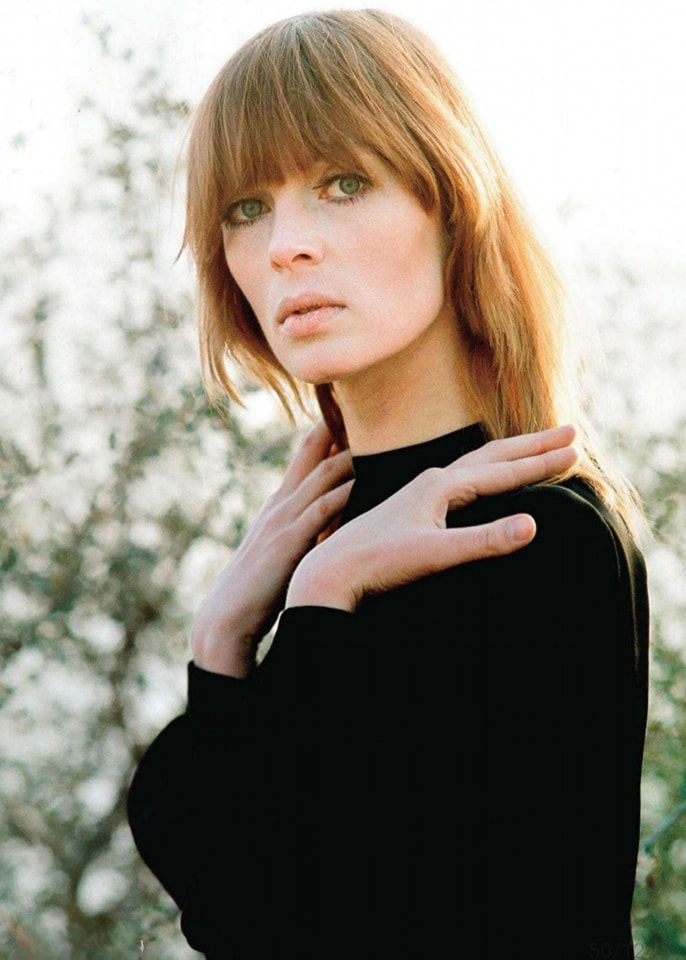
Two texts I used to write this, Jennifer Otter Bickerdike’s You Are Beautiful and You Are Alone and Richard Witts’s The Life and Lies of an Icon, are a perfect example of this. Bickerdike’s book uses a photo of blonde Nico for its front cover. Banana album. Chelsea Girl. Glamour, film, superstar, the sweet coo of “Femme Fatale.” This is how pop culture remembers Nico. Though its cover design is still victim to Warhol trappings with repeated pop-color portraits down the side, Witts’s bio uses a photo of red-haired Nico. Avant-garde, underground, aspiring poet. Anti-Warhol, art house Nico.
Hell, when Emma posted our podcast episode about Nico (which is still the longest single episode we’ve ever released, there’s a lot of shit to discuss, including but not limited to: racism, antisemitism, outward expressions of internalized misogyny, and allegedly stabbing someone with a broken glass!!) Emma posted blonde Nico to the song “These Days.”
I posted redhead Nico to her cover of “The End.”
Let me be clear: no one version of Nico is “better” or “more accurate” than the other. But there are two versions of Nico, and somewhere in there was the “real” Christa Paffgen. Exactly where? She’s been so obscured by myth, we’ll never know. And her son, the only true innocent in her life story, can’t give insight because he passed away.
Let’s begin our story with the blonde Nico, riding on the unexpected fame of Chelsea Girls. Having been the first to be booted from the Velvets, she was quickly snapped up by Verve Records and cut Chelsea Girl. With art by Paul Morrissey, liner notes comparing her to Marlene Dietrich, and songs written by Jackson Browne, ex-bandmates Lou Reed and John Cale, and freaking Bob Dylan, it was tailor-made to succeed. But it wasn’t Nico’s voice, and she knew it.
“I still cannot listen to it, because everything I wanted for that record, they took it away. I asked for drums, they said no. I asked for more guitars, they said no. And I asked for simplicity, and they covered it in flutes!...The first time I heard the album, I cried, and it was all because of the flute.”
quoted from: Lindsay Zoladz, “Made You Look: On Beauty, Ugliness, and Nico” The Ringer, 8/2/2018.

While she waited for Verve to release Chelsea Girl, Nico traipsed off to LA; the idea being that at the end of the summer, she’d join Warhol & Co. for a Chelsea Girls press tour. She took up residence at “the Castle,” a massive twenty-two-room art nouveau mansion with an opium den in the basement, linked up with her ex Brian Jones, bumped into Jimi Hendrix at Monterey Pop, and began a passionate and volatile three-month affair with Jim Morrison. He was at the height of his fame: “Light My Fire” was the number one song in the country. This brief romance quite literally changed Nico’s whole life path.
Jim introduced her to philosophy and Native American traditions. They went out to the desert and ate peyote together. This experience inspired one of, if not the first song she ever wrote, “Lawns of Dawn.” They also took a lot of LSD, as you do in California in 1967. Nico knew Jim liked redheads, so she dyed her hair red – it stayed that way for the rest of her life. She ditched her signature white pantsuit for flowy black clothes and heavy boots, and stopped fussing over her makeup. In her mind, she associated her old look with “a flimsy kind of fame,” according to John Cale.
“She hated it. That whole scene around The Velvet Underground and Andy Warhol she’d got into, she was really turned off by a lot of it and had walked away from it. She hated fashion. She hated the idea of being blonde and beautiful...The superficiality of it all was something she found an annoyance. She wanted to do something more substantial...”
quoted from: Tom Pinnock, “Nico and The Marble Index: ‘She hated the idea of being beautiful.’” Uncut issue 195, 8/2013.
Jim encouraged her to start writing what she saw in her dreams like he did. She read works by William Blake, Samuel Taylor Coleridge, Robert Lovell, Percy Shelley, and Sylvia Plath. And at a shop in San Fransisco, Nico bought a harmonium.
The instrument was portable, didn’t need electricity (she had a weird thing about turning on the lights,) she could teach herself how to play, and it sounded good with her unique singing voice. Deep, resonant...and not exactly tuneful.
The romance didn’t last beyond the Summer of Love. Jim was always a one-woman man at heart, he went back to Pam Courson. But Nico remained obsessed; carrying around a little cameo of Jim and talking about him endlessly. He saw her beyond her looks and shook her whole world. “He was the first man I was in love with, because he was affectionate to my looks and my mind.”
Meanwhile, back at the Factory, Warhol replaced Nico with new superstar Viva. But Nico didn’t really care. She’d been utterly transformed. She’d left New York a directionless chanteuse and came back a self-assured woman who, for the first time in her life really, had a goal. As put by Bickerdike,
“Morrison unleashed in Nico a self-possession that allowed her to step into a role that previously she may have been too afraid to even dream of: that of writer and musician.”
quoted from: Jennifer Otto Bickerdike, You Are Beautiful and You Are Alone: The Biography of Nico (2022.)
She did star in another Warhol film project, The Imitation of Christ which became FUCK which became **** (pronounced Four Star.) But Nico’s real passion was her music...to the point where she became the roommate from hell.
“She was very serious about it, dreadfully serious, like a Nazi organist. She’d pull the curtains across and light candles around her and do this funereal singing all day long. It was like living in a funeral parlor.”
quoted from: Richard Witts, Nico: The Life and Lies of an Icon (1993.)
Nico debuted her new spooky style at her first post-LA show at the Scene club . By the time Chelsea Girls came out in October of 1967, it was already outdated. Critics saw it as little more than a collection of pretty songs sung by a pretty girl. Though it failed to chart altogether, Nico asserted it was the only solo album she ever earned royalties from.
By the end of the year, Nico had twelve songs written. Eight would appear on The Marble Index. As the story goes, she wrote all the lyrics in the bathtub.
You may be wondering, “How the hell did a record like The Marble Index happen?” All the way down the line, everyone admitted at some point that the record was destined for commercial failure. Verve no longer saw Nico’s potential and dropped her. It was Elektra exec Jac Holzman and publicist Danny Fields who believed in Nico and wanted to give her a shot. And of course, there was John Cale. Before long, Nico was back in his orbit. They were two weirdo peas in a little weirdo pod: she wore all-black and sat quietly knitting, he wore a big black hooded cape like a vampire. Thanks to them, The Marble Index got recorded in three sessions in either May or September of 1968.
A little perspective: while Nico and John are working on music that sounds like this...
...everyone else is making stuff that sounds like this…
...and just six months earlier, Nico herself had released this!
John remembered in What’s Welsh For Zen, “I didn't pay close attention to her lyrics, they mostly addressed the atmosphere of the song; but she'd written all the words down. They were clear on paper, in that spidery Gothic script of hers...A lot of thought, an awful lot of thought, had been given to it before it went down on paper. That's remarkable, when you think of her working in an alien language.”
Everything after the lyrics caused great difficulty. By design, the harmonium is never truly “in tune.” Nico loved this. It drove John, who was supposed to be arranging for this stuff, fucking nuts. The guitar in particular was “murder” to work against a harmonium. He sometimes had to varispeed things to get them to match up, and he found that were the perfect solution to bridge the musical gaps.
Oh hey, did I mention John didn’t know how to arrange before this?
Because of her nocturnal lifestyle and dependency on heroin, Nico was egregiously late every day. She’d justify it by flippantly saying, “When I was in the actors’ studio, Elia Kazan told me to do things in my own time.” Meanwhile, you have Frazier Mohawk sitting on his hands in the corner being no help whatsoever. He only got the producer cred to appease Jac Holzman. John finally got so fed up with Nico’s shit, he locked her out of the studio to finish the album himself! But he relished in the freedom. The openness of the music and utter lack of supervision effectively gave him carte blanche to do whatever he wanted with The Marble Index.
While visiting Danny Fields’s place, Nico found her album title in a book of William Wordsworth. From hisPrelude, “The marble index of a mind for ever/Voyaging through strange seas of thought, alone.” Danny saw it “Sufficiently gothic, lovely and meaningless.”
Frazier Mohawk showed up just in time for the final mix...which he sat in on while engineer John Haeny actually completed said mix. The album is so short because “that’s all (he) could listen to.”
“Fifteen minutes a side seemed about right...We couldn’t listen to it all the way through. It kind of made us want to slit our wrists…After it was finished, we genuinely thought people might kill themselves.”
quoted from: Jennifer Otto Bickerdike, You Are Beautiful and You Are Alone: The Biography of Nico (2022.)
I first considered Nico thanks to yet another old-ass man I have a big fat crush on, Thurston Moore. Of course I’d heard the Chelsea Girls hits, I’d seen the “These Days” needle drop in The Royal Tenenbaums. But it wasn’t until I read about her cover of “The End” in Thurston’s Sonic Life that I dove into the rest of her work and was truly surprised by what I heard. (Go listen to that cover by the way, it’s even more fucked-up than the original.)
Lou Reed had valid reasons to ditch Nico – see “I can no longer make love to Jews.” John Cale did as well. But John never abandoned her. He elevated the artist in her. If not for him, we may not have had heard her voice. Her art haunts us, but it was the one part of her that didn’t haunt her.
The music John created for The Marble Index is the evil twin of Van Dyke Parks’s Song Cycle. It moves seamlessly, but cold, in the way a snake would. Ladies and gentlemen, cretins of caves, for the first time ever in Vinyl Monday’s history, we are covering an album without drums! Then you have Nico’s lyrics: bleak at best, bad-thought-inducing at worst. Some lyrics like “Numberless reflections,” “crucial parody,” “master’s voice cascades,” “dim and stale,” “titanic curses,” etc., were lifted from poems she read. “Ari’s Song” is pretty much William Blake’s “The Land of Dreams”: “awake my little boy/Thou wast thy mother’s only joy,” “Sail away, sail away my little boy/Let the wind fill your heart with light and joy.”
The Prelude (named for the poem the album title was lifted from) lulls us into a false sense of security with sparse piano and music box-like bells. These 59 seconds are the most negative space we’ll hear and the only reprieve we’ll get. Take a deep breath, because we’re going under and won’t come up for 28 more minutes.
There’s a harsh cut to murky, affected guitar with a muddy tone in vague chords. The bells hang in the background. Once Nico’s droning harmonium fades in, Lawns of Dawn reveals itself.
This is it. This is the song that ruined the harmonium for me!
I know the Beatles used it on (I think) “Blue Jay Way,” it’s supposed to be whimsical and psychedelic. But I only associate this instrument with the fucked-up circus that is The Marble Index.
Echoing guitar accents creep in with what sounds like dripping water, footsteps, and a crypt door creaking open. John’s gone full German expressionist film with this; with long, spindly fingers and dramatic shadows. Nico’s voice closely follows the harmonium’s entrance, like the priest emerging from the smoke of the incense he’s swinging. Her melody gives no ease or resolution, languidly moving up and down the scale. She does not wait for a guide to come and take her by the hand. She is the guide daring us to follow her into oblivion.
“Can you follow me?
Can you follow my distresses
My caresses, fiery guesses.”
Considering the images of Nosferatu flashing behind your eyes, one can easily forget Nico wrote this about being high on peyote in the desert with the Lizard King. Then we get to a line like, “Dawn, your guise has filled my nights with fear,” and the image comes into focus. The sun is hot, blinding, and punishing. The scenebecomes a reverse horror movie where the monster attacks with the light on. Both the instrumental and our narrator rock back and forth through her uncertainty. “I cannot understand the way I feel/Until I rest on lawns of dawns/Can you follow me?” Her deep voice crescendos with the harmonium in a way that’s truly spine-chilling. Before we can decide if we want to join her, the song drips off. The bass tumbles out of tune to land in a puddle.
No One Is There introduces the romance which lies in The Marble Index’s gothic feel. John forms what I believe is a three-part string ensemble. There’s definitely viola and violin, and the third part is either a second viola or a cello. “No One Is There” is baroque and stately; rooted compared to far-out “Lawns of Dawn.” It’s impressive how agile these parts are as they loop around Nico’s melody; even more so when you notice how they highlight what she’s doing. Nico had a very deep voice for a woman and a limited range. Using instruments that mimick her timbre and vibrato makes sure she isn’t left high and dry. Listen to all those weird rests John introduces to keep pace with Nico through the bridge. A certain elasticity is needed when working with an untrained musician like her. The lyrics tell of a mad poet lured into the night. The multitracking at the end is stunning as she envelops your ear in this medieval round vocal. Yes, medieval is the perfect word to describe Nico’s voice. It’s deep, heavy in tone, has limited range, and her vowel sounds are very dark.
Nico meant Ari’s Song as a sweet lullaby to her son. “Sail away, sail away my little boy/Let the wind fill your heart with light and joy.”
But this is Nico we’re talking about here. Her making anything “sweet” or “nice” goes something like Jack Skellington hijacking Santa’s workshop.
The “wind” she sings of is this machine-whir that makes the hairs on the back of your neck stand up. It constantly grates, never letting you find stability. Listen to how it changes pitch as her harmonium takes a great big gulp of air.
Choppy waters rock the boat as Nico hits one of her highest notes on the album, “Let the wind sing you a fantasy...” She has a tendency to turn the end of a phrase up, not unlike the little whisper of air after you lift your finger from the key of an organ. When she crams a few too many words into one line, “Now you see that only dreams can send you where you want to be,” it’s like a statue suddenly coming to life and looks you in the eye. You didn’t know something so rigid was capable of motion. Thanks to her limited vocal dynamics and non-existent head voice, her delivery sounds like she’s put her little boy into a boat and gently nudged it off the bank of the River Styx.
When you consider how Ari’s life ended – by way of the drug his mother was also addicted to – it’s difficult not to see “Ari’s Song” as a self-fulfilling prophecy in hindsight.
Facing The Wind a., feels like a psychotic break, and b., has John written all over it. Each attribute lends itself to the other.
Nico had intimate knowledge of mental health struggles. Her mother, who she was very close to, was institutionalized for the last few years of her life. Chilling whispers of, “It’s holding me against my will and doesn’t leave me still” and “Where did it begin? When did it begin?” are augmented by John’s dance; reminiscent of “Danse Macabre.” Harmonium, (I think) a wind machine, spine-chilling prepared piano which I love, and heavy affects placed on Nico’s voice all seem to be working against each other. It’s tension with no release; an exercise in the dissonant and strange designed to make you viscerally uncomfortable. The strings of the piano and the faraway thumps say Rosemary’s Baby. “Facing The Wind” totally becomes about the music. Nico’s voice run through the Leslie cabinet gets drowned out. Maybe that’s for the best, because she becomes alarmingly self-aware. “There’s nothing more to sing about/Not now or when they carry me away in the rain.”
“The Kids,” “The Bed,” and “Sad Song” act as the lynchpin trilogy of Berlin. Though they don’t close out a narrative like Berlin, Julius Caesar (Memento Hodie,) “Frozen Warnings,” and “Evening of Light” do the same for The Marble Index.
“Julius Caesar’s” layered harmonium parts clutter and disorient as John plays a fluttering viola part that sounds like a saxophone. It stages Nico’s feminine inspirations: “Amidst water lily fields white and green grows a tree/And from the tree hang apples not for you to eat.” This is the same idea as the fig tree passage from The Bell Jar. A woman can only choose so many life paths and she’ll forever be burdened by the “what-ifs” of the ones she didn’t choose.
What this has to do with Julius Caesar, I have no fucking idea.
Nico had a funny way of smooshing things together in her mind. There’s a passage in The Life and Lies where she talks about liking the work of “a Scottish poet who went to London and killed himself.” Through detective work, Witts figured out Nico was talking about Sylvia Plath. Notably a woman, and notably not Scottish! Nico displays impressive control over her voice on haunting, repeating “Mirth, birth, reverie.” It quickly ascends and descends, not quite in time with the strings. “Caesar” ends abruptly, with squeaking harmonium keys and a thin note.
Of each Marble Index cut that confuses, fascinates, and haunts a listener, Frozen Warnings is the one that sticks to me. I know where Nico’s voice comes from. It comes from Nico. I know where the droning viola comes from, that’s John. I do not know where the stagnated, snow-blind crescendo comes from.
It shapes the soundscape, making it one of the most hostile arrangements I’ve ever heard. It is essential to “Frozen Warnings,” it’s the most memorable thing about it besides Nico’s hymn to a bitter winter’s night at the edge of the mind. And I do not know where this comes from. They say the unknown is frightening, the uncanny valley and all. It’s beautiful and it’s terrifying and it’s euphoric. Nico captured death with an instrument that may have only existed in that room to record this song.
The climax of the record and the darkest moment on the LP is Evening of Light. I scared the hell out of the Losing My Opinion guys with this one. Matt was distressed because he couldn’t find the one (I can’t find it either.) Thomas was thoroughly weirded out in general. But hey, this was my fourth time on their show. They should know by now to expect wild shit from me.
“Evening of Light” builds into a stifling cacophony of the natural and unnatural, the real and the unreal. Twinkling keys, bass, heaving cello, inescapable feedback, and John’s screeching viola. It’s a blizzard in the pitch-black with no north star in sight. Nico’s voice is drowning in all this. If you can make out what goes in those ghoulish, ambivalent scales she sings, she deals some positively gothic imagery.
“In the morning of my winter
When my eyes will sleep,
A dragonfly is laying in a coat of snow
I’ll send to kiss your heart for me”
She sent an insect to whisper her dying words of love, but it couldn’t make it through this harsh landscape. I wonder if I can too.
Then, she might even talk about herself: “The story is telling a true lie.” It seems she’s aware that, with how unsettled her life has been so far and the building legend of the Velvets hanging over her, her life will be shrouded in mystery.
This is one of those numbers you have to hear in the round to believe. It’s apocalyptic through headphones, sure. But I’ve made the mistake of plugging this into my surround sound that is not meant to be hooked up to a turntable, it is built for a home theater system. The cello was just killing me. I wanted to run. I wanted to run but had nowhere to go. I couldn’t handle it but when everything falls down and that last feedback screech shatters, I felt so empty. When Nico sails off into the black and leaves you with it, you’re filled with existential dread. It’s like a precursor to Everywhere At The End of Time. If you are not acutely aware of your own mortality, you will be after “Evening of Light.” And if you have the misfortune of being acutely aware and just ignore it, you will be reminded.
This is of the most punishing album closers ever. The Marble Index doesn’t so much end as it commits suicide. “Midnight winds are landing at the end of time.”
I started this “Velvets, post-Velvets” miniseries with Berlin, Paris 1919 was our bright spot, and we end here, at the darkest album I feel comfortable featuring. What makes The Marble Index “dark?”
The soundscape, sure. John Cale went off on this thing; his work and her singing “a marriage made in purgatory,” as described by Lester Bangs. This was the album that made me pay attention to John. Not The Velvet Underground and Nico, not White Light White Heat, not even his own solo efforts. It was his work with Nico. He loaded all the avant-garde European shit in because he knew she could handle it.
Is it the lyrics Nico sings, and the gaunt voice she sings them with? That, too.
Is it the rejection of the delicate beauty of Chelsea Girl, musically and aesthetically?
Lindsey Zoladz observed in her fabulous essay about Nico, “In all of pop history, very few albums released by the same artist in a two-year span are as divergent than Nico’s first two solo albums.”
I’ll let you in on a secret: this works cited list has the most women I’ve ever cited for a Vinyl Monday episode, ever. Women write about Nico. A lot of male music critics don’t “get” her because they’re afraid to engage withthis huge truth that which dogged Nico her entire life: there is a burden that comes with being an artist and a beautiful woman. You’re only listened to when you’re beautiful, but your work isn’t actually taken seriously. Once that beauty goes away, you’re no longer listened to, and not all women gain the life skills to cope with that. Nico understood this. Though it brought her many opportunities, she resented “blonde Nico.” As put by Quinn Moreland for Pitchfork, “Chelsea Girl is (Nico’s) aura commodified by men who were intoxicated by the idea of Nico.” It’s the Nico the pop culture still clings to, to this day. Even her eighties bandmate James Young’s bookabout the final years of Nico’s life still has blonde Nico on the cover! Danny Fields articulated it perfectly.
“It was almost a burden to be so beautiful...She was a very serious person and wanted to be recognized as a poet and songwriter. Everything was turbulent about her, starting with the bombs during her childhood. You can hear it in the words of her songs. It’s a mythical thing that I think we are going to be trying to explain for a long time. She was terrifying in her austere beauty, which she didn’t want.”
quoted from: Jennifer Otto Bickerdike, You Are Beautiful and You Are Alone: The Biography of Nico (2022.)
John saw that inner conflict too. “She just felt that nobody took her seriously as a person and certainly as a woman...This is a lady who really did not end up liking herself very much. There’s a lot of fear and loathing, and that comes through.” To Uncut,
“She hated the idea of being blonde and beautiful. She hated being a woman, because she figured all her beauty had brought her was grief.”
quoted from: Tom Pinnock, “Nico and The Marble Index: ‘She hated the idea of being beautiful.’” Uncut issue 195, 8/2013.
It’s this internal struggle and external expression of such, “blonde Nico” vs. “redhead Nico,” that grabs me. The Marble Index was Nico claiming her agency. Witts observed, “Up to now she was a celebrity because some men had photographed her, some men had filmed her, some men had written songs for her, and one man in particular had made the others call her a Superstar. Yet now she was in charge.” The tragedy of Nico is that she wasn’t afforded the opportunity to clean up her legacy the way Andy and Lou were. Instead, her looks did that for her. She wasn’t even afforded a death of rock-and-roll excess like the men she worshipped. Nope. Nico fell off her bike, hit her head, and died. A tragically normal death for one who so fervently sought rock-and-roll suicide.
Maybe she’d want to be remembered for the ugliness and darkness she displayed, through her actions and art. She is as complex a woman as she was in the 1960s, and The Marble Index is as complex and unique an album as it was the day it was released
It’s medieval, funereal, at times ritualistic in the way Stravinsky could be. Dark. A dark beauty you don’t want to be in the presence of too long, lest it turns on you.
Frazier Mohawk meant this as a dig, I mean it as a compliment. “The Marble Index isn’t a record you listen to. It’s a hole you fall into.” The darkness is the combination of it all. The Marble Index is the darkness of a woman’s inner world, and the freedom she found in expressing it.
Personal favorites: “Lawns of Dawn,” “Ari’s Song,” “Julius Caesar (Memento Hodie,)” “Frozen Warning,” “Evening of Light”
– AD ☆
Watch the full episode above!
Bangs, Lester. “Your Shadow Is Not Scared of You: An Attempt Not to Be Frightened by Nico.” As published in Mainlines, Blood Feasts, and Bad Taste: A Lester Bangs Reader. Edited by John Morthland. New York: Anchor Books, 2003.
Bickerdike, Jennifer Otter. You Are Beautiful and You Are Alone: The Biography of Nico. London: Faber Books, 2022.
Cale, John, with Victor Bockris. What’s Welsh For Zen: The Autobiography of John Cale. New York: Bloomsbury, 1999.
Lindsay, Matthew. “Nico: Facing the Wind - The Marble Index Trilogy.” The Quietus, 1/14/2013. https://thequietus.com/quietus-reviews/reissue-of-the-week/nico-the-marble-index-trilogy/
Moreland, Quinn. “Chelsea Girl.” Pitchfork, 11/12/2017. https://pitchfork.com/reviews/albums/nico-chelsea-girl/
Pinnock, Tom. “Nico and The Marble Index: ‘She hated the idea of being beautiful.’” Uncut issue 195, 8/2013. https://www.uncut.co.uk/features/nico-and-the-marble-index-she-hated-the-idea-of-being-beautiful-71286/
Witts, Richard. Nico: The Life and Lies of An Icon. London: Virgin Books, 1993.
Zoladz, Lindsay. “Made You Look: On Beauty, Ugliness, and Nico.” The Ringer, 8/2/2018. https://www.theringer.com/2018/08/02/music/nico-1988-velvet-underground-these-days-chelsea-girl


that webster colour photo is wonderful and makes me think did warhol ever capture the essence of anyone?
the length of the album is just right; even with a grounding of listening to Bartok, ligeti, berio et al. the marble index still has challenges but, fearing it's reputation, i ended up very engaged with the music. methinks king crimson used a harmonium on islands? will have to check. julius ceasar, in my imagination, seems to float over an abandoned gormanghast castle for me.
seems a shame that at the point of realizing herself musically another man takes over ( who does a great job) but, as you say, because of lifestyle and dependence " Nico was egregiously late every day";…