
Pet Sounds, 60 Years Later
As long as there are young people living and those of us who remember how that living felt, there will be Pet Sounds.
Celebrating 60 years of the Beach Boys' Pet Sounds

The Beach Boys:
Brian Wilson
Carl Wilson
Dennis Wilson
Mike Love
Al Jardine
and Bruce Johnston
Tony Asher: lyricist
Played through by the Sid Sharp Strings ensemble and “the Wrecking Crew”
Special guests: Terry Melcher, tambourine on “That’s Not Me;” Marilyn Wilson, vocals on “You Still Believe In Me;” Banana and Louie, “vocals” on “Caroline, No”
Composed, arranged, and produced by Brian Wilson
art by George Jerman
Think of the ideal the cultural consciousness held of the Beach Boys at their commerical peak. They sang about regular California high school kid things: surfing, cars, and girls. If you were a parent and you saw them on TV, you’d think, “Yeah, I’d let my kids buy their records.” “If one of these nice young men turned up on my doorstep asking to take my daughter out, I’d let him, because he looks like he’d have her home by nine.” They’re nice, clean-cut, well-adjusted boys.
The Beach Boys were Capitol’s best-selling Stateside act of 1964. Best-selling overall were, of course, the Beatles. Brian Wilson was starting to feel the pressure. For six months of the year, they were on tour. Three months went to photoshoots and interviews. The remaining three months were allocated to cutting new records. Plural! Like their Fab counterparts, the Boys released multiple albums a year. This is an unbelievably fast turnaround for writing, recording, release, and touring; and Brian composed music for all of it.
“I was run-down mentally and emotionally because I was running around, jumping on jets from one city to another, on one-night stands, also producing, writing, arranging, singing, planning, teaching – to the point where I had no peace of mind and no chance to actually sit down and think or even rest. I was so mixed up and so overworked.”
quoted from: Steven Gaines, Heroes and Villains: The True Story of The Beach Boys (1995.)
In December of 1964, the Boys left for a short tour of the southwest. Everything caught up with Brian on the plane, where had what we might call today a massive panic attack. In most conventional tellings of the story, this is where Pet Sounds began; with “Brian’s first breakdown.” But we’ve missed an important detail. The Boys’ tour manager asked Brian if he wanted to go home to his wife Marilyn, or to his folks’ place. He said neither. Instead, he had his mother bring him to his childhood home in Hawthorne. He sat in his childhood bedroom and talked everything out. I believe this conversation in this setting was what truly planted the seed for Pet Sounds.
Brian’s Pet Sounds
Brian and Beach Boys management came to the conclusion he would no longer tour. To pass the time, he consumed more music than ever before. His biggest influences were Chuck Berry, the Four Freshmen, and George Gershwin. He’d always chased Phil Spector. He got super into exotica from the 1950s and early ’60s, and tuned into the pop music of the day; particularly folk rock. He said to the Melody Maker ahead of Pet Sounds’s release,
“The folk thing has been important. I think it has opened up a whole new intellectual bag for the kids. They’re making ‘thinking’ records now. That’s really what it is. Everybody is saying something. We got into a romantic rut. It was all boy-girl, crying records with everybody kind of screwed up. Suddenly, Dylan comes along with a cold, intellectual, philosophical thing.”
quoted from: Ren Greavatt, “Beach Boys Blast” Melody Maker, 3/19/1966.
A profile in May adds, “Kids were becoming very aware musically. They had started to wonder where songs actually came from. And they come from inside human beings.”
Brian makes a bang-on prediction to where Dylan will move in 1966, and therefore popular music as a whole. “I believe protesting will become highly personal and pertaining to a person’s own hangups and his ego. The lyrics will be more introspective. There’ll always be love records of course. There’s no stronger single theme. But you’ll find plenty of thinking records too.”
The Beach Boys Today bursts with “new Beach Boys” songs, bearing new themes of introspection and insecurity. Also in 1965 – July 12th, to be exact – work began on the Beach Boys’ rendition of “Sloop John B.” Though no one knew it at the time, this was the first day of work on what would become Pet Sounds.

In November, the Beatles released Rubber Soul. According to several sources including biographers Keith Badman and David Leaf, Brian got ahold of the American version of the LP. Instead of starting with “Drive My Car,” it starts with “I’ve Just Seen A Face.” Capitol wrestled the Beatles’ “marijuana album” into a cohesive folk-rock record, to go toe-to-toe with Bob Dylan’s folk-rocking Highway 61, Revisited, and some new contenders out of California: the Byrds. Brian heard this Capitol-made cohesive statement and pivoted his focus. Instead of focusing on singles, he’d focus on the album. “It flipped me out so much I said, ‘I’m gonna try that, where a whole album becomes a gas.’” He set out not just to beat Rubber Soul, but to make “the greatest rock-and-roll album ever made.”
Brian was now 23 years old, married, and owned a nice house. He was an adult with adult responsibilities – an unusual amount for a man his age, at that. But that didn’t mean he didn’t still feel lost and confused. Those insecurities don’t just magically go away when you grow up. You can’t surf them away, either. Surfing, cars, and girls didn’t reflect his life anymore. Hell, Brian wouldn’t go surfing for another ten years! That was always Dennis’s thing! And it’s getting old. In his review of Summer Days (And Summer Nights,) Mike Ledgerwood wrote, “I’ve never understood the Beach Boys’ colossal popularity. Their stodgy repetitive songs are so old-hat it’s ridiculous.”

About a year and a half before, agent Loren Schwartz introduced Brian to jingle writer – and his best friend from high school – Tony Asher. Brian remembered him and figured a jingle writer could turn out some catchy tunes. Most importantly, he was an outsider. He had no attachment to the band politics. In January of 1966, he randomly called Tony back! After asserting that yes, this really was the real Brian from the Beach Boys, he explained his situation: he was making this album, they were running months behind schedule, but he’s only written two sets of lyrics and doesn’t like either one.
“He also made it clear that he didn’t want to work with any of the lyricists he’d previously written with. I told Brian that I wasn’t into surfing, and that I didn’t have a handle on the surf vernacular...Brian was very clear in his response. ‘We’re not going to do typical Beach Boys songs, so forget anything that comes to mind when you think of one. That’s why I’m calling you. If I wanted that kind of song, there are plenty of other people who I could do them.’”
quoted from: Charles Granata, Wouldn’t It Be Nice: Brian Wilson and the Making of The Beach Boys’ Pet Sounds (2017 ed.)
So Brian pops the question: Tony, how would you like to write a Beach Boys album? “Now, that’s like someone suddenly asking, ‘Would you like fifty thousand dollars?’” Tony took a leave of absence from his copywriting job and got to work with Brian the following Tuesday.

Despite spending whole days together, and a kooky situation where him, Brian, and Loren Schwartz made a pan of too-strong pot brownies, hallucinated animals in Brian’s medieval tapestry flying out of the wall, and piling into a car and winding up at a Mexican restaurant (now why wasn’t THAT scene in Love and Mercy?!) Tony and Brian weren’t buddy-buddy. Tony showed up promptly in the morning. Brian slept late. He was an expert procrastinator, putzing around well into the afternoon. Tony described the experience as “a free-form exercise. Our working relationship was so spontaneous that when we sat down we didn’t know if we were going to write a ballad or a rhythm tune, or one in a major or minor key. There wasn’t any master plan.” After three or fourhours, Brian would have a core melody, maybe the bridge, and Tony would have most of the lyrics. “...it was a little different on each tune, there’s no doubt that I did much more (of the) lyrics and Brian did much more (of the) melody. On almost every tune, he certainly wrote some words,” Tony explained.
Let’s Go Away For A While
Most of the songs that would make up Pet Sounds were written across two weeks between January and February while the rest of the Boys were on tour. The backing tracks were recorded at Gold Star Studios, Western, Sunset Sound, and Columbia between January and March. The Boys came back to cut their vocals between March and April. Brian’s sister-in-law, Diane, was contractor for Pet Sounds sessions. She was the one who got the “Wrecking Crew” in the room: a who’s who of the best session musicians Los Angeles had to offer. Executing Brian’s complex arrangements was no easy feat, much less with the limited capabilities of recording technology available at the time.

By March, Pet Sounds ran into problems. For one, there was the lateness of the project. Brian released “Caroline, No” as a solo single. The Boys expected it would be the hit; going so far as to record thank-you spots for radio stations. When it wasn’t the hit they thought it’d be, they saw the forest for the trees.
The idea that that the rest of the Beach Boys didn’t hear anything from Pet Sounds before returning from Japan is false. Brian would play them bits and pieces over the phone. But he tracked vocals himself, wrote all of the arrangements, co-wrote the lyrics with an outside collaborator, and ran the whole production. This stoked a new fear within the rest of the Beach Boys: what if we’re being made redundant? Before this, the Boys contributed lyrics and played their own instruments. Now, they had to answer to Brian for their livelihoods, and he wasn’t always reliable.

It’s difficult to know what exactly the rest of the Boys thought of Pet Sounds in the moment. Carl and Dennis Wilson were never the best in interview, Al Jardine and Mike Love say whatever they have to in order to protect the Boys’ image (or in Mike’s case, his own.) As for Brian...well, he was Brian. Carl and Bruce Johnston were the project’s great champions. Dennis also supported it. Al liked the music, but wasn’t sure if it was Beach Boysmusic. Mike put up most of the fight. Suddenly, he was no longer the principle lyricist. In his mind, Tony Asher had swooped in and taken his place to write songs like “Let Go Of Your Ego.” Openly referencing LSD? We can’t do that, we’re the Beach Boys! It’s not in alignment with our “brand,” as a zoomer social media manager might say! (Side note, yes, there was The Chemical Element involved in Pet Sounds. Exactly what or how much, we don’t know. We do know Brian first took LSD in early 1965, slightly before or around the same time that John Lennon and George Harrison were dosed by their dentist.)
“Sloop John B” was hurried out two weeks after “Caroline” to keep Capitol off the Boys’ backs. It peaked at number 3 – perhaps because it was the one month no Beatles singles were on the chart. During all of this, Capitol came in and said, “Hey, we need something from you guys. What do you have?” Uhhh…Beach Boys' Party? After the failure of “When I Grow Up To Be A Man,” Capitol rushed out the Boys’ cover of “Barbara Ann” as the next single. Though none of the Boys wanted it released, it was the only thing from Party even close to a hit.
Wait, what do you mean this album peaked at number 2 in the UK?! That’s right, ladies and gentlemen, Pet Sounds was not the album that started the Brits’ love affair with these clean-cut boys from California. It was The Beach Boys Goddamn Party. Fuck, I love music history.

Hoist Up The Pet Sounds Sail
Thanks to publicist Derek Taylor, the British music press pushed a radical new branding strategy for the Boys: positioning one brother as the creative mastermind of the group. “Brian Wilson is a genius.” Putting it all on one guy? What could possibly go wrong?! Released 60 years ago, Pet Sounds was the Beach Boys’ (really Brian’s) first bid for artistic legitimacy. While Brian and the rest of the guys stayed back, Taylor and Bruce Johnston went ahead to London in May of 1966. While we don’t have much in the way of what the rest of the guys thought of Pet Sounds at the time, we have plenty from Bruce. He gave an interview to anyone who asked! He played the album for whoever he could, whenever and wherever he could. He hawked the album to publicists, radio stations, journalists, even rockstars.
“We’ve finally shaken off the image of ‘hotrods’ and ‘surfboards’ and seem to be on our way to a break in Europe,” Bruce said to the NME. That break came. “God Only Knows” was a pirate radio hit, and Pet Sounds shot to number 2 on both major UK pop albums charts. Playing the album for Keith Moon got Bruce all the way up to John Lennon and Paul McCartney. Paul heard it and felt compelled to embark on his own “pet project,” Sgt. Pepper’s Lonely Hearts Club Band. Pet Sounds was radically inspiring to artists and fans alike.

America was a different story. Think of what was on pop radio at the time: The Byrds’ “Eight Miles High,” Dylan’s “Rainy Day Women,” the Stones’ “Paint It, Black.” “Monday, Monday,” “Good Lovin,’” “Gloria,” and “It’s A Man’s World.” Then you have the Beach Boys. The double A-side single of “Wouldn’t It Be Nice” backed with “God Only Knows” broke the top 10. Pet Sounds peaked at number 11, but dropped off the charts after five weeks. Mike was right. Fans here didn’t anticipate Pet Sounds. Eight weeks after its release, Capitol put out a Beach Boys’ Greatest Hits compilation. This one-two punch of a Stateside commercial disappointment and a poorly-selected “hits” album triggered downward spiral for the Boys. Save for “Good Vibrations” in the fall, each subsequent album and single sold fewer copies than the last.
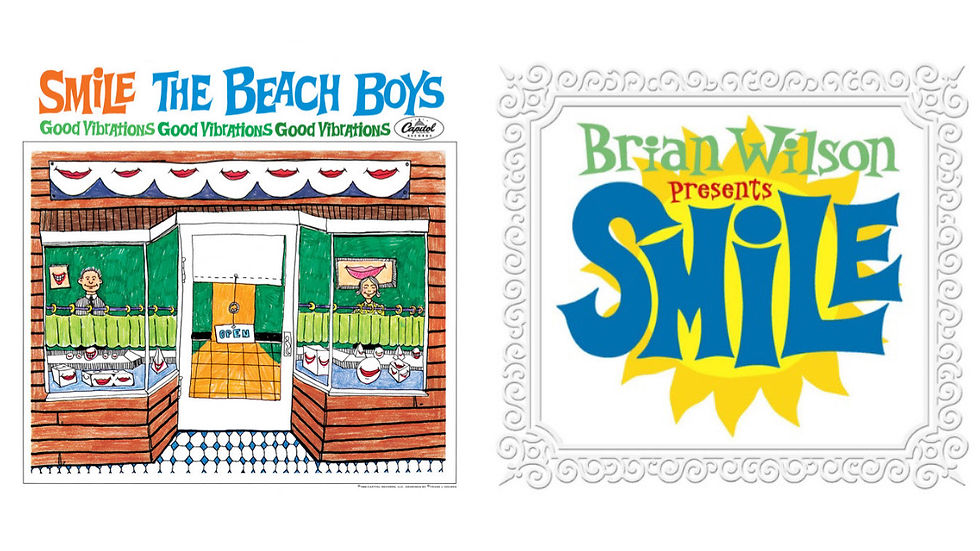
And so, the Beach Boys’ identity crisis began. Yes, they sing about surfing, cars, and girls. They also sing about deep sadness, longing, and how uncomfortable it is growing up. They’re clean-cut, nice young men, but they also get stoned and trip. You can imagine how difficult it’d be to market a group with two faces. Should Capitol push the Brian-led stuff that gained immediate acclaim overseas, or should the Boys become a nostalgia act to sell out stadiums at home? We know which stance won in the end. But this identity crisis would follow the Beach Boys for quite literally the rest of their careers. “Good Vibrations” closed the Pet Sounds chapter and opened the next; an arc of Brian’s life that would play out over the next 38 years. The SMiLE saga.
This is how I explain it: Brian was a confident driver. But he never charted the whole route from start to finish, and he had a lead foot. Brian had to have someone in the front seat holding the map and pumping the brakes when he drove too fast. He had people to pump the brakes on Pet Sounds. With SMiLE, he did not. Save for the nostalgia act thing, the Beach Boys swan-dive into obscurity.
“Not since Pet Sounds...will (Brian) do an entire album where he conceives it, he creates it, he composes it, he arranges it, he produces it, he sings it, and he does it his way, without any static...He was immensely powerful when he made this record. And so, he lost that power. It was the last time he realized fully his ambition.”
quoted from: personal interview with David Leaf, 4/23/2026.
About thirty years later, something interesting happened. Pet Sounds received mass critical re-evaluation; peaking in the 2010s. Brian took the album out on the road with an orchestra in 2000, then again with his band in 2002. Had he not done that, we may never have gotten Brian Wilson Presents SMiLE in 2004. The “Pet Sounds Sessions” saw an official release in the Nineties, the Boys put out another box set for its 50thanniversary. Love and Mercy was in part about the making of the album. It’s consistently held the number-two slot on Rolling Stone’s “500 ‘Greatest Albums of All Time’” list. As of the album’s 60th anniversary, we’re seeing a plateau in Pet Sounds’ popularity, even a slight decline. Hell, Alex James of Blur went and called the album “shit” as I was writing the script of my video! Not cool, cheese man!!
Was the Pet Sounds adulation heavy-handed? Yeah. But if you ask me, people are turning away from Pet Sounds because of the endlessly frustrating post-irony, post-sincerity culture of the 2020s. Any time anyone does anything earnestly and puts it out into the world, they’re “larping,” being “performative,” or deemed “cringe,” which is a sentence worse than death. How does an album as earnest as Pet Sounds fit into a pop culture dictated by these arbitrary rules? Andrew Loog Oldham might just prove that we’ve looped back to the circumstances under which this album was released: “Brian put his heart in his music with Pet Sounds at a time when we were all using other muscles...it spoke for me when I was too busy to have a personal life.” The Rolling Stones’eccentric manager out here proving time is a flat circle.
“Without Pet Sounds, essentially the Beach Boys are the Four Seasons. They’re just a group who made a whole bunch of hit records in the early and mid-’60s, and then lived off those hits. Pet Sounds and ‘Good Vibrations,’ that's what made them, to me, legendary. Without that, they're they're just another American group.”
quoted from: personal interview with David Leaf, 4/23/2026.
Concept Album?
What more could one say about Pet Sounds six decades after the fact? Not only has it been in this world for six decades, by some (Rolling Stone-shaped) metric, it’s the second most critically-lauded album of all time.
Let’s start by settling the “concept album” debate. Tony Asher insisted him and Brian didn’t write with an overarching narrative in mind. I believe him. But the thoughts and feelings expressed on Pet Sounds came from somewhere. Brian and Marilyn’s marriage was never on solid ground. Brian experimented with all these new people, musics, and substances. He had a lot of pressure on him from his family and label. This album articulates the feelings of a guy who’s loved and lost, and trying to find his place in the world amid all the noise. That is coming of age. Teenagers know something children don’t and adults forget, right? The vast majority my audience haven’t been teenagers for fifty years. The rest of them are teenagers now, and are in the thick of it. I haven’t been a teenager for about eight years now, I’ll be 27 in June. But I haven’t forgotten the inherent melancholy of being a teenager. Pet Sounds doesn’t all come from the same character or storyline. The melancholy, if anything, is the thing that links the songs.
Not to get meta here, but I was quoted in Harvey Kubernik’s recent Pet Sounds anniversary piece for Cave Hollywood. There, I called Pet Sounds the first of the “cellophane” albums. I got this term from Joni Mitchell’s description of Blue in her famous interview with Cameron Crowe for Rolling Stone. Blue, John Lennon’s Plastic Ono Band, and Dylan’s Blood On The Tracks all fall in that “cellophane” lineage. They expose their respective artists’ cores so deeply, it feels equally cathartic and voyeuristic for the listener. Imagine my surprise when I crack open God Only Knows: Brian Wilson, The Beach Boys, and the California Myth for the first time in a while and David Leaf basically said the same thing! He argues Pet Sounds is “a Brian Wilson solo album in that the songs expressed the innermost feelings of its creator. Pet Sounds was the record of a singer/songwriter years before that kind of expression came into rock vogue. The exploration of his mind and emotions give Pet Sounds a coherence that was totally new in rock music.” After Plastic Ono Band, Blue, Blood On The Tracks, and Pet Sounds, their respective writers put walls up between themselves and us. John hauled Phil Spector in. Joni went jazz. Bob painted his face and ran off with the circus, then found Jesus. Brian shut down. Though he said, “Good, emotional music is never embarrassing,” never again would he reveal quite so much of himself. This is a key element of what makes a cellophane album; what happens after. Pet Sounds as a concept album? No. The work of an auteur? Yes.
While I’ve always considered SMiLE to be a Brian Wilson Album, I think of Pet Sounds as a Beach Boys album. Though they don’t play their instruments, it still has that Beach Boys touch; the harmonies, Carl singing “God Only Knows.” Love ’em or hate ’em, Mike’s lyrics.
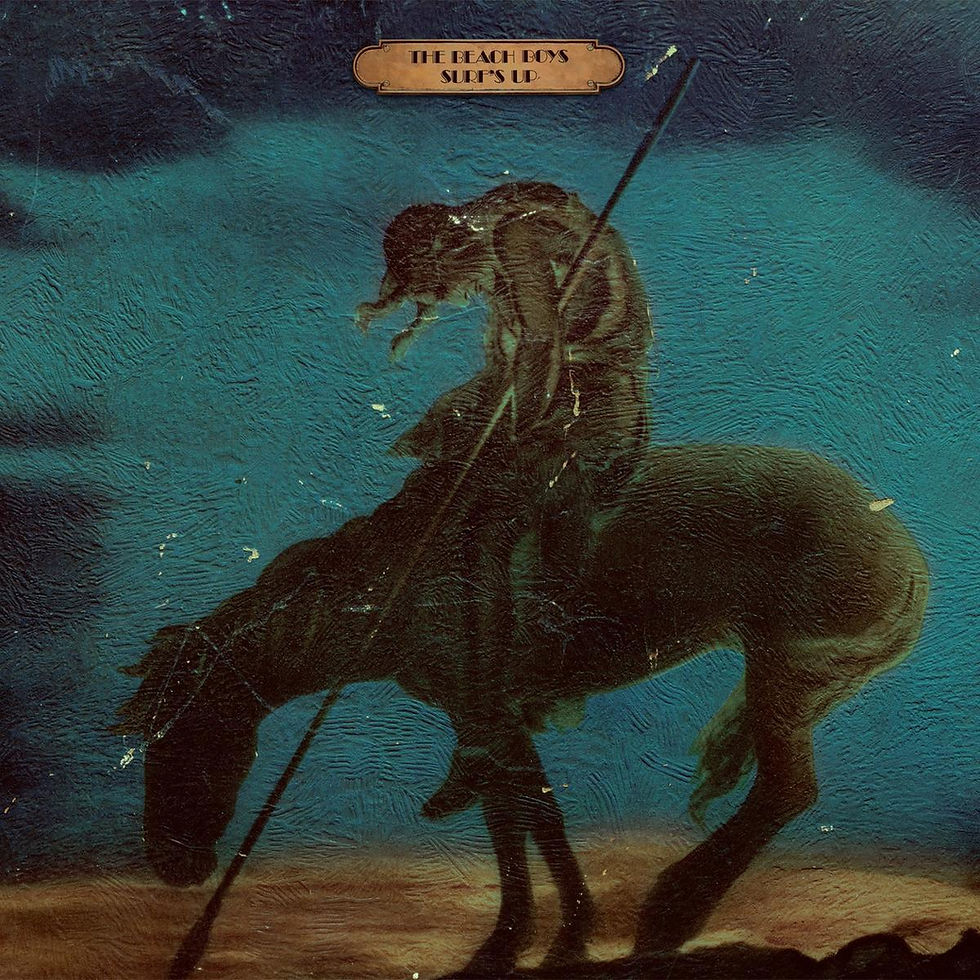
Speaking of the lyrics: I see lots of grumbling about the supposedly “childish” writing of Tony, Brian and Co. The poetry of Beach Boys lyrics are rarely in the lyrics themselves (not unless you have Van Dyke Parks on board for “Surf’s Up.”) More often, the poetry lies in what surrounds the lyric. The writing could be morearticulate, but the feelings the songs express are not. They’re basic needs. What makes the music of Pet Soundsamazing (particularly in mono as Brian intended) is the variety of textures, song structures, and vocal performances. The innovation this album achieved in the field of recording and the studio process is incredible; particularly for its time. The fact that many a capable artist, including its own fucking composer, have tried and failed to best Pet Sounds in the six decades since its release is a testament to its greatness.
Inside The Piano
When I spoke to David Leaf for this anniversary celebration, he said that Wouldn’t It Be Nice was one of his favorite songs on Pet Sounds; but that young people these days might not be able to relate to it anymore. At a glance, yeah, its message reads as dated. “Aw shucks, I can’t wait until we’re married, then we can live together and live happily ever after!” That world just doesn’t exist anymore. Nowadays it’s commonplace to wait until well into your thirties to get married and to cohabitate before marriage. (I for one think it’s a great idea. It saves you a lot of grief down the road!) But when David said people these days can’t relate to “Wouldn’t It Be Nice” anymore, he seemed to have forgotten something unique to our modern era: the long-distance relationship. In this context, “Wouldn’t it be nice if we could wake up/In the morning when the day is new/And after having spent the day together/Hold each other close the whole night through” isn’t old hat. It’s two people with a strong emotional connection yearning to close whatever distance is between them to create a world where they belong. That’s timeless.
John Coltrane had what were called the “Coltrane changes.” “Giant Steps,” you know? I don’t know why we don’t call any of Brian’s changes the “Brian changes.” He came up with chord facings just as challenging to play and instantly-recognizable to the ear. The first notes of Pet Sounds are a serious contender for title of “Brian changes.” The graceful, pretty twelve-string guitar almost sounds like a harp (it’s a Danelectro Bellzouki, quite a unique model.) Then, BOOM! Two-three-four, BAH-BOOM! It locks down the key change for the chorus and enforces our narrator’s hope. If we just wait a little longer and we keep talking about it, it’s meant to be, and it’ll be. One of the things that made The Beach Boys special were their ability to take a vocal pop song and give it an arrangement that bursts at the seams. The rhythm of “Wouldn’t It Be Nice” is propelled by two accordions, twotenor saxophones, and two basslines in two different keys. It’s a wonder any of this worked together, but it did! The Boys’ doo-wop and barber shop roots are still there. See the “run-run-wah-ooo”s under Brian’s lead, and the “Good night, buh-buh-baby/Sleep mmm-tight, buh-buh-baby” round-robin from Mike. I think of it as young people who keep saying goodnight to each other because neither one really wants to hang up the phone.
The beginning of You Still Believe In Me is another fakeout. It sounds like harpsichord, but it’s really an experiment inside the piano. All the cool artists and musicians of 1966 hip to John Cage. He had musicians opening up pianos and playing strings inside, either manually or with objects. Brian took that idea and made it into the opening of “You Still Believe In Me.” He got inside the piano to pluck the strings while Tony pressed the keys.
“You Still Believe In Me” serves as the true thematic beginning of Pet Sounds. Every subsequent song either embraces, is ashamed of, or tries to hide insecurity and vulnerability. These are feelings men struggle to express. Men are taught to be reserved, composed, measured. Lead with facts and logic, not emotions (yet in reality, men are much more emotionally-driven creatures than women!) The narrator of “You Still Believe In Me” recognizes his shortcomings. “I know perfectly well I’m not where I should be/And I’ve been very aware you’ve been patient with me.”
My favorite Beach Boys song is “She Knows Me Too Well.” “I treat her so mean, I don’t deserve what I have/And I think that she’ll forget just by making her laugh/But she knows me...knows me too well.” Both the narrators of “She Knows Me Too Well” and “You Still Believe In Me” recognize they’re not good boyfriends. Their girlfriends really should dump them. But out of love and too much patience, they stay. Let me be clear: these girls shouldn’t leave because their boyfriends “aren’t where (they) should be” in life. It’s for their emotional immaturity. “I can’t help how I act when you’re not here with me.” Could it be that these guys are emotionally stunted because of the huge expectations placed upon them to be “strong” all the time? He collapses under new demands of being a man.
“I try hard to be strong,
But sometimes I fail myself.
And after all I’ve promised you, how can it be?
You still believe in me?”
Another key difference between “She Knows Me Too Well” and “You Still Believe In Me” is how the narrator responds to his girl always choosing him in the end. Here, he’s full of childlike wonder at her capacity to believe in him. The spectacular vocal round of “I wanna cry” is full of wonder. I’m surprised more authors don’t point out its resemblance to “Gloria in excelsis deo.” Brian was a spiritual guy. God is everywhere, especially in unconditional love...or maybe that’s more like Jesus. God sent plagues upon us and shit.
Bicycle bell wasn’t an accident, but it left in the mix from “In My Childhood.” Since the tracks had already been mixed down, Brian couldn’t scrub it out. The horn was added for an extra pop of whimsy.
That’s Not Me is one of the most intriguing songs of the bunch. The music is always shifting. For instance, “I miss my pet and the places I’d known/And every night as I lay there alone, I will dream…” stays open instead of closing like the “just one girl” line. The narrator asks a lot of questions. Am I truly an independent, self-actualized individual? Who am I at my core? Do I need others’ acceptance? Where is home to me? How do I maintain relationships with family as I grow and change? Mike sings lead, giving a freshman voice to these concerns. “I wanted to show how independent I’d grown now, but that’s not me.” Considering the narrator has left his girlfriend behind when she “needed his love,” he’s packed up and split for the city, “I miss my pet and the places I’d known,” and he writes home, I think “That’s Not Me” is about a guy who’s left for his first semester of college. He’s unsure of what he’ll come home to.
“My folks when I wrote them, told them what I was up to,
Said, ‘That’s not me,’”
How frustrating it is when our parents have the image of our child selves stuck in their heads! These are the new conflicts of a relationship with your parents as an adult child. Where before it was, “I want to go to the movies with my friends but mom says I have to stay home and do my homework!” Now it’s, “I have the autonomy to go wherever I want with whoever I want. I’ve had all these new experiences, how do I bring them home?” You change the most between 18 and 30. How do you hang onto – or find – your true sense of self as you experience all these new things?
“I went through all kinds of changes, took a look at myself,
And said, ‘That’s not me.’”
Every young person has that moment. They’ve changed their clothes, dyed their hair, picked up new hobbies and interests and lost old ones. At a certain point, you look in the mirror and say, “My teenage self wouldn’t recognize me now.” If you’re a self-actualized person, you take stock and realize your world view is different. “I soon found out that my lonely life wasn’t so pretty.” How you respond to that is up to you. Good grief, when we’re young, we have so many questions! And we only get answers to a few. The rest we have to explore for.
If you listen to Brian’s tracking vocals for Don’t Talk (Put Your Head On My Shoulder,) he cut all eight parts – eight part harmony!! – himself. Brian’s “ear” (such an overused term, but it’s true) was one-of-a-kind. He could hear highly complex harmonic structures and execute them. If you listen to the opening of the album version of “Don’t Talk,” the chords are a simplified version of the tracking vocals he cut. Absolutely breathtaking.
And we haven’t even gotten to what Brian himself sings! Along with “Surf’s Up,” “Don’t Talk” was the most beautiful melody he ever wrote. It sweeps up when the strings swell, falls when the piano curls up around itself supine. It rises, then just collapses. I’ll get into the Beach Boys’ vocal blend later, but I believe the Boys subconsciously built their tone and blend around Brian’s voice. Though his falsetto was a sublime and delicate instrument – like fabric weaved of threads of gold, it was so supple – the things I’ve always loved most about Brian’s voice are his lack of vibrato and his natural slur. He was mostly deaf in one ear. L’s, M’s, N’s, and S’s were the letters he dragged on, and some O’s. That slur is so unique to him. On a song like “Don’t Talk,” its thick, viscous, syrupy-sweet feel like globs of maple syrup, that voice becomes part of the arrangement. It’s a much-needed counterpoint to the funereal organ, big drums, and bells. We’ve brought Hollywood drama to Pet Sounds. The sun has set on side one of the record. We had brightness on “Wouldn’t It Be Nice,” and we will have it again by side one’s closer. “Don’t Talk” is the point furthest from light.
It’s so grand and heavy, you’d be forgiven for missing its tenderness.
“I can hear so much in your sighs,
I can see so much in your eyes.
There are words we both could say,”
But they don’t talk. They just coexist in silence. There’s external conflict between, “Don’t talk, put your head on my shoulder” and “Take my hand/And let me hear your heartbeat.” Put your head on my shoulder, let me be the one you lean on, but I also need to lean on you right now. I need to put my head on your chest and hear your heartbeat. Our narrator is being so vulnerable. You can feel the tension. He pleads us to, “Listen, listen, listen,”and I crack every time.
Get ready for tonal whiplash, here’s I’m Waiting For The Day! I always thought the lead vocal was split up but no, Brian just changed his tone between the first and second verses. He’s meek on the first, and more confident on the second. The timpanis come crashing in; this is another show of confidence on side one. There’s a well-placed oboe on the tender verses, and shining moment for the flutes on the sunny instrumental break. “I’m Waiting For The Day” is about a guy trying to “love this girl better” after a bad relationship. “He hurt you then, but that’s all done,” and I was your shoulder to cry on. But when he doesn’t get his desired outcome, things inevitably turn sour at the bridge: “You didn’t think that I could sit around and watch him take you!” You’re going back to him after all that? I deserve something in return for making you feel better!
Let’s Go Away For A While is the first of Pet Sounds’s two instrumentals. Both are the last tracks before their respective side’s closers. This was supposed to be a backing track for vocals, but that wasn’t to be. It was left as an instrumental ballad, with exotica-like vibes. Think Bacharach mixed with Dionne Warwick. It’s the most of-its-time piece on Pet Sounds, full of renewed hope – and a fabulous moment for the vibes.
Sloop John B started as Bahamian folk tune, recorded by Alan Lomax and Mary Elizabeth Barnicle for Lomax’s landmark collections of folk recordings. These compilations were instrumental in the folk revival of the 1950s and ’60s. The Weavers recorded “The Wreck of the John B” in 1955, the Kingston Trio recorded it in ’58, Jimmy Rogers interpreted it in 1960. Al Jardine loved the song. He sang it with his high school folk group the Islanders, and brought it to Brian in the summer of 1965.
This might be my hottest Pet Sounds take: if you don’t rock with “Sloop John B,” you don’t truly like Pet Sounds.
Stephen Davis called the Beach Boys’ version “boring” but I’d argue the arrangement is in magnum opus territory. How do you hear this…
...and turn it into this?!
Several lush overdubbed tracks of 12-string guitars, piano, and the obligatory tambourine – this is the mid-’60s, after all – color in the lines. The flutes, glockenspiel, clicker, chubby bassline, and low brass give a folk song a maximalist and uniquely “Beach Boys” twist. Then when you pull it all back and we hear our first (and only) taste of a capella singing on the whole of Pet Sounds, you leap out of your seat. That’s it, that’s the Beach Boys!
Their vocal blend was bar-none – and it was because they had a cheat code. Being that Brian, Carl, and Dennis were brothers and Mike was their cousin, the anatomy of their voices, their actual vocal cords and voice boxes, were genetically similar. They all had different vocal ranges, they were tonally pretty similar. They could easily tweak their vowel sounds and the sharpness of their consonants to fill in a blend with Brian’s natural slur.
I love trading the lead back-and-forth between “crew members” Brian and Mike. Mike’s interjection of “This is the worst trip I’ve ever been on” is so funny. For the guy who made a big stink about the LSD reference in “Hang Onto Your Ego,” he sure was fine with the double-entendre on “Sloop John B!” I’m pretty sure that’s why Brian took interest in the song in the first place. It’s a boating voyage and in one context a voyage of the mind in another.
I’m sick of people knocking “Sloop John B” or saying it doesn’t deserve its place on Pet Sounds because it “doesn’t fit with the story.” By that logic, the instrumentals wouldn’t work on the record because they don’t have lyrics! Clearly, that logic is bullshit!
The God of it all. Brian wasn’t sure about including it in the title of the side two opener, but Tony fought for the lyric.
About the spiritual element of the Beach Boys’ music, Carl said, “We believe in God as kind of a universal consciousness. God is love. God is you. God is me. God is everything right here in this room. It’s a spiritual concept, which inspires a great deal of our music.” Elsewhere, Brian said, “It all starts with religion...I believe in God – in one God, some higher being who is better than we are. But I’m not formally religious. I simply believe in the power of the spirit and in the manifestation of this in the goodness of people. I seek out the best elements in people.” Do I believe God Only Knows was a love song to God? No. But I believe Brian wrote to god and the angels. Wouldn’t It Be Nice author Charles Granata says the song has “nothing to do with God, but everything to do with teenage angst,” I also disagree with him!
“God Only Knows” is a song about the reality of love. I want to believe in unconditional love, but I know better. The human element makes it uncertain. “People are part of my music,” Brian said in the Melody Maker “genius” profile. “A lot of my songs are the results of emotional experiences, sadness and pain. Or joy, exultation, and so on…” This is what makes “Something” such a brilliant love song. “You’re asking me will my love grow? I don’t know/Stick around, it may show/I don’t know.” The opening line of “God Only Knows” is brilliant. “I may not always love you.” That’s followed by, “You’ll never need to doubt it/I’ll make you so sure about it.” I may doubt myself, but I won’t make you doubt me. The narrator is so sure of his love’s impact on his life, “God only knows what I’d be without you,” but is unsure of how he’d proceed in a world without. Life would still go on, but what good would living do me?
This is a prime example of how the poetry of Pet Sounds lies in what’s left out. The arrangement fills in the blanks. The iconic French horn foreshadows Brian’s top part of the vocal round at the end, “What I’d be without you…” The cups as percussion and sleigh bells are quirky. This is another wonderful moment for sensitive flute flourishes – and for a supposedly “baroque pop” album, it sure has taken a long time for a harpsichord to make an appearance!
Carl was the perfect choice to sing “God Only Knows.” He sounds young and reverential; unsure, but clinging to his devotion. My first real exposures to the Beach Boys were The Beach Boys Christmas and “God Only Knows.” If you’ll remember, Carl only had his first lead vocal on that Christmas album. So for the longest time, I assumed Carl was one of the lead vocalists of the band! He feels like such a natural fit, I’m confused as to why he didn’t sing lead more. But hey, it makes “God Only Knows” a gem in the Beach Boys catalog.
What key is this even in? God only knows! People have made whole YouTube videos trying to decipher it. The song’s weak tonal center means, again, it’s unsure and clinging onto whatever it can. I say we leave it at “it’s in the key of Brian” and move on.
Let’s look at I Know There’s An Answer and “Hang Onto Your Ego” together, the former a response song to the latter. In Granata’s Wouldn’t It Be Nice, Mike said, “The people that I’d seen indulge in those things exhibited behaviors and mannerisms that left much to be desired, and ‘Hang Onto Your Ego’ was a lyrical by-product of that drug subculture. I thought a positive message that wasn’t related to the drug culture would be preferable on Pet Sounds, so I came up with the alternative lyric, which reflected finding yourself. I always tried to put a positive spin on things.”
Mike Love, everybody, always trying to put a positive spin on things!
“Astrologically, Brian is a Gemini, and they write through desperation. I’m a Pisces, and I write through inspiration. It’s a different way of coming at it. I suggested another direction to go in, and Brian didn’t balk.” Sure, Mike. Ironically, the lyric blatantly referencing LSD...
“They come on like they’re peaceful, but inside they’re so uptight.
They trip through the day and waste all their thoughts at night”
...is the same in both versions! Brian’s original lyric doesn’t glorify drug use! The greatest change made between versions is the chorus. “Hang onto your ego/Hang on, but I know that you’re going to lose the fight” versus, “I know there’s an answer/I know now, but I had to find it for myself.” Simply “finding the answer for yourself” could mean any number of things. “Hang on, but I know that you’re going to lose the fight” means proceeding with caution or you’ll get swallowed up. Could it be that the original lyric is more anti-drug than the rewritten one? This is why I’m a “Hang Onto Your Ego” defender; not simply because Mike rewrote it, but because of the pride he exercised in this situation leading to more ambiguity in regards to the song’s message. It’s accidentally hilarious!
Brian liked the Here Today chord progression so much, he recycled it for “Good Vibrations.” I’d call this another minor lyrical cut in the same category of “I’m Waiting For The Day,” in the sense that the arrangement blows it out of the water. I mean, come on. That stop-time with the rollicking saloon piano and the studio banter left in, then the baritone saxes come in and wallop the whole thing in the jaw. It’s Pet Sounds’ last little burst of joy, and always a pleasure to listen to.
Tony Asher said he couldn’t relate to I Just Wasn’t Made For These Times. He was a businessman from the upper-crust. Think of the guy the song really came from. Brian said it was “about a guy who was crying because he thought he was too advanced, and that he’d eventually have to leave his friends behind. All my friends thought I was crazy to do Pet Sounds.” Well okay, Brian, but this song definitely isn’t about Pet Sounds. It’s also not about simply wishing you were born in a different era. “I Just Wasn’t Made For These Times” is about existing in a world that just was not, and never will be, designed for you.
“I keep looking for a place to fit in where I can speak my mind,
And I’ve been trying hard to find the people that I won’t leave behind.”
“Where can I turn when my fair-weather friends cop out? What’s it all about?” Why can’t I find people who will support me? “They say I got brains, but they ain’t doin’ me no good/I wish they would...” Why can’t I get out of my own way? Why are my skills so ill-suited to the world I’m in? If I work so hard, why do things keep going wrong?
“Each time things start to happen again,
I think I got something good going for myself,
But what goes wrong?”
Drums, clip-clopping percussion with lots of reverb, and many voices are layered on top of each other. The most blankly confessional lines on the whole album are obscured. Only if you listen hard will you hear, “Ain’t found the right thing I can put my heart and soul into,” and in Spanish, “When will I be?” When is it my turn to come into my own? It’s like someone asking you, “What’s wrong?” And you just know if you told them the honest truth (if you could articulate it in the first place,) they just wouldn’t “get it.” All of these thoughts layer on top of each other, but all he can get out is, “Sometimes, I feel very sad.” The narrator wants to be accepted without judgement, but concludes it isn’t possible. “I guess I just wasn’t made for these times.”
Brian wrote the title track for a James Bond film, either Dr. No or You Only Live Twice, but it was turned down. It’s another groovy example of Brian’s interest in exotica.
Where our side one closer was a spectacular beachside fairground ride with lights and swings and fun, Caroline, No ends the album on a somber note. It’s interesting to note this was the one and only Brian Wilson solo single. Bruce thought he wrote it about himself. “I think that Brian realized it was going to be over soon, that special door that opened for him, where he’d do special things naturally…” I think this is a stretch; some mythologizing after the fact. In reality, this song is about Brian seeing a high school crush years later and seeing she’d grown up. She’d cut her hair, there was a sober air about her. “You said you’d never change, but that’s not true.” It’s easy to say when you’re a teen that you’ll “never change.” Then you go out into the real world like the narrator of “That’s Not Me” and see change is inevitable. We have to grow and change in order to survive. From the beliefs we hold right down to the food and drink we eat. Do you think you could still sustain yourself on nothing but pan pizzas and chocolate chip Eggo waffles like you could when you were sixteen? Hell no! After so much time, the voice of “Caroline, No” is unable to move on. He either hasn’t changed at all or refuses to acknowledge his changing. In one way or another, he’s frozen in time, and I don’t think it’s because of Caroline. The song is rarely about the muse, it’s really about what she brings forth. The fantasy in his mind’s eye has shattered. He’s been brought to his knees by what Caroline represents: a happier time he can never relive. “Will I ever find in you again the things that made me love you so much then?” Those times exist only in his memory of Caroline, and that’s gone forever. “It’s so sad to watch a sweet thing die/Oh Caroline, why?”
I want to go back to the point of our current culture’s earnesty crisis. Everything, every expression and feeling, is now something to be ashamed of. 2026 is proving Pet Sounds isn’t an album for cynics, wet blankets, the dishonest, or those without imagination. It’s a piece of art created by and for hopeless romantics, misfits, and lovers of joy, fun, and whimsy. Of course I’m a Pet Sounds defender. I’m nothing if not terminally whimsical! Like Brian said, “Good, emotional music is never embarrassing.”
When I asked David Leaf why Pet Sounds is important, he listed many valid reasons. It’s a master work in composing, arranging, and producing. The lyrics are great. It’s the Beach Boys at their absolute vocal peak. The listener can put it on and allow themselves to be taken on a journey through hope and heartbreak. The music is without an equal; no one else was doing anything like this in 1966, and no one has done anything on-par since. David believes that institutions will teach Brian’s music hundreds of years from now the way they teach Gershwin, Schubert, Beethoven, and Mozart. Pet Sounds is important because Brian Wilson is important.
Why do I think Pet Sounds can endure 60 years later? No matter how you tamper it down with a too-cool-for-school attitude or dress it up with bells and whistles and the occasional bicycle horn, these feelings can’t be pinned to one place in time. As long as there are lovers, there will be lovers thinking, wishing, hoping, praying for their dreams to come true. As long as there are kids growing up, there will be kids realizing their lonely lives aren’t so pretty. As long as there are guys who try hard to be strong, there will be loves to believe in them. As long as there is a God, there will be “God only knows…” As long as there are young people living and those of us who remember how that living felt, there will be Pet Sounds.
Personal favorites: “Wouldn’t It Be Nice,” “You Still Believe In Me,” “Don’t Talk (Put Your Head on My Shoulder,” “God Only Knows,” “I Just Wasn’t Made For These Times”
Favorite instrumental: “Let’s Go Away For A While”
– AD ☆
Badman, Keith. The Beach Boys: The Definitive Diary of America’s Greatest Band, On Stage and In the Studio. San Fransisco: Backbeat Books, 2004. https://archive.org/details/beachboysdefinit0000badm/mode/1up
Davis, Stephen. “Pet Sounds.” Rolling Stone, 6/22/1972. https://www.rollingstone.com/music/music-album-reviews/pet-sounds-249007/
Doe, Andrew. Brian Wilson and the Beach Boys: The Complete Guide to Their Music. London: Omnibus, 2004. https://archive.org/details/brianwilsonbeach0000doea/
Gaines, Steven. Heroes & Villains: The True Story of the Beach Boys. New York: Da Capo Press, 1995 ed.
Granata, Charles. Wouldn’t It Be Nice: Brian Wilson and the Making of the Beach Boys’ Pet Sounds. Chicago: Chicago Review Press, 2017 ed.
Greavatt, Ren. “Beach Boys’ Blast.” Melody Maker, 3/19/1966. https://www.worldradiohistory.com/UK/Melody-Maker/60s/66/Melody-Maker-1966-03-19.pdf
Hall, Tony. “The Tony Hall Column: LPs.” Record Mirror, 6/4/1966. https://www.worldradiohistory.com/UK/Record-Mirror/60s/66/Record-Mirror-1966-06-04.pdf
Jopling, Norman. “Beach Boys Best: An In-Depth Review of the Beach Boys Widely-Praised New Album ‘Pet Sounds.’” Record Mirror, 7/2/1966. https://www.worldradiohistory.com/UK/Record-Mirror/60s/66/Record-Mirror-1966-07-02.pdf
Kubernik, Harvey. “BRIAN WILSON’S MASTERPIECE, THE BEACH BOYS PET SOUNDS TURNS 60.” Cave Hollywood, 4/6/2026. https://cavehollywood.com/the-beach-boys-masterpiece-pet-sounds-turns-60-landmark-album-celebrated-with-audiophile-vinyl-releases-pet-sounds-sessions-highlights-collections-brian-wilson-and-harvey-kubernik-1974-200/
Leaf, David. God Only Knows: The Story of Brian Wilson, The Beach Boys, and The California Myth. London: Omnibus, 2024 ed.
Ledgerwood, Mike. “Beach Boys.” Disc, 4/24/1966. https://www.worldradiohistory.com/UK/Disc/1966/Disc-&-Music-Echo-1966-04-23.pdf
Traynor, Don. “Brian, Pop Genius!” Melody Maker, 5/21/1966. https://www.worldradiohistory.com/UK/Melody-Maker/60s/66/Melody-Maker-1966-05-21.pdf
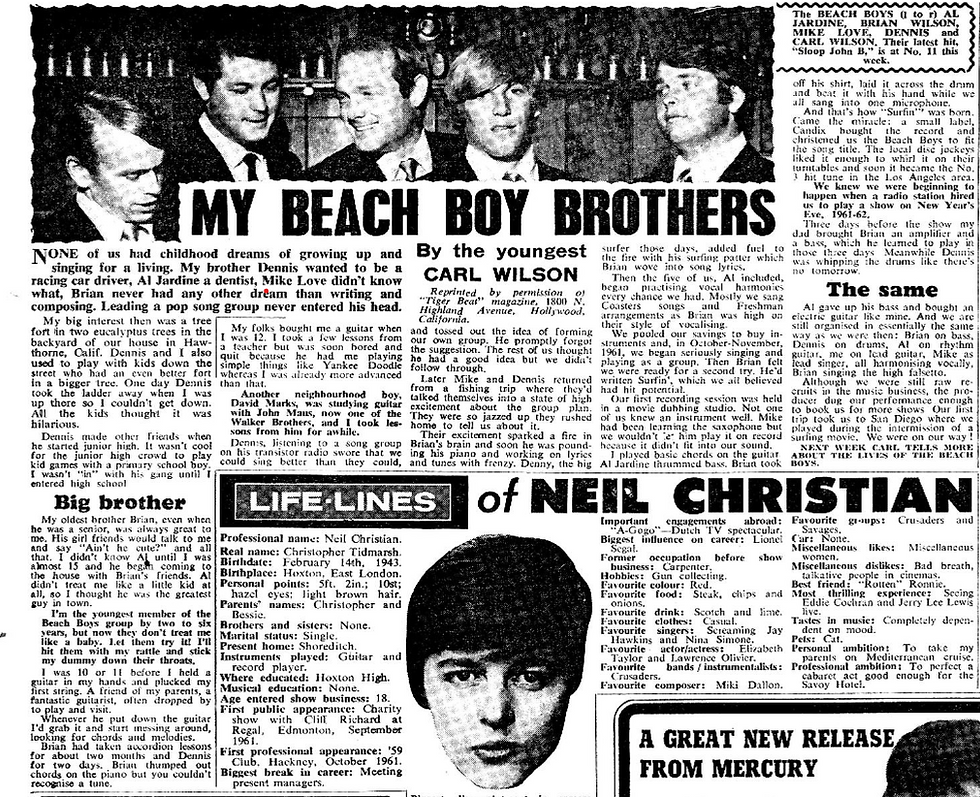
“My Beach Boy Brothers: Carl Wilson Continues His Story.” NME, 5/6/1966. Originally printed in Tiger Beat. https://www.worldradiohistory.com/UK/New-Musical-Express/1966/NME-1966-05-06.pdf


Hope this means you are on the mend, Abby. I remember being a snarky little punk once to and then I really discovered The Beach Boys. This album (usually one I rank as my favorite) is so much a part of every greatest hits album and pop culture that it is hard to fathom that it was a flop here in the States. I don't miss the forced snark from my peers and eventually "those darn kids" won't either. They will grow up, fall in love and learn "They Just Weren't Made for These Times" like the rest of us. Somewhere in the background Carl will still be singing "I may not always love you..."
a piece of writing absolutely involved with the creation of pet sounds in a specific time and it's lasting impact on our perceptions and emotions. i wonder if i could pretend clip-clopping percussion was mine and use it in a vinyl friday comment.
got no issue with the clarity, simplicity, of the lyrics on the album. they kind of focus the mind while the emotions of Brian's music roll up the beach like an incessant tide.
no,that guy on the written page, writing hits requires that you know what you're doing it's got fuck all to do with luck.
only occasionally do i read your written reviews before the corresponding video. let's all believe in writing. it represents us and,…