
The Notorious Byrd Brothers
Catch them if you can, they're goin' back...the Byrds set the curve for "back to basics" (with a twist) on The Notorious Byrd Brothers. review

The Byrds:
Roger McGuinn: guitar, vocals, Moog
Chris Hillman: bass, vocals
David Crosby: guitar, vocals, bass on “Old John Robertson”
Michael Clarke: drums on “Artificial Energy,” “Draft Morning,” “Change Is Now,” “Old John Robertson,” “Tribal Gathering,” “Space Odyssey”
Clarence White: guitar on “Natural Harmony,” “Wasn’t Born To Follow,” “Change Is Now”
Red Rhodes: steel guitar
Curt Boettcher: harmony vocals
Hal Blaine: drums on “Get To You,” “Tribal Gathering”
Jim Gordon: drums on “Goin’ Back,” “Natural Harmony,” “Wasn’t Born To Follow”
The Firesign Theater: sound collage, “Draft Morning”
Maybe Gene Clark?: harmony vocals on “Goin’ Back;” co-writer of “Get To You”
Produced by Gary Usher
cover by Guy Webster
the notorious byrd brothers review
“Like the imaginary pupils under tutelage in the song, (the Byrds) had already sold plastic ware, topped the charts and experienced the ambivalent delights of being chased and torn apart by screaming fans. Now they were actually living the final verse of the song – coming to terms with the ‘strange game’ of post-fame and its attendant anomie...as the lyrics concluded, with chilling precision, they were now caught somewhere between a new age spirit of rebellious disenchantment and an old-world view that demanded they fulfill their appointed role in the pop circus: ‘Don’t forget what you are, you’re a rock ’n’ roll star.’”
quoted from: Johnny Rogan, Requiem For The Timeless, Vol. 1 (2011.)
Don’t Forget What You Are
Though I award this title to the year 1966 (and so did Paul Kantner,) most histories of contemporary music pin February of 1967 as the honest-to-goodness beginning of the “Summer of Love.” Jefferson Airplane released Surrealistic Pillow, Jimi Hendrix debuted on London club circuit, Sergeant Pilcher lead the infamous Rolling Stones drug bust at Redlands. The Byrds followed the Beatles, Bob Dylan, and the Beach Boys’ “album over singles” lead from the year before with their February ’67 release, Younger Than Yesterday. This album is notable in the Byrds canon for several reasons, beginning with Chris’s emergence as a songwriting power. He came out swinging with compositions like “Have You Seen Her Face,” “The Girl With No Name,” and “Time Between,” and cowrote Younger Than Yesterday’s promo single, “So You Want To Be A Rock ’N’ Roll Star.”
Though biographer Johnny Rogan alleged the song was a Monkees diss track, “Rock ’N’ Roll Star” simply breaks the fourth wall to address the Byrds’ own dimming star. “We wrote ‘So You Want To Be A Rock ’N’ Roll Star’ to the audience of potential rock stars, those who were going to be, or who wanted to be, and those who actually did go on and realize their goals.” The single peaked at number 29 on the Billboard singles charts. Not great considering the two number-ones this band had under their belt, but not terrible either, considering the poor performances of “Fifth Dimension” and “Mr. Spaceman.”

Younger Than Yesterday is also notable for David Crosby’s “Mind Gardens,” or rather, the card it pulled from an already-precarious house. “We fought Crosby on that song” Chris remembered (so did producer Gary Usher,) “but (Crosby) managed to get it on the album anyway, and it’s lousy. What’s more, Crosby later admitted that, looking back, he didn’t think it was very good either.”
From February through March, the Byrds toured Europe for the first time since 1965; when their aloof, California cool-kid attitude got them on the bad side of the British music press. Hugh Nolan of Disc and Music Echo acknowledges successes of Younger Than Yesterday, but just can’t put the perceived snub behind him.
“...there seems to be some barrier between the group and British audiences. However good their records are they never rise in the Top 50, and their last visit here two years ago remains the glaring example of a well-thought-of group dying the death after being exposed to critical London audiences...Onstage they seemed bored, tired, brought-down and completely out of touch with the packed audiences…”
quoted from: Hugh Nolan, “Byrds sag” Disc and Music Echo, 3/25/1967.


“Rock ’N’ Roll Star” made it onto Top of the Pops, but wasn’t received well. Record Mirror reader June Perryman complained in the April 29th issue that “they were a monotonous drag.” Tough crowd!

While in London, Crosby cozied up to the Beatles. They were recording Sgt. Pepper at the time, and Croz was one of the first people to ever hear “A Day In The Life.” “By the time it got to the end of that last piano chord ring-out, I was a dishrag. I was stunned.” This confirmed his thinking that far-out was the right direction. So did Paul McCartney in his February 1967 “Blind Date” spot for Melody Maker. “I think by now they should be getting off that style of 12-string guitar and that particular brand of harmony. They really should be splitting from that scene because they’ll end up...caught up in it. Dave Crosby knows where they should be going, and so does Jim McGuinn.”
Looking at the Byrds’ set lists for this European tour, one can’t help but notice a band having an identity crisis. They played “Renaissance Faire,” “Rock ’N’ Roll Star,” and “Why” off their latest LP, “What’s Happening” and “Hey Joe” off Fifth Dimension, and covers “The Bells of Rhymney” and “My Back Pages.” The Byrds got themselves in an interesting predicament come the spring of 1967. With waning commercial success and a refusal to play their two greatest hits live, they were growing increasingly reliant on the counterculture audience, who Croz was the link to. And Croz was starting to wear out his welcome.
Natural Disharmony

First was “Lady Friend.” Unhappy with Chris and Rog’s contributions, Dave re-recorded their parts without telling them. Chris openly complaining about this to the music press as far back as 1967. In interview with John Nork, he said “Lady Friend” was “a great song, but David unfortunately went back into the studio and put all the voices on and took ours off, and he made it this mishmash crazy sounding thing that had no personality. He ripped it of personality and loaded it up with tracks of vocals of his own and it was awful.” He was a bit more diplomatic in his memoir. “It was becoming increasingly clear to me and McGuinn that David was feeling restless and was seeking new musical outlets beyond the Byrds. I don’t have a problem with that desire, if one is honest with all concerned. Unfortunately, David handled it differently.”
The Byrds took the stage at Monterey Pop on Saturday, June 17th. As the guys tuned up between songs, Croz stepped to the mic, “STP” sticker on his guitar, and he said this:
According to Crosby in interview with Ben Fong-Torres three years later, this wasn’t dissimilar from how he’d normally introduce the song.
“It was a standard introduction...We used to do it every single time we did ‘He Was A Friend Of Mine.’ The introduction for a year solid was: ‘We’d like to do a song about this guy who was a friend of ours. And just by way of mentioning it, he was shot down in the street. And as a matter of strict fact he was shot down in the street by a very professional kind of outfit. Don’t it make you sort of wonder? The Warren Report ain’t the truth, that’s plain to anybody.”
quoted from: Christopher Hjort, So You Want To Be A Rock ’N’ Roll Star: The Byrds Day-By-Day, 1965-1973 (2008.)
It was the action itself that irked his bandmates. First of all, time and place! Second, you are not the frontman of the Byrds, David, so stop acting like it. And third, was he trying to get the Byrds blacklisted? Again?? To add insult to injury, their set was terrible. Everyone was way too high, and Michael kept losing time.
Meanwhile, after having completed a tour of the midwest, Neil Young ghosted the Buffalo Springfield! The generally-accepted narrative is that he got cold feet over the Springfield’s booking on The Tonight Show. (His weirdness over being filmed at Woodstock a couple years later certainly bolster’s this theory’s credibility.) The reality is that Neil Young is gonna do what Neil Young wants to do, no matter what anyone asks of him. Instead of playing Monterey with his band, he wanted to record solo stuff with Jack Nitzsche. Enter part two of “The Monterey Incident.” On Sunday night, Buffalo Springfield took the stage with Stephen Stills’s new bestie, David Crosby.

For what it’s worth, the Springfield’s set was also a shitshow. According to Bruce Palmer, “Crosby stunk to high heaven...He didn’t know what he was doing. He didn’t rehearse, thought he knew what he was doing, didn’t and embarrassed us to the max...He came on for forty minutes and embarrassed us.”
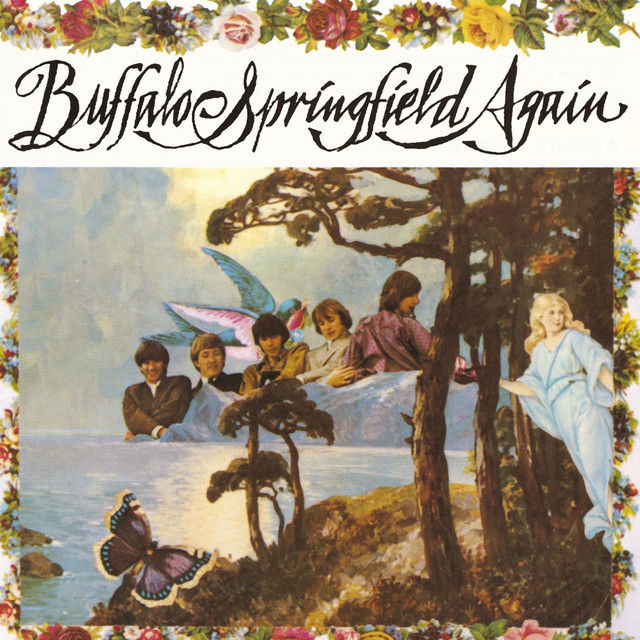
In Dave’s mind, this was just the spirit of Monterey, maaaan. Getting high and cookin’ on stage with your friends! “It got to be a matter of habit that I would do (other things,)” he said to Ben Fong-Torres, “and it’s hard to break a habit, man. Habit’s even harder to break than some kind of deliberate plot, cos it’s not maliciousness on anybody’s part.” Chris and Rog were blindsided. Ric Menck said, “It seemed clear to McGuinn and Hillman that Crosby obviously preferred playing with another band...and if that was the case, why was he sticking around?” It’s not like Crosby was hitching his wagon to a greater party: the Springfield were actively breaking up through the making of their Buffalo Springfield Again album. But again, according to Chris, it was the principle of the thing. Sure, you can help out the Springfield. We’re all friends. But could you not tell us first? This weird, secretive behavior further divided the Byrds.
Change Is Now
What often comes with interpersonal chaos? Managerial chaos! Publicist Derek Taylor quit after the Byrds’ string of gigs at the Whiskey with the Springfield and the Doors. Taylor himself wrote in Disc, “The Byrds, one of the best groups in the world, were again terrible in the Whiskey A Go-Go here. I cannot work it out. They seem to have a death-wish which is only thwarted by their indomitable heartbeat...I love them and deplore them.” Manager Eddie Ticker resigned after the second European tour, and Jim Dickson was fired that summer. The Byrds letting go of accountant and office manager, Rita Rendall, purely because she was Ticker’s wife was a big blunder; as was bringing in Larry Spector as their new manager. He managed a few of their friends: Hugh Masakela, the Monkees, Dennis Hopper and Peter Fonda. But Spector would prove to be “a thoroughly dishonest individual who led us down a path of extreme hell,” in Chris’s words. Whose idea was it to hire Spector in the first place? David Crosby’s. And who was the first Byrd to have falling out with Larry? David Crosby.
On July 31st, 1967, the Byrds recorded “Universal Mind Decoder,” a proto-“Change Is Now.” This was the first song for what would become The Notorious Byrd Brothers. After this, they'd jet off to Hawaii, where Croz would write “Draft Morning” and “Dolphin’s Smile.”
No other history of the Byrds makes a big deal of this, but it was, in fact, a big deal that Columbia Records released a Byrds Greatest Hits album that August. As we’ve learned from Capitol Records and the Beach Boys, when your label puts out a greatest hits album, you’re cooked. The label think you’re old news, and that you can no longer reliably deliver a hit. Columbia had reason for this line of thinking; “Eight Miles High” caused undue controversy and caught the ire of the Gavin Report. “Fifth Dimension” and “Mr. Spaceman” flopped, “Rock ’N’ Roll Star” couldn’t top “Eight Miles High,” and “Lady Friend” backed with “Old John Robertson” also flopped. The most successful single of the past year was “My Back Pages,” but people were starting to have doubts about the Byrds’ Dylan schtick. The March 18th issue of Record World wrote, “The Byrds have chosen another Bob Dylan tune to chant and the kids will fall for it.”
After “Lady Friend” went belly-up, the Byrds resisted recording Crosby’s songs. They had more reason to do so after a blowup while cutting “Dolphin’s Smile.” Michael was tossed out of the session, to be replaced by Hal Blaine and Jim Gordon for (most of) the rest of Notorious Byrd Brothers production.


I want to briefly break to address the aesthetics of Notorious Byrd Brothers. This may seem like a tangent, but stay with me! Just as they did with folk rock and raga rock, the Byrds set the curve for – say it with me, folks! – the "back-to-basics movement," and it’s all because of a most unfortunate incident back in January of 1967. Chris wanted to take his new bike for a ride, but he didn’t notice the carburetor was leaking. He kick-started the bike, and just as it sparked, his garage door opened. The dry Santa Ana winds came rushing in, and if you can imagine what throwing a lit match onto a pool of gasoline in the middle of a windstorm would be like, then you can picture how quickly Chris’s house caught on fire. He lost everything: all his gear, all of his paisley shirts and skinny corduroy pants, and all his Dippity Doo and hair tools used to achieve the Byrds bowl cut. Chris has literally gone back…to the basics.
The music of The Notorious Byrd Brothers, however, did not go “back-to-basics.” While recording the Byrds, Gary Usher was working on his own project, Sagittarius. Following the lead of the Beach Boys and the Beatles with SMiLE and Pepper respectively, Gary fashioned Notorious Byrd Brothers into two side-long suites. Croz wasn’t down with this direction. He was losing interest;sick of presenting song after song and having them either turned down or flop on the charts. He felt Gary was conspiring against him. The narrative that David’s “Triad” was “too scandalous” endures today. In reality, theguys just didn’t like it. This attempt to record “Triad” (there would be several more through Croz’s career) just wasn’t his best vocal. It was a “nice melody, not-so-nice lyric,” as Chris put it. “We just weren’t on the same page.” In Rogan’s text, Chris said, “I don’t think it was a moral decision. The song just didn’t work that well. David was drifting and bored and wanted to do something else, and that song just added fuel to the fire.”
If Crosby needed any more proof Usher was seemingly conspiring against him, his final straw was “Goin’ Back.” Usher heard Dusty Springfield’s recording of the song by Gerry Goffin and Carole King and brought it to the Byrds. McGuinn was alright with it, Hillman wasn’t enthused. Michael Clarke didn’t give a fuck either way, he was hardly around at this point. Croz was fully against it; adamant the Byrds should only do originals from now on. The session date came, and at a certain point that day, it became clear to Croz that “Goin’ Back” would, in fact, be on the album instead of “Triad.” He threw a tantrum and refused to participate. Roger, who typically kept his thoughts and feelings to himself, blew a gasket. Three years of pent-up frustration came out all at once as he verbally unleashed upon Crosby. His grand finale: “If you don’t want to participate, you should get the fuck out.”
As you can imagine, the vibes between the three songwriting Byrds henceforth were rancid. Their Fillmore gigs sucked. By October, Chris and Rog knew they had to fire David. Usher buried his vocals in the mixes. It’s still debated today which tracks Croz is on, if any at all. What we do know is that, although Crosby contributed “Draft Morning,” he was fired before he could actually record it with the Byrds. “In (the Byrds’) eyes it didn’t matter that it was a Crosby song, it was still a Byrds recording, cut on the Byrds’ dime at Columbia studios, (and) therefore a potential candidate for the album.” So the remaining Byrds went ahead and recorded “Draft Morning.” You read that right, the Byrds stole “Draft Morning” from David Crosby!!
So David was gone, Michael is gone-ish, the Byrds had to appear on The Smothers Brothers’ Comedy Hour and didn’t have a proper band. What did they do? Call Gene Clark! Michael, Chris, and Jim Dickson had all worked on his solo album that year. You can imagine they were feeling lots of warm, fuzzy, nostalgic feelings. The Byrds brought Gene to a few sessions, then tried to take him on tour, but it just wasn’t working. Michael left for good around this time, too. About his departure, Roger said, “We weren’t really pulling in any teenage girls and Michael missed that. He liked the idea of being a sex symbol.” In reality, he was sick of the infighting, sick of LA, and sick of the music industry. He split for his “happy place,” Hawaii. I don’t blame the guy – I wouldn’t want to be a Byrd in 1967, either! Thus, the Byrds were down to a whopping two-piece, just in time for turning in their album.
Goin’ Back
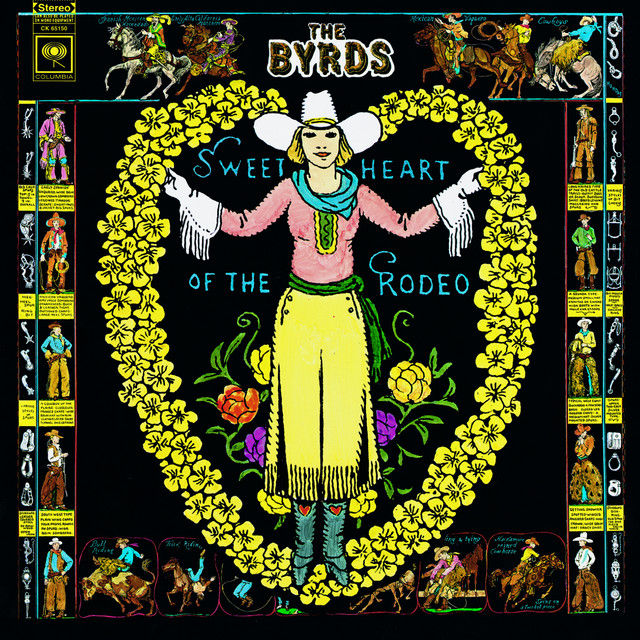
The opener and closer of Notorious Byrd Brothers are both awful. Artificial Energy is a ham-fisted drug song with a 1970s cheesecake horn part, and Space Odyssey a weird intergalactic sea shanty that was supposed to anticipate the bluegrass rock opera Roger wanted to do next. Instead, we got Sweetheart Of The Rodeo, a much more digestible affair. Sandwiched between these two slices of soggy bread is some of the best material the Byrds ever recorded; flavorful and plenty worth savoring. If you’re not put off by the sour “Artificial Energy,” you’ll be rewarded with the sweet Goin’ Back.
The lyric itself about looking back on childhood, but as sung by the Byrds, “Goin’ Back” becomes a reflection of where the band was at this stage in their career. They’ve gone just about as far out as they could go, now they’re coming back down to Earth.
“I think I’m goin’ back
To the things I learned so well in my youth.
I think I’m returning to
Those days when I was young enough to know the truth.”
The irony of, “Now there’s more to do than watch my sailboat glide/And every day can’t be a magic carpet ride”isn’t lost on me. The Byrds were posed in a black void on an “Oriental” carpet for the Fifth Dimension album cover, and after refusing to record this song, David Crosby used his Byrds settlement money to buy the Mayan. The guys made some much-needed changes from Dusty’s version: “No more coloring books/No Christmas bells to chime” was changed to “No more electric trains/No more trees to climb,” and the clunky “Now I think I’ve got a lot more than skipping rope to lend” became “Now I think I’ve got a lot more than just my toys to lend.”
I love Dusty Springfield, but her piano ballad version of “Goin’ Back” is yawn-snooze. Usher’s arrangement is exciting, and much more fitting for the song’s subject matter. Gary was a “more-is-more” guy in 1967, the “more-is-more” year. He would throw everything at the wall to see what stuck. Usher tried to have the Byrds take up more space in the mix by applying heavy reverb to their vocals. It sounds like the guys themselves are filtered through a memory. (By the way, I don’t know what Menck is talking about in his text, I can hear Gene loud and clear on this song.) Usher applies same treatment to piano chords, raising the ceiling of arrangement. “Goin’ Back” is an especially fine showing by the Byrd Brothers ensemble. Red Rhodes on steel guitar plays long accent lines through verses, and gives an agile showing through chorus. Jim Gordon on drums shapes the flow of the song. The snare crack after the fakeout ending, leading into the airy “la la la” coda, is essential. Usher sneaks in orchestral touches: a celeste, those wonderful cello parts before the final line of each chorus, listen really hard and you can hear the harp. On the surface, “Goin’ Back” sweeps the listener up in a romantic version of the past, whatever that is for them. Dig a little deeper and it’s the true beginning of the push-and-pull of Notorious Byrd Brothers; a terribly intriguing affair.
The push-and-pull carries into Natural Harmony. Though Chris wrote the lyric, the music sounds an awful lot like what Croz was writing around this time; we often associate the Byrds’ jazz influence with him. “Natural Harmony” switches back and forth from 5/4 to 4/4. Clearly we’re rocking with a certain chemical influence as well: “Merging with a grain of sand/Try hard to catch us if you can.” Chris’s lyric establishes a core theme of Byrd Brothers: the pursuit of a modern Garden of Eden, “Seems just like the day of birth/Our first awakening to this earth,” even if Eden is frollicking down the busy Sunset Boulevard or congregating on Haight-Ashbury. “Dancing through the streets side-by-side/Head thrown back, arms open wide.”
“Natural Harmony” is a fantastic example of the Byrds’ experiments with electronics. The lead vocal is fed through early phaser on choruses, there’s prominent Moog in the arrangement. I think the vocal is varispeeded on the verses as well? This sounds weirdly thin for it to be any of the guys’ natural voices. The effect is a distant, watery sound, not far off from the Leslie cabinet the Beatles discovered the year before. “Natural Harmony” is a cool, efficient two-minute interlude. It brings the first truly wonderful segue of the album as we fade out of a jazzy guitar lick and into the cymbal wash which begins “Draft Morning.”
About Draft Morning, Crosby said,
“It’s not a them-versus-us situation. They are us, man...The guy who shoots people in Vietnam lives in me because I have gotten mad and I have hit people in my life and we’re all the same person. He came from the same energy source I did, and he’ll go back to the same energy source I will, and he is trying to get off the wheel too. I can’t straighten him out without straightening myself out too. Somebody’s got to straighten us all out now, it’s getting out of hand, man. People (are) dying. It puts me uptight. It lives in my house and it lives in my head.”
quoted from: Johnny Rogan, Requiem For The Timeless, Vol. 1 (2011.)
Considering Croz had only been writing songs for himself for about a year by now, the depth present in “Draft Morning” is remarkable. “No hurry to learn to kill/And take the will from unknown faces.” The vocal harmonieshave lots of ambient space between parts. There’s a haunting sense of knowing within the guys’ delivery, and the youth in their voices. As Roger breaks from the intricate, interlocking guitar parts to play a brief, conservative solo, Usher pops on the Firesign Theater’s sound collage. We hear a trumpet, old-timey Western gun shots, bombs, a mandolin trill, and general chaos. It took me an embarrassingly long time to notice this, but Jack Nitszche and Neil Young did a very similar thing for Neil’s own statement on the war-torn Sixties. “Broken Arrow” and “Draft Morning” make a serious case for Buffalo Springfield Again and Notorious Byrd Brothers to be viewed as brother-sister albums; both made by bands actively breaking up. While Again is positively un-cohesive, aurally untenable as the band who made it, Byrd Brothers is remarkably cohesive considering its circumstances. Roger plays Taps, sentencing the poor kid narrator of “Draft Morning” to death. Why should it happen?
This solemn ending fades into Red Rhodes and the unsung hero of Byrd Brothers, Clarence White, playing a wonderful duet to open Wasn’t Born To Follow. Clarence hitched his wagon to the Byrds’ caravan around Sweetheart Of The Rodeo. While I don’t think he was ever an official Byrd, if there’s anyone worthy of the “sixth Byrd” title, it’s him. Clarence was an immensely skilled player, making his presence known in these small flashes on Byrd Brothers. He was integral to Byrds’ country flavor. He made such a mark in such a short time, he’s a terribly underrated guitarist, and it’s a damn shame he died as soon as he did. Don’t fucking drink and drive.
Anyway, though “Wasn’t Born To Follow” was written by positively square Goffin and King, ir reflects counterculture’s longing to forsake modernity and return to the pleasantries of nature.
“Oh, I’d rather go and journey where the diamond crescent’s flowing
And I run across the valley beneath the sacred mountains
And wander through the forest where the trees have leaves of prisms…”
...yeah, we’re still plenty psychedelic!
Right when Rog begins his guitar solo, Usher pushes the whole of “Wasn’t Born To Follow” through his compressors. I wish I could convey to you the surprise I felt when I heard that for the first time. I wasn’t sure I liked it at first! I didn’t think it “made sense” with a “country Byrds” number. Knowing what has taken place onNotorious Byrd Brothers so far, it not only makes total sense, it’s one of the most immersive and special production choices made on the LP.
We’ve been sucked through space to splash about in rivers of the mind. But when the narrator wants to “dive beneath the white cascading waters,” his girl won’t forsake her measly little world to follow him.
“She may beg, she may plead,
She may argue with her logic
And mention all the things I’ll lose
That really have no value, In the end, she will surely know
I wasn’t born to follow.”
“Wasn’t Born To Follow” is the most successful blend of psych and country we’ve had on the album. Throw in the folk and orchestra and you get “Goin’ Back.” It feels funny that the two best songs on Notorious Byrd Brothers weren’t written by the Byrds, as they were such an originals band by now – but then you consider all of their greatest hits weren’t written by them! That’s not to say the Byrds weren’t worthy, developing writers. The songs bookending “Wasn’t Born To Follow” prove that they were.
The door shuts (it came from Columbia’s stock sound library,) and we turn our attention to Get To You. The jazz influence has stuck around: this is a country clicking drum swinging between 5/4 and waltz time! The string parts parts weaving between vocal harmonies are lovely. I wonder how the guys ever came up with the breaths on the chorus. It’s certainly...original.
The narrator of “Get To You” anxiously awaits his plane. Once he’s in the air, he wonders how much faster this thing can fly, because he just wants to get back to his girl. Who wrote “Get To You?” Roger and Chris, or Roger and Gene? No one involved seems to remember, but Jon Einarson confidently states in his Mr. Tambourine Manbiography that it was Gene. Whoever that co-writer was, it seems he equates the journeying of a rock-and-roll star to Homer’s Odyssey, and reuniting with this girl like Odysseus reuniting with Penelope. “Glad to be in London even though it’s pouring rain/It’s a bright sunny day when I see you run my way/But it took me 20 years to get to you.”
I have one major gripe with Notorious Byrd Brothers on streaming services, and no, it’s not hollowing out Chris’s wonderful warm bass tone. (Though that is pretty egregious, now that I think of it. It’s clear he’s grown leaps and bounds as a player through his contributions on Byrd Brothers.) It’s what they decided to do between “Get To You,” the side one closer, and “Change Is Now,” the beginning of side two. They’ve crossfaded the songs. This is like connecting “Great Gig In The Sky” to “Money.” You just don’t do it. It messes with the continuity of the record and it alters the context. Usher intended Byrd Brothers as two side-long suites, not one album-long one.
Side two (and suite two) of Byrd Brothers begins with the ambiguous chiming guitar of Change Is Now. The lyric centers – once again – around expanding the mind and seeking truth. I love the turn of phrase, “Dance to the day when fear, it is gone.” It captures the kids of the time getting together and, whether at the sockhops, auditoriums, hoedowns, or love-ins, dancing themselves clean of the trauma of the 1960s. Uptempo country sections cut into the jazz swing, and harmonies hang in the air, but “Change Is Now” is dominated by layered guitar solos (one of them possibly run through a Moog) and a thick, mean, propulsive bass line. I wouldn’t normally associate these textures or this playing style with the Byrds. They’re totally 1967 Monterey. It was all about the free-flowing guitar solo and an “elephant fart” bass tone (you can thank Corky Laing for that one!) I wouldn’t associate soloing with Roger McGuinn, either. Sure, he could sling a jangly little lick like few others – his chiming intros to Byrds songs were one of the original “producer tags.” But extended showings like this are highly, highly unusual for him on a Byrds album.
Old John Robertson would be an otherwise-innocuous song about a Stetson hat-sporting character from Chris’s hometown if not for a., its status as B-side of infamous “Lady Friend,” b., its phasing, and c., the orchestral break in the middle. The Byrds sure do know how to work within the confines of a pop song. They make 1:48 feel like four minutes, easily.
“Robertson” ends on open chord, picked up by the third song in 5/4, Tribal Gathering. How much Brubeck were these guys listening to? The “Gathering” in question was Crosby’s experience at Elysian Park on Easter Sunday 1967. He observes all these people who’d never meet under “normal” circumstances:
“A Macedonian and a pilot comes
A-laughing at a German jest or joke.
A friendly motorcycle angel comes
To sit and talk a while and share a smoke.”
Try speaking that in its sung cadence. It’s harder than it seems! Croz would write this intensely rhythmic trick into the title track of Deja Vu a few years later. The cool, angsty drive underneath this song about a supposedly carefree event is intriguing. It emphasizes that this, in fact, is a “strange thing,” the counter-culture. I hear and feel the skepticism the narrator has surrounding this free-love thing; “Lost herself out in the wheel of sound.” (Which is ironic, because David Crosby was a known, ahem, proprietor, of free love!) The angst really comes out in the garagey guitar solos.
“Gathering” slides into Dolphin’s Smile; the Moog plinking is meant to mimic a dolphin chattering. Very cool, and a gorgeous use of feedback. The insistent, jazzy drumming is not provided by Michael Clarke; he got tossed out of this session for “playing the same thing all the time.” The lyric reveals Crosby’s desire to be anywhere but here right now. The sea is calling him. He shows us just what we’ll be missing with his departure; his harmonies are sublime.
And after all that, we end on Space Odyssey. Way to miss the runway, boys! Hearing this song about space travel in search of life on other planets, a grand retelling of Arthur C. Clarke’s The Sentinel, which takes place in the distant future...1996...does make me laugh.
Catch Them If You Can...
To properly close things out, let’s revisit the back-to-basics thing. Jon Landau wrote in his Rolling Stone review of Byrd Brothers, “the presence of the war is deeply felt.” He’s talking about Vietnam, but like the band that made it, Byrd Brothers is an album at war with itself. It’s a country, rootsy, naturalistic aesthetic with a production style that is distinctly of the studio. There are horns, strings, a harp, crossfades, phasing, sound collages, early electronic effects, and a very early appearance of a Moog on a pop album. The Byrds do all these psychedelic things, but Byrd Brothers isn’t really thought of as a “psychedelic album.” That title would go to Fifth Dimension over this. On Byrd Brothers, the Byrds and Gary Usher used psychedelic elements as textures and tools; which I think a lot of groups in the Sixties tried to do, but they let the fuzz and pedals and the LSD of it all take off.
This is a grounded album, which is really remarkable considering the circumstances. This is a band actively splintering apart. These guys are going in all different directions. You can tell from the wildly disparate sounds and moods they bring with their respective compositions. They have very different concerns: the collective versus the self. It’s as if the inner conflict comes through with the music. Ric Menck wrote the following about “Natural Harmony,” but I feel it applies to the whole album. “While they are obviously working to achieve a futuristic sound...there is also the nagging feeling that they have taken things to the extreme and long for a return to some normalcy.” This was true, as we’d see from Chris and Croz’s respective post-Byrds efforts. The former ran off with Gram Parsons to form the Flying Burrito Brothers, as for the latter...
Somehow, the Byrds kept it together for long enough to not only build and fully explore a defined sound, but to continually comment on the times they were living in: the war, hippie culture, politics, the generational shift away from excess.
Standing today as one of the most alarmingly self-aware albums of its day, The Notorious Byrd Brothers has one foot in the future and one in the past. Which foot is where is up to you.
Personal favorites: “Goin’ Back,” “Natural Harmony,” “Draft Morning,” “Wasn’t Born To Follow,” “Get ToYou,” “Change Is Now”
– AD ☆
Watch the full episode above!
Crosby, David, with Carl Gottlieb. Long Time Gone: The Autobiography of David Crosby. New York: Doubleday, 1988.
Einarson, John, with Richie Furay. For What It’s Worth: The Story of Buffalo Springfield. New York: Cooper Square Press, 2004 ed.
Einarson, John. Mr. Tambourine Man: The Life and Legacy of the Byrds’ Gene Clark. eBook: Amazon Kindle. Backbeat, 2005.
Harry, Bill. “Bill Harry’s Pop Talk: ‘Byrds Again.’” Record Mirror, 4/29/1967.
Hillman, Chris. Time Between: My Life as a Byrd, Burrito Brother, and Beyond. Chicago: BMG Books, 2020.
Hjort, Christopher. So You Want to Be a Rock ’n’ Roll Star: The Byrds Day by Day, 1965-1973. London: Jawbone Press, 2008.
Menck, Rick. 33 1/3: The Notorious Byrd Brothers. New York: Bloomsbury, 2025 ed.
Nolan, Hugh. “Byrds sag.” Disc and Music Echo, 3/25/1967. https://www.worldradiohistory.com/UK/Disc/1967/DISC-&-Music-Echo-1967-03-25.pdf
Pearlman, Sandy. “Change Is Now.” Crawdaddy, 5/1968.
Rogan, Johnny. Byrds: Requiem for the Timeless, Vol. 1. London: Rogan House, 2011.
Taylor, Derek. “Our man in America.” Disc and Music Echo, 6/3/1967.
“Paul McCartney reviews the new pop singles.” Melody Maker, 2/25/1967. https://www.worldradiohistory.com/UK/Melody-Maker/60s/67/Melody-Maker-1967-0225.pdf



i can hear the twisty directions going on that makes for an interesting album: contradictorily an unfocused frustrating album too though. tribal gathering is really good. i admire the fact that you can be so committed to a band but if you think they mess up you jump on it: " miss the runway" is great.
it's possible to liken the Croz situation at this point with Graham Nash's king midas problem with the hollies and too much innovation unsteadying a well charted course. the rest is history.
Thanks AD ⭐.
Abby, I think Clarence was asked to become a full-time member after the Sweetheart sessions, and he apparently was in the group for 5 years until February 1973 when McGuinn dissolved the band (I'm guessing this was before the reunion album with the og members).